For consumers and small business owners in Buffalo, Cheektowaga, and the wider Western New York region, card payment rules can feel remote even though they affect daily expenses and local commerce. Two areas that often create confusion are settlement payout eligibility and ATM access fees. In this Lake Erie Times guide, reporter William Strasmore explains what these processes mean for consumers, merchants, and banks.
What Is Settlement Payout Eligibility?
Settlement refers to the final transfer of funds between banks after a card transaction has been authorized. When a customer uses a Visa or Mastercard to make a purchase, the merchant’s bank and the customer’s issuing bank exchange messages through the card network. Settlement payout eligibility determines whether the merchant will actually receive those funds and when they will arrive.
Several factors influence whether a settlement is processed smoothly:
- Transaction authorization status – Whether the card was approved and sufficient funds or credit were available.
- Chargeback activity – High dispute or fraud rates can delay or block payouts for merchants.
- Compliance requirements – Merchants must adhere to Visa and Mastercard rules, including PCI DSS security standards.
- Account standing – Issuing banks may hold funds for verification, especially for new or high-risk accounts.
For Western New York businesses, this matters in practical ways. A restaurant in downtown Buffalo, a pharmacy on Lake Shore Drive, or an online retailer shipping from the region may all rely on predictable settlement cycles to cover payroll, inventory, and operating costs.
ATM Access Fees: What They Are and Who Pays
ATM access fees, also known as surcharges or out-of-network fees, are charges applied when a cardholder withdraws cash from an ATM operated by a bank other than their own. These fees typically consist of two components:
- ATM operator fee – Set by the bank that owns the ATM, often ranging from $2 to $5 per transaction.
- Issuer fee – Imposed by the cardholder’s own bank, common for transactions at out-of-network or international ATMs.
Visa and Mastercard both permit these fees as long as they are disclosed transparently. In practice, the exact amount depends on bank agreements, account type, and whether the withdrawal is domestic or international.
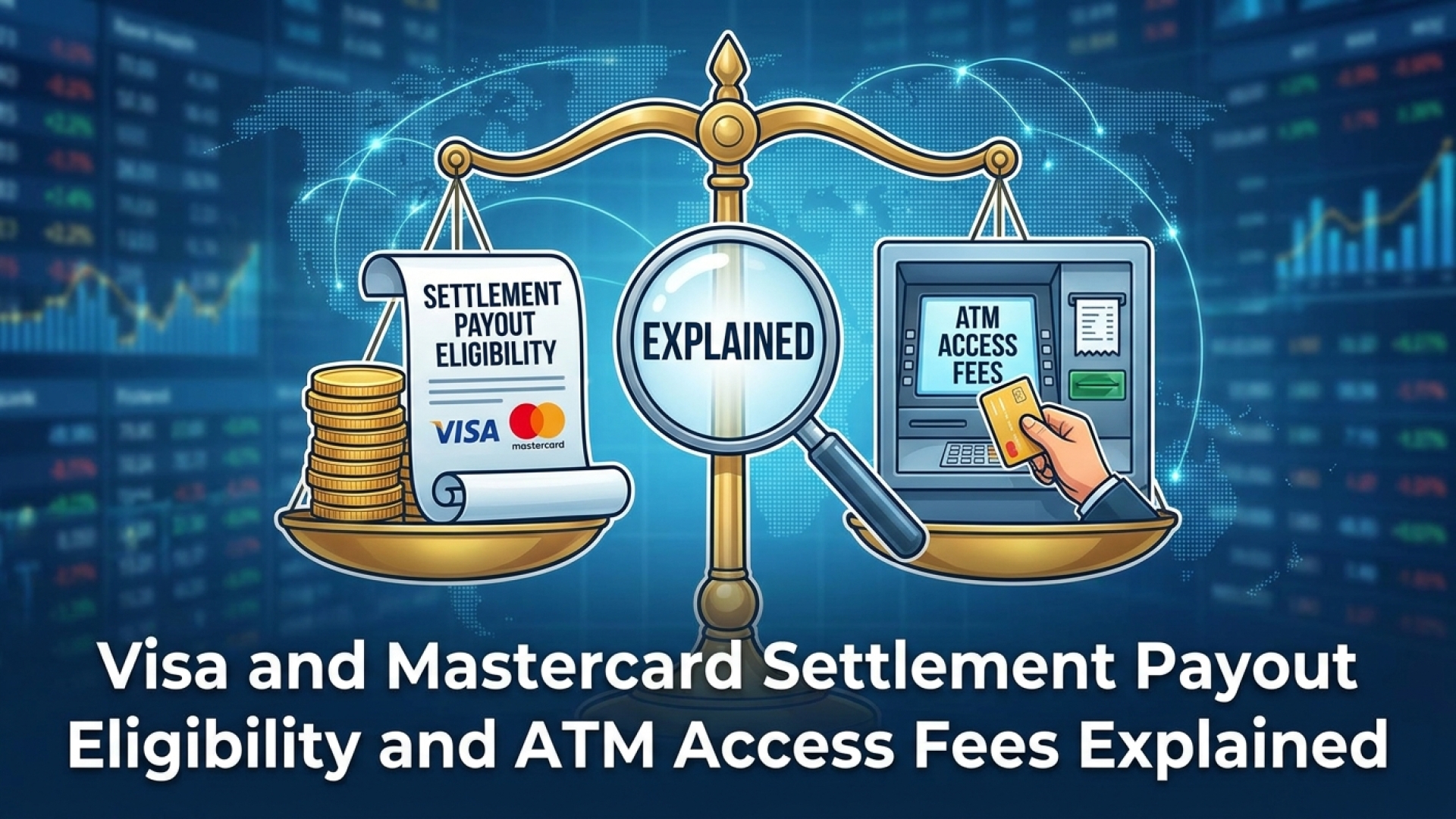
Quick Comparison: Settlement Payouts vs. ATM Fees
| Topic | Settlement payout eligibility | ATM access fees |
|---|---|---|
| Primary purpose | Determines whether and when a merchant receives funds from an approved card sale. | Covers costs associated with cash withdrawals at ATMs outside a cardholder’s own network. |
| Who is affected most directly | Merchants, acquirers, and payment processors. | Cardholders using out-of-network or international ATMs. |
| Common cost or delay factors | Authorization status, chargebacks, fraud risk, and compliance issues. | ATM ownership, bank fee schedules, and cross-border transaction rules. |
| What readers should watch for | Timing of deposits, pending transactions, and unexpected holds. | Surcharge disclosures, reimbursement eligibility, and international fee estimates. |
How Visa and Mastercard Are Improving Fee Transparency
Both card networks have continued to emphasize clearer disclosures, while individual banks determine how and when fee information is presented to customers. Recent trends include:
- Clearer presentation of ATM surcharges in mobile and online banking tools.
- Expanded reimbursement options for customers with premium checking or savings products.
- More consistent international fee disclosures, which can help travelers using ATMs abroad.
These developments aim to reduce surprises and give consumers a better understanding of the total cost of cash access.
Practical Ways to Reduce Fees and Avoid Delays
Whether you are a consumer withdrawing cash or a merchant receiving card payments, a few practical steps can help:
- Choose your bank wisely – Look for institutions with large ATM networks or fee-reimbursement benefits.
- Use in-network ATMs – Most banks provide a list of partner ATMs where no surcharge applies.
- Monitor your statements – Track both settlement timing and ATM fees to catch discrepancies early.
- Ask about premium accounts – Many banks waive ATM fees for customers who meet balance or income requirements.
Looking Ahead
As digital payments, contactless transactions, and cash-back rewards programs continue to grow, the role of physical ATMs may gradually diminish. However, cash remains an important part of the financial system, especially for local customers and businesses that still rely on everyday banking access. For residents and businesses in the Lake Erie region, understanding how Visa and Mastercard manage settlement and ATM fees helps create more informed financial decisions and clearer expectations around costs.
William Strasmore is a dedicated news reporter in Western New York who delivers in-depth, impartial coverage and incisive analyses on local issues. His reporting for Lake Erie Times focuses on community affairs, local business, and regional economic trends.
Lake Erie Times provides this article for informational purposes only and does not provide professional legal or financial advice. Some links on Lake Erie Times are affiliate links. This means that if you make a purchase through these links, we may earn a commission at no additional cost to you. Our recommendations are based on careful research and our commitment to quality journalism.