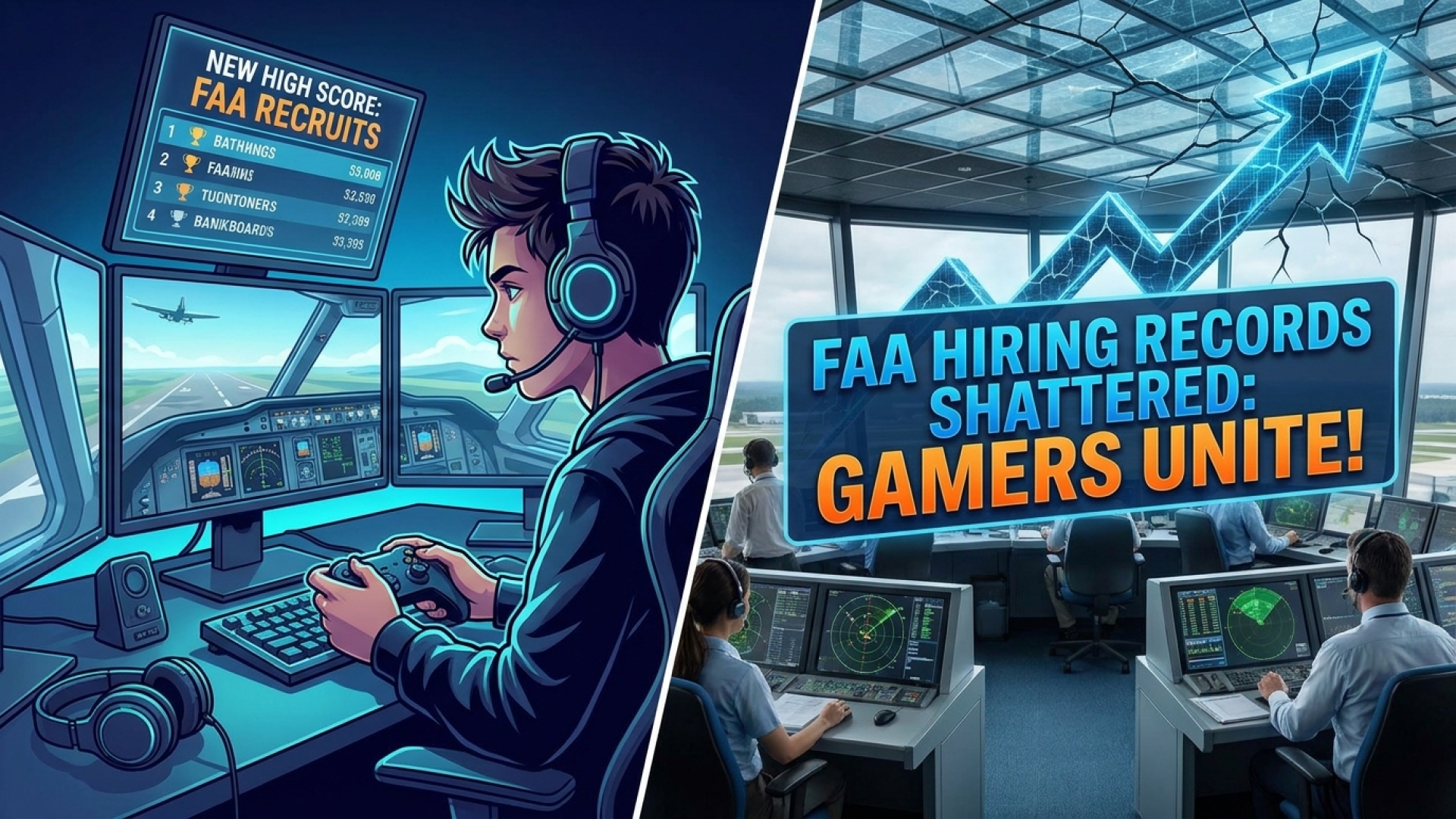
The Federal Aviation Administration (FAA) has reached a historic milestone in its recruitment efforts, shattering previous records for air traffic controller applications. This surge in interest, driven by an innovative campaign targeting the gaming community, signals a potential turning point for an agency long plagued by staffing shortages—a development that holds significant implications for regional hubs like Buffalo Niagara International Airport and the broader Western New York aviation corridors.
Record-Breaking Response to FAA Recruitment
The FAA recently announced a monumental success in its latest hiring drive. In a display of unprecedented interest, more than 8,000 qualified candidates applied for these high-stakes roles in record time, marking the fastest application pace in the agency’s 67-year history. U.S. Department of Transportation Secretary Sean Duffy celebrated the milestone, declaring “Mission accomplished” via a social media announcement that featured “Super Mario Bros.” imagery—a direct nod to the campaign’s unconventional strategy.
The annual hiring window opened at midnight on April 17 and saw an immediate influx of traffic. Within 13 hours, the FAA received over 8,000 applications, with approximately 7,250 individuals deemed qualified upon initial review. By the evening of the first day, the number of qualified applicants surpassed the agency’s primary goal, leading to the job posting being closed well ahead of schedule.
Targeting Gamers: A Strategic ‘Level Up’
The success of this recruitment drive is largely credited to the FAA’s decision to pivot toward the gaming community. The agency launched a high-energy advertisement campaign inviting video game players to “level up” their careers. This strategy was not merely a marketing gimmick; it was a calculated move to identify individuals with inherent transferable skills, such as high-velocity spatial awareness, intense focus, and the ability to navigate complex, multi-variable environments under pressure.
The FAA’s hiring portal leaned heavily into this theme, rebranding traditional job descriptions as “mission requirements” and outlining compensation packages as “high score rewards.” For a generation raised on real-time strategy and simulation games, the transition to the radar screen is being framed as the ultimate professional challenge.
Addressing the Controller Shortage in Western New York and Beyond
For travelers at Buffalo Niagara International Airport and regional commuters, this hiring surge is welcome news. The FAA has been grappling with a persistent shortage of controllers, exacerbated by a wave of mandatory retirements and training delays during the pandemic. A fully staffed air traffic control system is vital for maintaining the safety and efficiency of national and local airspace, reducing flight delays, and ensuring the smooth operation of commercial and cargo logistics.
By tapping into a demographic already accustomed to the cognitive demands of air traffic control, the FAA aims to reduce the washout rate at its training academy in Oklahoma City. These candidates are often better prepared for the mental rigor required to guide thousands of flights daily through some of the world’s busiest air corridors.
Requirements and Compensation
The FAA has standardized the requirements and benefits for those entering the pipeline. The following table outlines the criteria for the “mission” and the potential rewards for successful recruits:
| Category | Details |
|---|---|
| Eligibility Requirements | U.S. Citizenship, under 31 years of age, and proficiency in English. |
| Starting Salaries | Six-figure potential, with total compensation exceeding $155,000 within three years of Academy graduation. |
| Training Support | Fully paid academy training and housing stipends during the residency in Oklahoma City. |
| Benefits Package | Comprehensive federal benefits including health insurance, retirement plans, and life insurance. |
A Local Perspective on a National Success
As an investigative reporter covering community affairs in Western New York, I have observed how critical infrastructure staffing directly impacts our local economy. The FAA’s ability to modernize its recruitment process serves as a template for other public service sectors facing labor shortages. By effectively engaging a new generation of workers through digital-first outreach, the agency is not just filling seats—it is future-proofing the safety of our skies.
While the record-breaking application numbers are a significant first step, the focus now shifts to the rigorous training phase. Only the most disciplined applicants will make it through the final “levels” to become certified controllers, but for now, the FAA has successfully cleared a major hurdle in its path to recovery.
About the Author: William Strasmore is a dedicated news reporter for Lake Erie Times. Based in Western New York, he delivers in-depth, impartial coverage and incisive analyses on regional politics, infrastructure, and community issues.
Disclaimer: The content provided by Lake Erie Times is for informational purposes only and should not be considered as professional legal or financial advice. Some links on Lake Erie Times are affiliate links. This means that if you make a purchase through these links, we may earn a commission at no additional cost to you. Our recommendations are based on careful research and our commitment to quality journalism.