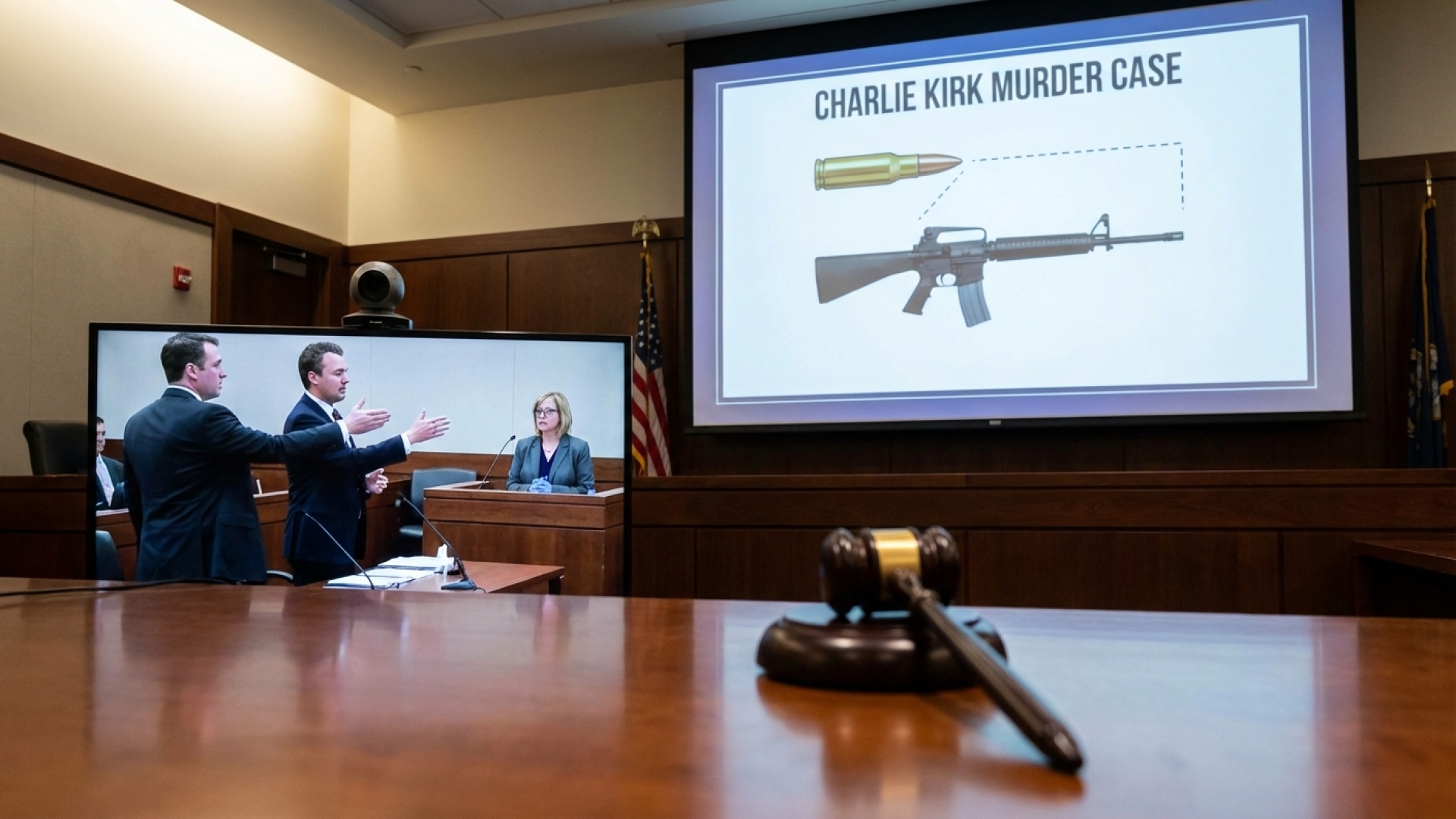
In the ongoing legal proceedings following the high-profile death of conservative activist Charlie Kirk, defense attorneys for Tyler Robinson are seeking a significant delay in court proceedings. The request for a postponed preliminary hearing, originally slated for May, hinges on the emergence of complex forensic data, including an inconclusive ATF analysis that could prove pivotal to the defense’s strategy.
Inconclusive ATF Report Challenges Prosecution’s Ballistics Link
Court filings reviewed by William Strasmore for the Lake Erie Times reveal that Robinson’s defense team is scrutinizing a report from the Bureau of Alcohol, Tobacco, Firearms and Explosives (ATF). According to these filings, the federal analysis failed to conclusively connect a bullet fragment recovered during the autopsy to the rifle discovered at the scene. While the specific contents of the ATF report remain private, defense counsel has cited snippets in public documents to highlight the lack of a definitive match.
The FBI is reportedly conducting additional testing to bridge this evidentiary gap. In forensic ballistics, experts seek unique microscopic markings—often described as “ballistic fingerprints”—left on a bullet as it traverses a firearm’s barrel. When fragments are too small or damaged, establishing a match becomes mathematically and scientifically difficult, providing the defense with grounds to challenge the prosecution’s narrative.
The Prosecution’s Case: DNA vs. Ballistics
Despite the ambiguity of the ballistics report, prosecutors maintain a robust collection of forensic evidence. They have pointed to DNA profiles consistent with Robinson found on three critical areas: the rifle’s trigger, a fired cartridge casing, and two unfired cartridges. However, the defense countered these claims by noting that several items contained DNA from multiple individuals, suggesting a more complex forensic picture than initially presented.
| Evidence Category | Forensic Finding | Status |
|---|---|---|
| Bullet Fragment | Inconclusive link to the recovered rifle | Pending FBI Review |
| Rifle Trigger | DNA consistent with Tyler Robinson | Reported by Prosecution |
| Cartridge Casings | Presence of Robinson’s DNA and other profiles | Contested by Defense |
| Communication | Text messages regarding the victim’s rhetoric | Entered into Evidence |
Legal Proceedings and Potential Death Penalty
Tyler Robinson, 22, faces charges of aggravated murder in connection with the September 10 shooting on the Utah Valley University campus. Prosecutors have signaled their intent to seek the death penalty. Robinson has yet to enter a formal plea, and his legal team continues to push for time to review what they describe as an “enormous” volume of discovery material.
A key piece of the prosecution’s motive involves text messages Robinson allegedly sent to a romantic partner, stating he targeted the activist because he “had enough of his hatred.” As the case progresses, the Lake Erie Times will continue to monitor how these forensic inconsistencies impact the upcoming hearings.
The next court appearance is scheduled for April 17. This hearing will focus on a defense motion to prohibit cameras from the courtroom, as Robinson’s team seeks to limit media exposure ahead of a potential trial.
Reporting for the Lake Erie Times by William Strasmore. For further updates on local and national news affecting the Western New York region, visit our local news section.
Disclaimer: The content provided by Lake Erie Times is for informational purposes only and should not be considered as professional legal or financial advice. Some links on Lake Erie Times are affiliate links. This means that if you make a purchase through these links, we may earn a commission at no additional cost to you.