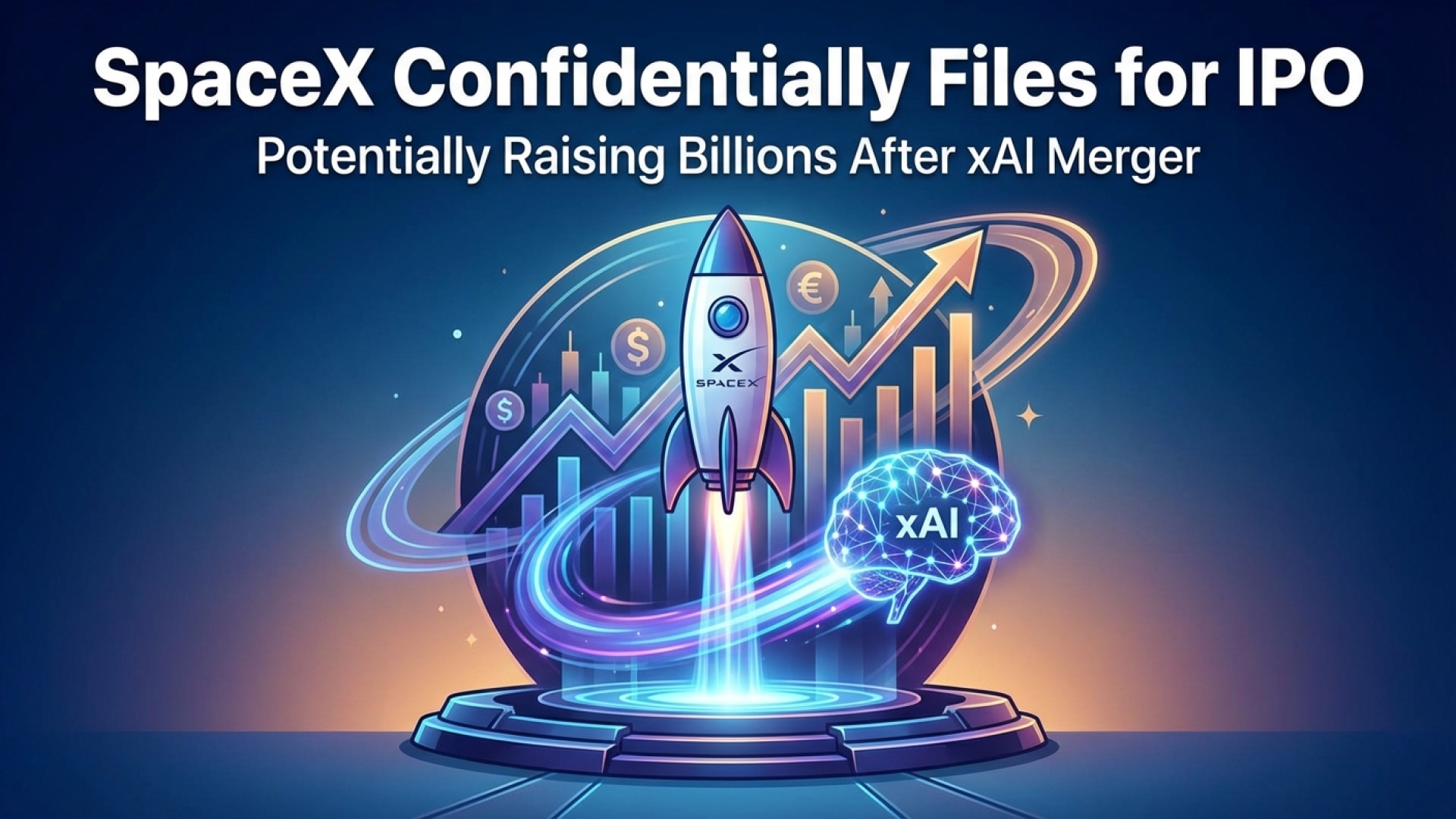
In a development that has sent ripples through the global financial markets and the burgeoning tech corridors of Western New York, SpaceX has officially taken its most significant step toward becoming a publicly traded entity. On Wednesday, the aerospace titan, led by Elon Musk, confidentially filed paperwork for an initial public offering (IPO) with the U.S. Securities and Exchange Commission (SEC).
While the move marks a transition from private giant to public powerhouse, the sheer scale of the offering is what has captured the attention of analysts from Wall Street to Buffalo. Projections suggest SpaceX aims to raise between $40 billion and $80 billion. If the figure hits the estimated $75 billion mark, it would stand as the largest IPO in history, fundamentally shifting the landscape of the aerospace industry.
Historical Context: Breaking Records
To understand the magnitude of this filing, one must look at the previous benchmarks for global capital raises. SpaceX’s anticipated entry into the public market is set to dwarf previous record-holders, signaling a new era of private-sector space dominance.
| Company | IPO Year | Amount Raised (USD) |
|---|---|---|
| SpaceX (Estimated) | 2026 | $75 Billion |
| Saudi Aramco | 2019 | $29.4 Billion |
| Alibaba Group | 2014 | $25 Billion |
The xAI Catalyst and the Trillion-Dollar Valuation
The timing of the IPO is no coincidence. It follows closely on the heels of a strategic merger with Musk’s artificial intelligence venture, xAI. This integration of aerospace hardware with cutting-edge AI capabilities has propelled the combined business value to an unprecedented $1 trillion.
For Musk, the financial implications are staggering. Currently holding a 42% stake in SpaceX according to Pitchbook, his net worth—already estimated by Forbes at $823 million—is poised for an astronomical leap. As the IPO issues new shares and the market validates the trillion-dollar valuation, Musk is firmly on the path to becoming the world’s first trillionaire.
Proven Capability and Federal Trust
Beyond the balance sheets, SpaceX’s market confidence is bolstered by its recent operational successes. In late 2025, the company stepped in where others faltered, rescuing two astronauts stranded on the International Space Station (ISS) following the failure of Boeing’s Starliner. This mission served as a high-stakes demonstration of SpaceX’s technological reliability.
The federal government has taken notice. Over the last five years, SpaceX has secured roughly $6 billion in contracts from NASA and the Department of Defense. These taxpayer-funded agreements, documented via USAspending.gov, provide the company with a stable revenue stream that most startups—and even established aerospace firms—cannot match.
The Political and Investment Landscape
The IPO also highlights the intersection of business and political influence. Notable among the current investors is Donald Trump Jr., who holds a stake through the venture capital firm 1789 Capital. The firm, which focuses on federal contractors, positioned itself as a partner shortly after the 2024 presidential election, underscoring the complex web of interests surrounding the company’s transition to the public sector.
For investors in Western New York and beyond, the SpaceX IPO represents more than just a stock listing; it is a litmus test for the future of the private space economy. As the SEC reviews the confidential filing, the world waits to see if the “Trillion-Dollar Frontier” is truly ready for prime time.
About the Author: William Strasmore is a dedicated news reporter for the Lake Erie Times, providing in-depth coverage of regional dynamics, local politics, and major economic events affecting the Western New York community.
Disclaimer: The content provided by Lake Erie Times is for informational purposes only and should not be considered as professional legal or financial advice. Some links on Lake Erie Times are affiliate links. This means that if you make a purchase through these links, we may earn a commission at no additional cost to you.