As weather patterns become increasingly unpredictable, the National Hurricane Center (NHC) is preparing a significant evolution in how it communicates storm threats. For the 2026 season, the NHC will roll out an experimental update to its hurricane forecast cone, a move designed to provide a more comprehensive and accurate visual representation of potential tracks based on years of rigorous error analysis.
For residents in Western New York, understanding these changes is vital. While Buffalo is far from the coastline, the region frequently contends with the remnants of tropical systems that bring heavy rainfall and high winds. Following these updates ensures our community remains informed via the Lake Erie Times weather coverage.
The Shift to Elliptical Forecasting
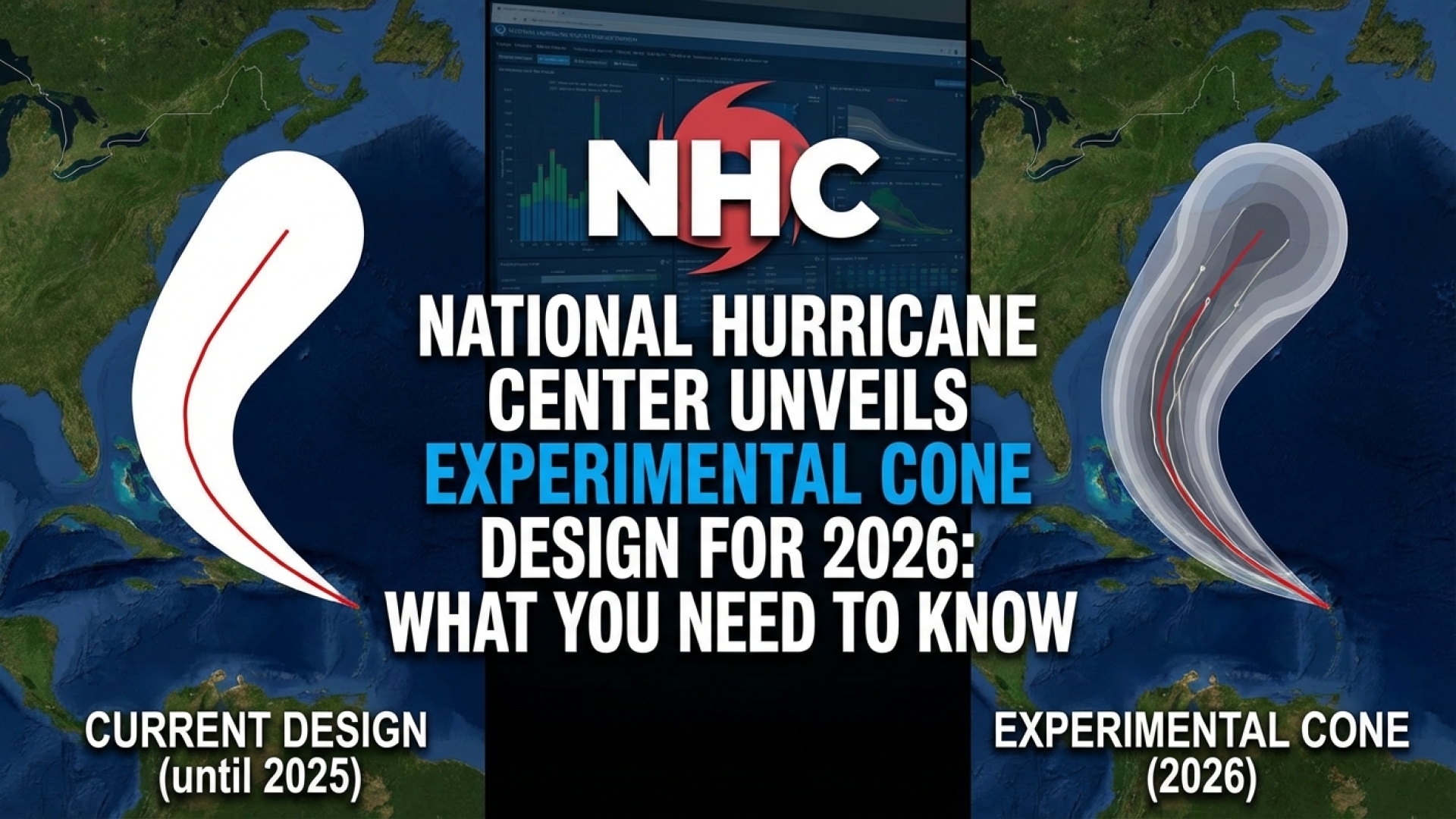
The most striking change in the upcoming redesign is the move away from standard circles. The updated design will feature ellipses anchored at each forecast point. This innovative approach allows meteorologists to illustrate two distinct types of uncertainty: a storm’s expected speed (is it accelerating or stalling?) and its directional shift (is it veering off the predicted path?).
By using an elliptical shape, the NHC can more accurately depict when a storm might be more likely to drift laterally versus when it might surge forward. This provides a more nuanced and realistic representation of a storm’s probable behavior compared to the previous uniform design.
Expanding the Scope of Uncertainty
Beyond the aesthetic change, the experimental cone significantly broadens the data it represents. Currently, the cone is designed to encompass approximately 67% of past forecast outcomes. The 2026 version increases this threshold to 90%. This means the center of the storm is expected to remain within the cone nine out of ten times.
While this change will make the cone appear wider on maps, it offers a more honest assessment of risk. By grounding the visual in the past five years of forecast errors, the NHC ensures that the public sees the full range of possibilities for a tropical storm or hurricane’s path.
| Feature | Current Forecast Cone | 2026 Experimental Cone |
|---|---|---|
| Historical Accuracy | Captures ~67% of forecast tracks | Captures ~90% of forecast tracks |
| Primary Shape | Circles at forecast points | Ellipses at forecast points |
| Focus Area | General track probability | Integrates speed and direction errors |
| Visual Width | Narrower appearance | Wider, more inclusive appearance |
Improving Public Risk Perception
According to the NHC, the primary objective is to improve how the public assesses risk during severe weather events. Historically, many individuals focused solely on the center line of a forecast, ignoring the potential for impacts outside the immediate cone. This “skinny line” syndrome often led to a lack of preparation in areas that were still very much at risk.
The new design reinforces a critical message: a storm’s impacts—such as flooding, storm surges, and high winds—are not confined to a single line. This broader perspective is essential for fostering a proactive approach to hurricane preparedness, even for inland regions like the Western New York community, where heavy inland flooding is a recurring concern.
2026: The Experimental Phase
The NHC will introduce this updated cone as an experimental product throughout the 2026 hurricane season. This period allows forecasters and local meteorologists to evaluate its performance in real-world scenarios while gathering public feedback. This phase is crucial for refining the tool before it becomes a permanent fixture in global hurricane tracking and public safety advisories.
As these updates roll out, William Strasmore and the Lake Erie Times team will continue to monitor how these changes affect our local forecasting and emergency management strategies. Staying ahead of these technical shifts is part of our commitment to keeping Buffalo and the broader region safe and informed.
Disclaimer: The content provided by Lake Erie Times is for informational purposes only and should not be considered professional legal or financial advice. Some links on our site may be affiliate links; we may earn a commission at no additional cost to you based on our commitment to quality journalism.