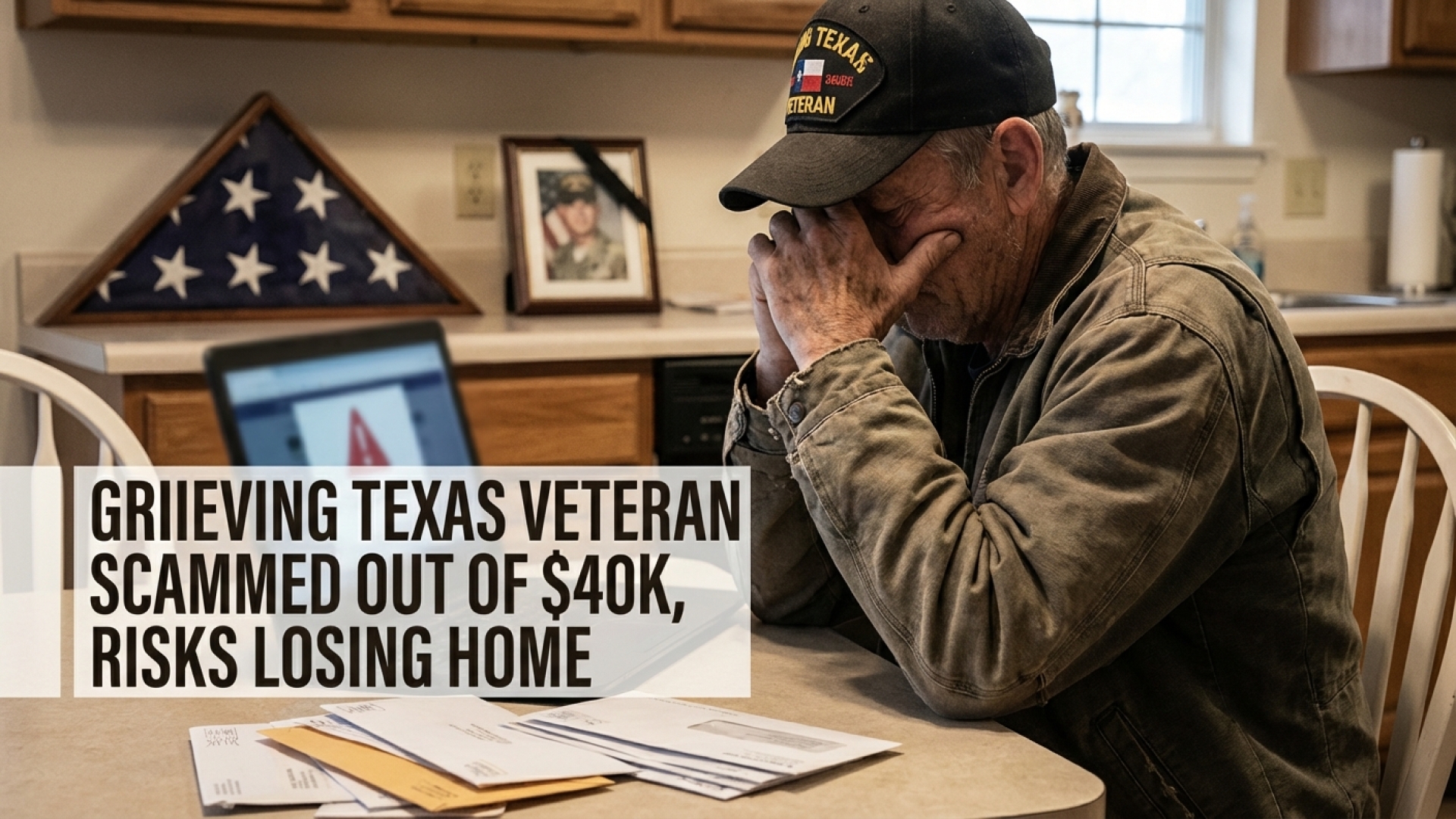
Richard Runyan, an 82-year-old veteran, is sharing his harrowing story after becoming the victim of a sophisticated financial scam that drained approximately $40,000 from his life savings. The devastating loss has left the widower at risk of losing his home, a blow compounded by the recent passing of his wife, Donna, after her long battle with multiple sclerosis. While this specific incident highlights a national trend, the implications for seniors in Western New York are a growing concern for local advocacy groups and law enforcement.
The Anatomy of a Sophisticated Financial Scam
The deception began with a text message and a follow-up phone call from individuals impersonating Bank of America representatives. The scammers convinced Runyan that a fraudulent $20,000 withdrawal was imminent. To “protect” his assets, they instructed him to withdraw the cash himself and hand it over for safekeeping. Under intense pressure and clouded by grief, Runyan complied, eventually handing over two boxes of cash and credit card funds totaling $41,000.
“I wasn’t coherent on this,” Runyan admitted, acknowledging how his emotional state made him a prime target for the predators. This vulnerability is a key factor in community safety discussions across the Buffalo region, where elderly residents are increasingly being targeted by similar psychological manipulation.
National Trends Impacting Western New York
Financial exploitation of the elderly is a rising tide that local authorities are monitoring closely. According to reporting by the FBI, criminals are shifting away from traceable wire transfers in favor of harder-to-track methods. The following table highlights the primary “red flags” that Western New York residents should monitor to avoid falling victim to similar schemes.
| Scam Tactic | What to Look For |
|---|---|
| Urgency & Fear | Claims that your account will be “frozen” or money “stolen” unless you act immediately. |
| Impersonation | Callers posing as bank officials, IRS agents, or local law enforcement. |
| Unusual Payment Methods | Requests for cash, gift cards, or cryptocurrency to “secure” funds. |
| Secrecy | Instructing the victim not to tell family members or bank tellers the true reason for a withdrawal. |
Protecting Vulnerable Residents
Bank of America has responded to these types of incidents by emphasizing its commitment to employee training aimed at preventing elder abuse. The institution offers resources through the Bank of America Security Center and “Better Money Habits” programs. However, experts note that once cash leaves the bank, recovery becomes nearly impossible.
FBI Public Affairs Officer Connor Hagan emphasizes that prompt reporting is the only way to disrupt the “financial fraud kill chain.” As criminals evolve their tactics, local lifestyle and safety advocates encourage family members to maintain open dialogue with elderly relatives regarding their finances.
Resilience and Community Support
Despite the prospect of homelessness and the weight of his grief, Runyan remains focused on moving forward. “It’s not OK, but I can deal with it,” he stated. “I’ve got to go forward.” To combat the financial ruin brought on by the scammers, a GoFundMe fundraiser has been established to help the veteran save his home.
For more updates on local issues and investigative reports affecting the Western New York region, stay tuned to our local news section.
About the Author: William Strasmore is a dedicated news reporter for Lake Erie Times, providing in-depth, impartial coverage on the issues that matter most to Western New York. With a background in investigative journalism, William focuses on community affairs and local politics. View more of his work on his author page.
Disclaimer: The content provided by Lake Erie Times is for informational purposes only and should not be considered as professional legal or financial advice. Some links on Lake Erie Times are affiliate links. This means that if you make a purchase through these links, we may earn a commission at no additional cost to you.