
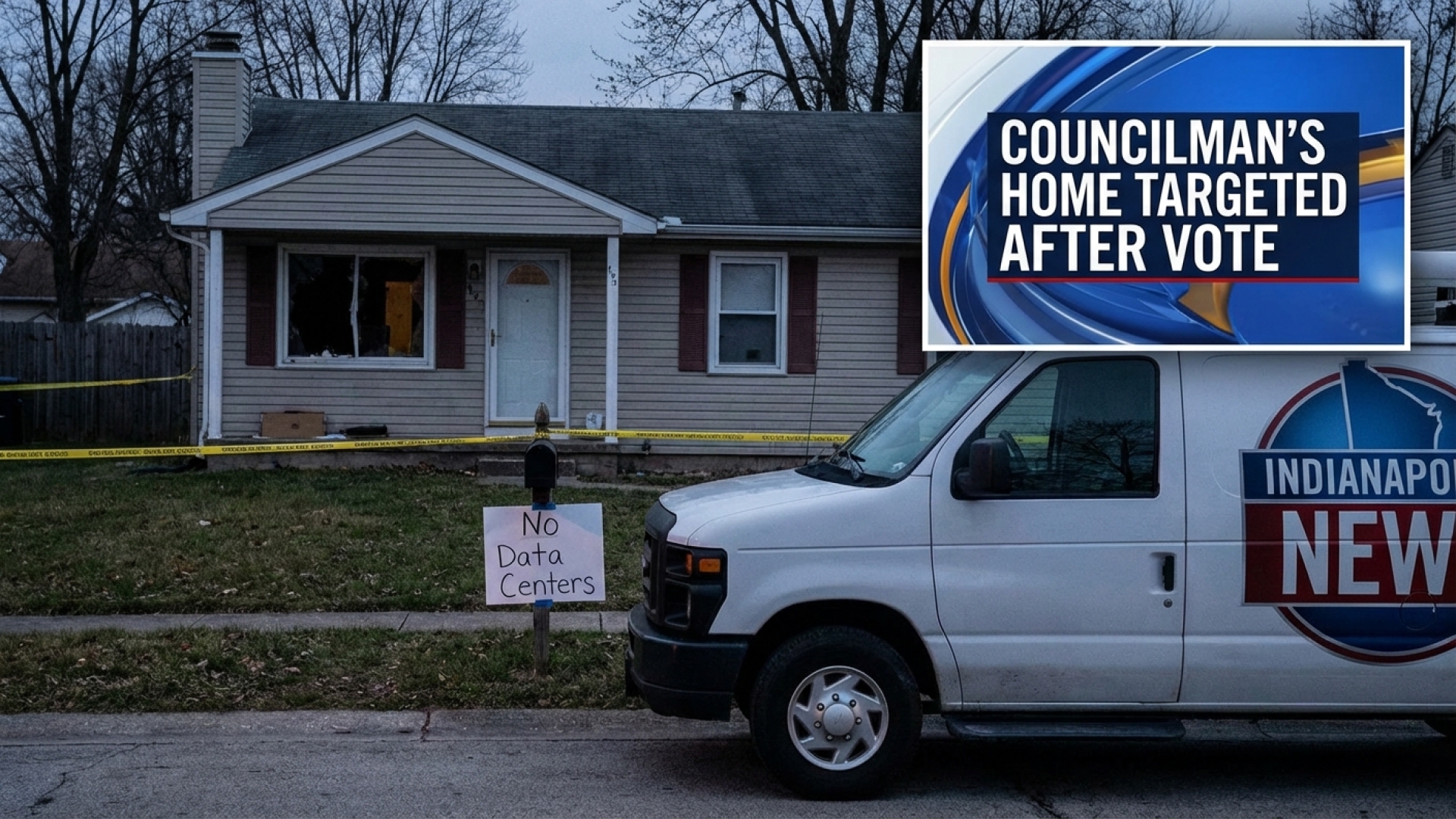
The safety of public officials has come under intense scrutiny following a violent incident in Indianapolis that highlights the rising tensions surrounding technology infrastructure and local rezoning. Councilor Ron Gibson reported that his home was targeted in an overnight shooting, an act of intimidation linked to a controversial data center project he recently supported. This escalation underscores a growing national friction between economic development and community preservation—a dynamic frequently observed in the evolving landscape of Western New York.
Councilmember’s Home Targeted in Overnight Attack
In a statement that has shaken local political circles, Indianapolis City-County Councilor Ron Gibson detailed a harrowing event that occurred in the early hours of Monday morning. Gibson reported that an unidentified assailant fired at least a dozen rounds into his residence while he and his eight-year-old son were asleep inside. The incident, which occurred around 12:45 a.m., left physical and emotional scars on the household.
“Just steps from where those bullets struck is our dining room table, where my son had been playing with his Legos the day before,” Gibson shared. His account emphasizes not only the immediate danger to his family but also the broader threat to neighborhood safety and the integrity of civil discourse.
Controversial Data Center Rezoning Sparks Debate
The timing of the attack is particularly significant, occurring just one week after Gibson’s district approved a rezoning petition for the data center developer Metrobloks. Along with the gunfire, a note reading “no data centers” was discovered on Gibson’s doorstep, explicitly linking the violence to the legislative decision.
The approval followed a heated public hearing where residents and local leaders voiced staunch opposition. While community members expressed fears over the project’s footprint, Gibson defended his vote by citing the potential for “significant investment, job creation, and long-term tax revenue” intended to bolster infrastructure and essential services.
Evaluating the Impact of Data Center Development
As these facilities become more prevalent, the debate over their presence has intensified. Critics point to the massive environmental and economic costs associated with large-scale server farms. To provide clarity on the conflicting perspectives, the following table outlines the primary points of contention:
| Category | Community Concerns | Developer & Economic Arguments |
|---|---|---|
| Resource Consumption | Extreme water usage for cooling and high energy demand on the local grid. | Modern facilities use closed-loop cooling to mitigate water waste. |
| Utility Costs | Concerns that energy demands will lead to higher electric rates for residents. | Large-scale investments often fund necessary grid modernizations. |
| Economic Growth | Limited long-term job creation after the initial construction phase. | Significant tax revenue that supports local housing and schools. |
| Transparency | Confidential power agreements between utilities and developers. | Proprietary data protection is standard in high-tech infrastructure. |
Resource Management and Public Accountability
Beyond the immediate threat of violence, the situation raises critical questions regarding how municipalities manage vital resources. Data centers are notorious for their substantial energy and water requirements. Consumer advocates remain concerned that the confidential nature of agreements between developers and local utilities may leave ratepayers subsidizing the electricity costs of these massive operations.
In regions like Western New York, where industrial legacy and natural resources are central to the economy, the Indianapolis incident serves as a cautionary tale regarding the transparency needed when courting high-tech industries.
Investigation Underway with FBI Assistance
The Indianapolis Metropolitan Police Department (IMPD), supported by the FBI, has launched a comprehensive investigation into the shooting. Law enforcement officials have characterized the event as an “isolated, targeted incident.” While the investigation continues, the event has already prompted a wider discussion on the safety of elected officials who find themselves at the intersection of corporate development and community resistance.
As part of our commitment at Lake Erie Times to provide in-depth analysis of community affairs and regional dynamics, we will continue to monitor how these national infrastructure trends impact local policy and public safety.