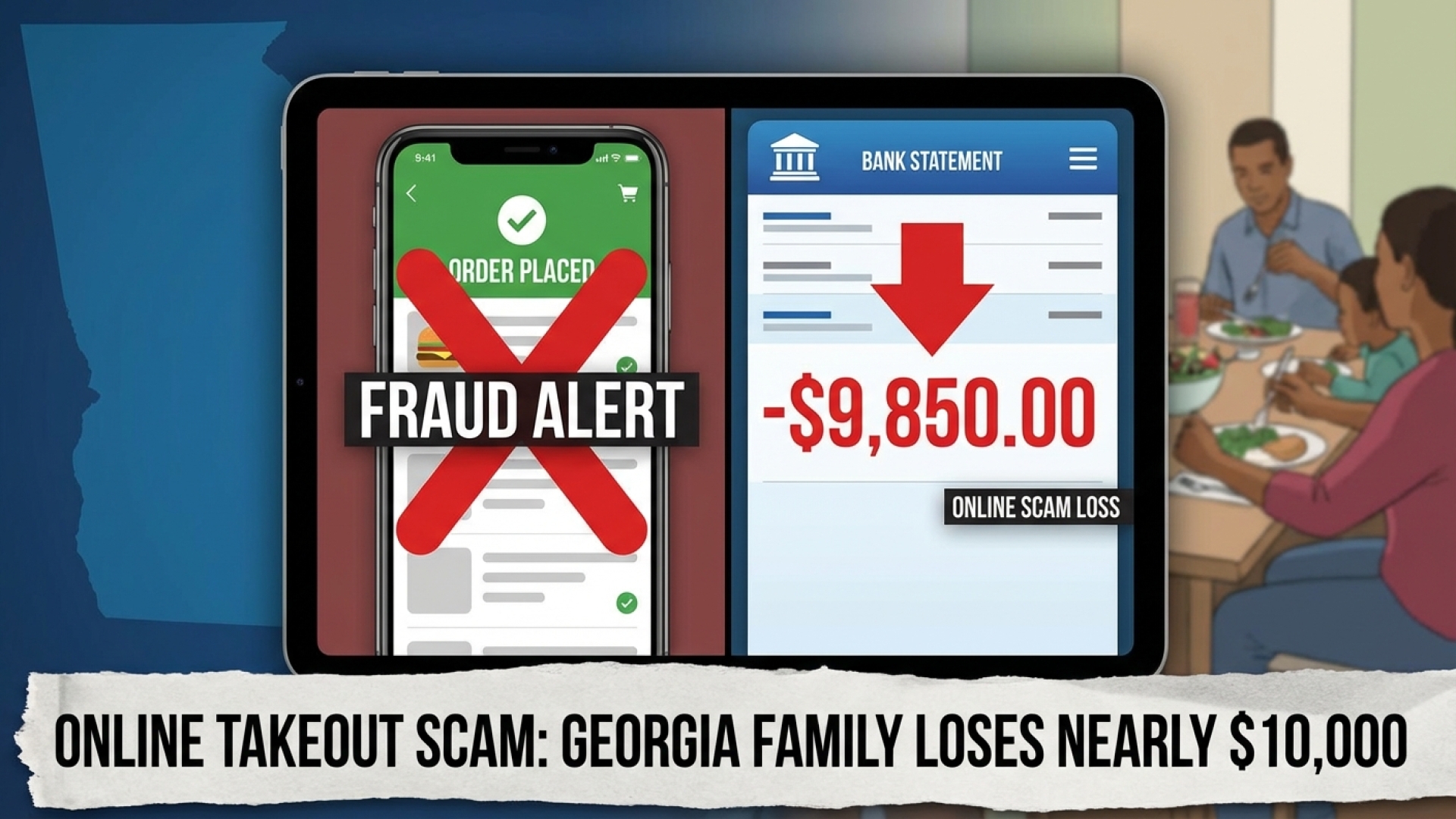
A seemingly simple online takeout order recently transformed into a devastating financial nightmare for a Georgia family, serving as a stark warning for residents across Western New York. Nina Lloyd, a mother from Fayetteville, Ga., recounted the harrowing experience of being scammed out of $9,900, highlighting a sophisticated new wave of online fraud that bypasses traditional security assumptions.
As we continue to monitor regional consumer safety at the Lake Erie Times, this incident underscores the vulnerability of even the most routine digital transactions. Our investigative team, led by William Strasmore, has noted a rise in similar redirection tactics designed to exploit the trust consumers place in direct brand websites.
A Routine Order Leads to Major Financial Theft
The incident unfolded when Lloyd attempted to place an order through the official website of Bonchon, a popular Korean fried chicken chain. During the checkout process, the site unexpectedly redirected her to what appeared to be a third-party verification page. Trusting the brand’s interface, Lloyd followed the prompts to verify her bank account information.
The speed of the theft was breathtaking. Within minutes of entering her details, Lloyd received an automated text notification from her bank: a wire transfer for $9,900 had been initiated and completed. The funds, which the family considered their “cushion and security,” were gone instantly.

The Human Cost of Digital Fraud
The stolen $9,900 held significant emotional and practical value for the Lloyd family. The money was a gift from a recently deceased aunt, intended to provide stability during a difficult transition. Compounding the tragedy, Lloyd’s husband had lost his job just one week prior to the theft. This “safety net” was intended to cover essential living expenses while the family navigated his unemployment.
“You think you’re doing the right thing by going directly to the source,” Lloyd explained. She had specifically avoided third-party delivery apps like DoorDash or Uber Eats to save on fees and ensure the restaurant received the full payment. This common consumer logic—that direct ordering is safer—was precisely what the hackers exploited.
Analysis: How to Spot Order Redirection Scams
While Bonchon has confirmed they are investigating the redirection to the fraudulent page, cybersecurity experts suggest that these “overlay” or “injection” attacks can happen to any business with a digital storefront. To help our Western New York community stay protected, the Lake Erie Times has compiled a safety checklist for online transactions.
| Red Flag | What to Look For |
|---|---|
| Unexpected Redirection | If a site moves you to a different URL for “verification” that isn’t a standard processor like PayPal or Stripe. |
| Banking Credentials | Legitimate food apps rarely ask for bank login details; they typically use credit cards or digital wallets. |
| Urgency Prompts | Messages claiming your order will be cancelled unless you “verify identity” immediately. |
| URL Discrepancies | Check the address bar. Look for slight misspellings or “.net” instead of “.com”. |
Seeking Recourse and Public Awareness
Nina Lloyd is currently working with her financial institution to recover the funds, though reimbursement in wire transfer fraud is notoriously difficult to secure. By sharing her story, she hopes to prevent other families from falling into the same trap. At the Lake Erie Times, we encourage our readers to use credit cards rather than debit cards or direct bank transfers for online orders, as credit cards often offer more robust fraud protection.
William Strasmore continues to track regional trends in cybersecurity to keep the Buffalo and Western New York community informed. For more updates on local issues and consumer alerts, visit our Community section.
Mission Statement: Lake Erie Times is dedicated to providing the Western New York community with accurate, in-depth, and engaging news coverage, fostering informed dialogue and strengthening connections within our region.
Disclaimer: The content provided by Lake Erie Times is for informational purposes only and should not be considered as professional legal or financial advice.
Affiliate Disclaimer: Some links on Lake Erie Times are affiliate links. This means that if you make a purchase through these links, we may earn a commission at no additional cost to you. Our recommendations are based on careful research and our commitment to quality journalism.