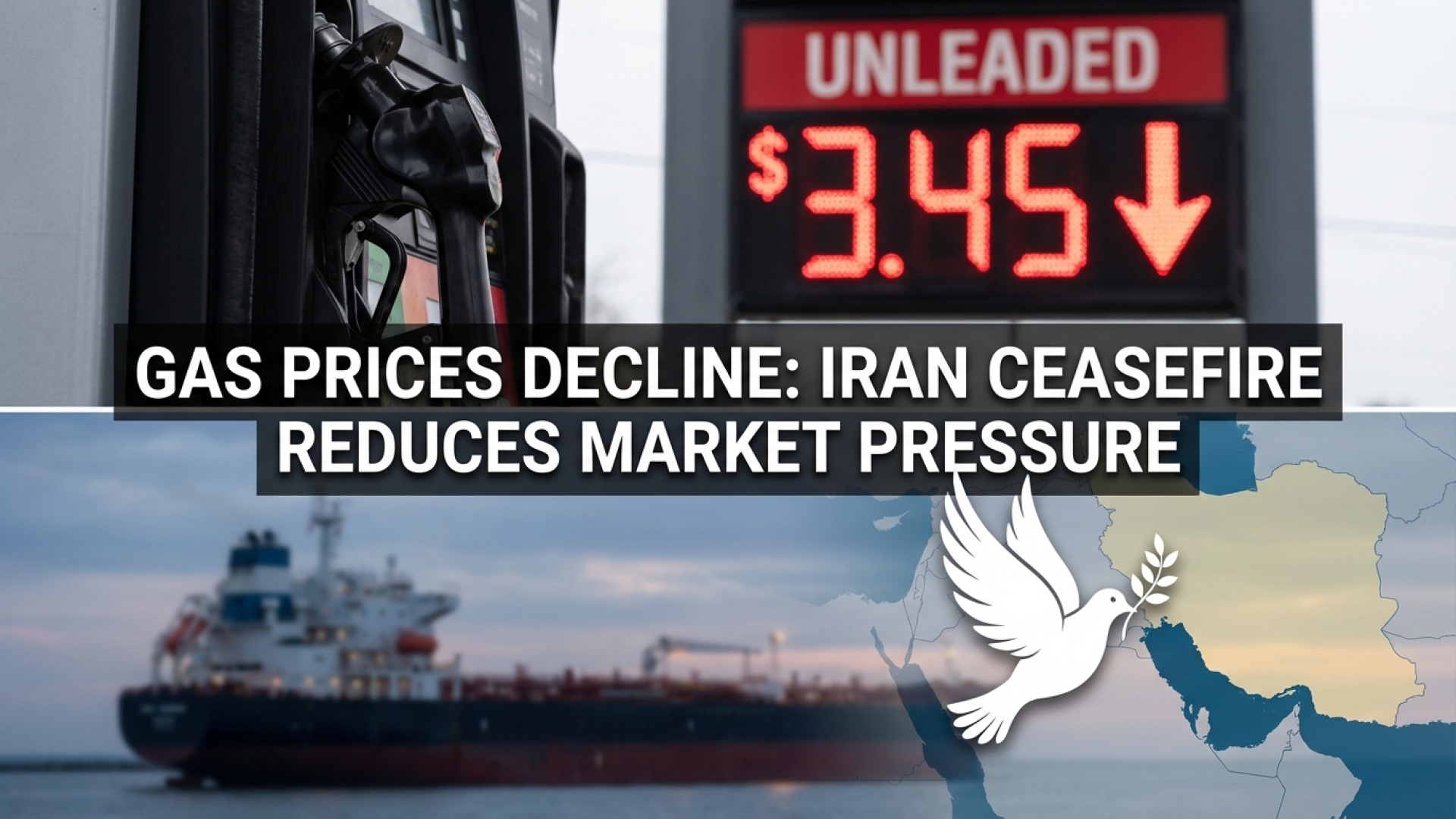
As the United States enters its first full weekend under the recent ceasefire agreement with Iran, gas prices across the nation—and specifically within the Western New York corridor—have begun a welcome downward trend. This shift marks a reprieve for Buffalo-area motorists who have grappled with volatile costs at the pump for much of the year.
The easing of international tensions has directly impacted global oil markets, leading to the reopening of the Strait of Hormuz. As a primary artery for global oil shipments, the stabilization of this route has alleviated the “risk premium” that had been driving crude oil prices above the $100-per-barrel mark.
National and Local Price Trends
According to the latest data from AAA, the national average for a gallon of regular gasoline dipped to $4.135 this Saturday, falling from Friday’s average of $4.153. While the national trend is downward, drivers in Buffalo and the Niagara region continue to see prices that reflect New York State’s specific tax structure and regional supply dynamics.
Historically, Western New York prices tend to track slightly higher than the national average due to state-level fuel taxes, though they remains significantly lower than the record highs of $5.00+ seen in June 2022. The following table illustrates the current price landscape across various regions:
| Region / State | Average Price (Regular) | Trend |
|---|---|---|
| National Average | $4.135 | Decreasing |
| New York State | $4.290 | Stable |
| California | $5.900 | Decreasing |
| Oklahoma | $3.474 | Stable |
| Washington | $5.391 | Decreasing |
Diesel and Logistics Impacts
The Lake Erie Times has also tracked a minor reduction in diesel prices. The national average moved from $5.683 on Friday to $5.670. Despite this marginal decrease, diesel remains near record highs. For the Western New York economy—a vital hub for cross-border logistics and manufacturing—these sustained high diesel costs continue to exert pressure on local supply chains and the final cost of consumer goods found in Buffalo area markets.
Understanding Price Disparities in Western New York
Many Buffalo residents have noted that prices can fluctuate significantly between stations in Amherst, Cheektowaga, and the City of Buffalo. These disparities are driven by several localized and structural factors:
- Taxation: New York maintains one of the highest combined fuel tax rates in the country. While California leads the nation at approximately 71 cents per gallon, New York’s complex mix of excise taxes and petroleum business taxes significantly inflates the base cost compared to states like Alaska (9 cents).
- Logistics and Proximity: Prices are often influenced by a station’s distance from oil refineries and regional distribution terminals. Transporting fuel to more rural parts of the Southern Tier can add incremental costs.
- Market Competition: In high-traffic areas, stations may lower gas prices to attract customers into convenience stores, where profit margins on retail items are typically higher than those on fuel.
The Geopolitical Catalyst
The current volatility trace back to the escalation of conflict in the Middle East starting in late February. As a region that supplies a vast majority of the world’s oil, military tensions immediately resulted in higher costs for crude oil, which is refined into gasoline, diesel, and jet fuel.
While the ceasefire has provided immediate relief, energy analysts remain cautious. With crude oil having repeatedly surpassed the century mark per barrel in recent weeks, the long-term outlook for Lake Erie region motorists remains tied to the stability of these international agreements and the continued flow of oil through global shipping lanes.
Disclaimer: The content provided by Lake Erie Times is for informational purposes only and should not be considered as professional legal or financial advice.
Affiliate Disclaimer: Some links on Lake Erie Times are affiliate links. This means that if you make a purchase through these links, we may earn a commission at no additional cost to you. Our recommendations are based on careful research and our commitment to quality journalism.