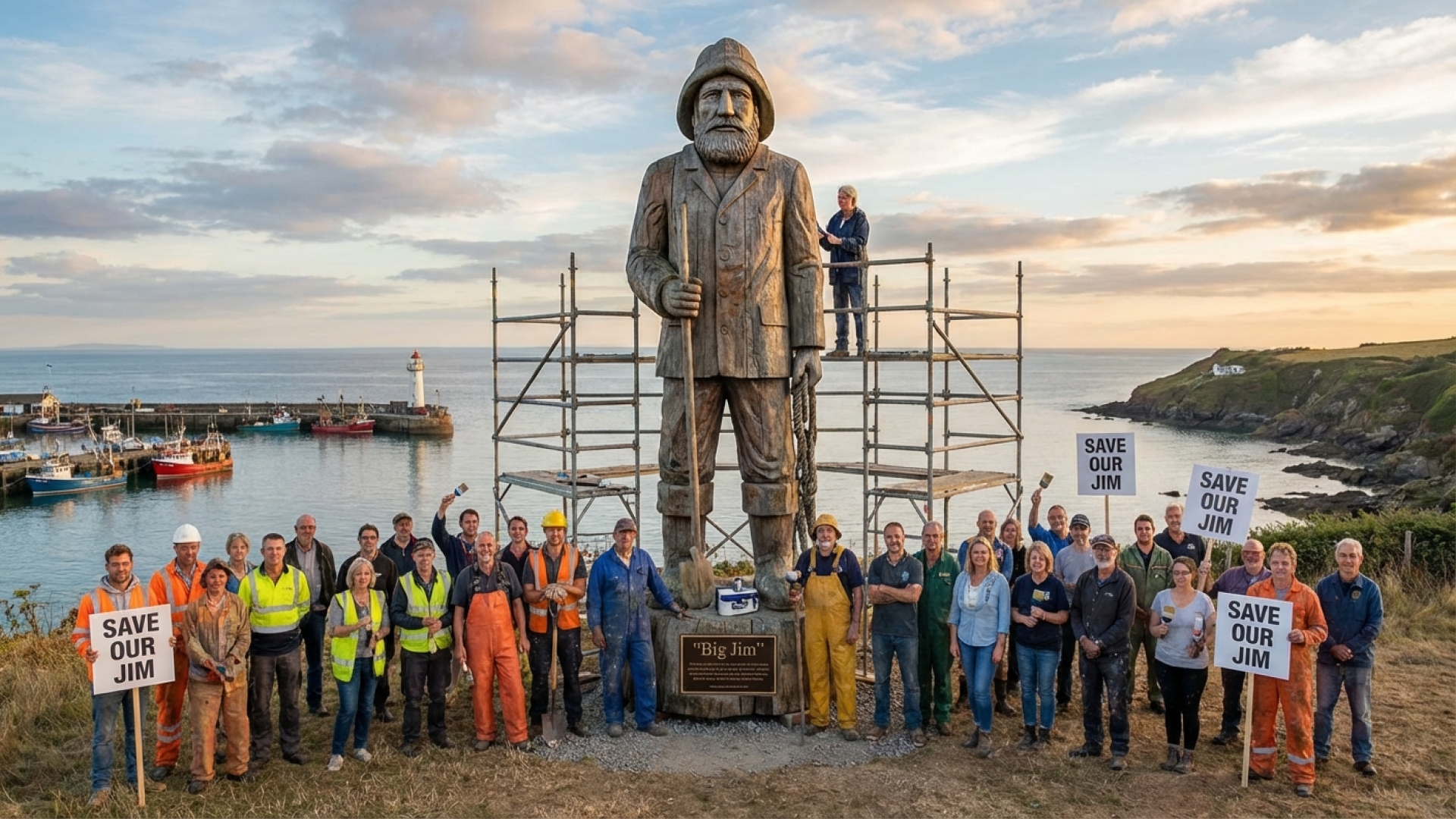
In a move that resonates with the industrial preservation efforts often seen along the Buffalo waterfront, a massive piece of maritime history is undergoing a meticulous revival. “Big Jim,” the iconic 40-foot fisherman statue that once served as a towering sentinel for Maine’s sardine industry, is currently the subject of a sophisticated restoration project. For observers in Western New York, where the preservation of grain elevators and lakefront landmarks is a frequent topic of debate, the story of Big Jim offers a compelling look at how communities can mobilize to protect their cultural and economic identity.
An Investigative Look at Big Jim’s Legacy
The effort to revitalize the monument is led by Kevin Johnson, a photo archivist at the Penobscot Marine Museum. The figure is slated to become the focal point of the museum’s “Sardineland” exhibit, a seasonal display exploring the economic engines of the past. Jennifer Stucker, a board member of the Gouldsboro Historical Society, notes that the statue is more than a roadside attraction; it represents a vanished “economic machine.” At its peak, the sardine fishery was to the Maine coast what the steel and milling industries once were to the Western New York community.
| Project Detail | Information |
|---|---|
| Statue Height | 40 Feet |
| Year Built | 1959 (Kittery, Maine) |
| Current Location | Belmont Boatworks (Restoration Site) |
| Restoration Cost | $30,000 (Funded by public donations) |
| Primary Material | Aluminum panels and steel frame |
Historical Context: From Marketing Tool to Landmark
Constructed in 1959, the figure was originally designed as a larger-than-life advertisement for the state’s booming seafood trade. In a regional dynamic similar to the iconic signage of the Great Lakes, Big Jim was the first sight for many travelers crossing into the region from New Hampshire. By the 1970s, the statue had been relocated to Prospect Harbor, where it transitioned from a commercial advertisement into a beloved coastal landmark. Kevin Johnson underscores this importance, noting that the figure remains the most recognizable symbol of an era that defined the regional economy for generations.
The Technical Challenge of Restoration
Decades of exposure to harsh Atlantic salt air necessitated an intensive structural overhaul. In late March, the monument was disassembled and transported to Belmont Boatworks. Owner Dan Miller, who refers to the deconstructed statue as “flat Jimmy,” is overseeing a crew task with stripping old paint and repairing damaged aluminum panels. This stage of the process requires precision to ensure the structural integrity of the 40-foot frame.
Following the structural repairs, the aesthetic restoration will be handled by mural artists from the WOW Collective. These specialists will apply protective coatings and fresh paint designed to withstand the elements, ensuring the figure’s longevity for the next several decades. This meticulous attention to detail mirrors the high-stakes preservation work often discussed in Buffalo’s own business and development sectors.
Community Mobilization and Future Outlook
What makes this restoration particularly noteworthy is its funding model. Rather than relying solely on large-scale grants, the $30,000 required for the project was raised through hundreds of small, private donations. This grassroots support highlights a deep-seated public commitment to preserving historical markers that tell the story of a region’s labor and industry.
Once the work is completed later this spring, Big Jim will be temporarily installed on the Penobscot Marine Museum’s campus. Following the conclusion of the seasonal exhibit, the fisherman will return to his permanent home in Prospect Harbor. For those of us in Western New York, the successful crowdfunding and restoration of such a massive industrial symbol serves as an inspiring case study in community-driven heritage preservation.
For more in-depth reporting on community issues and regional developments, stay connected with the Lake Erie Times.
About the Author: William Strasmore is a veteran reporter for the Lake Erie Times, specializing in investigative journalism and regional community affairs. His work focuses on the intersection of history, politics, and the economic forces that shape Western New York and beyond.