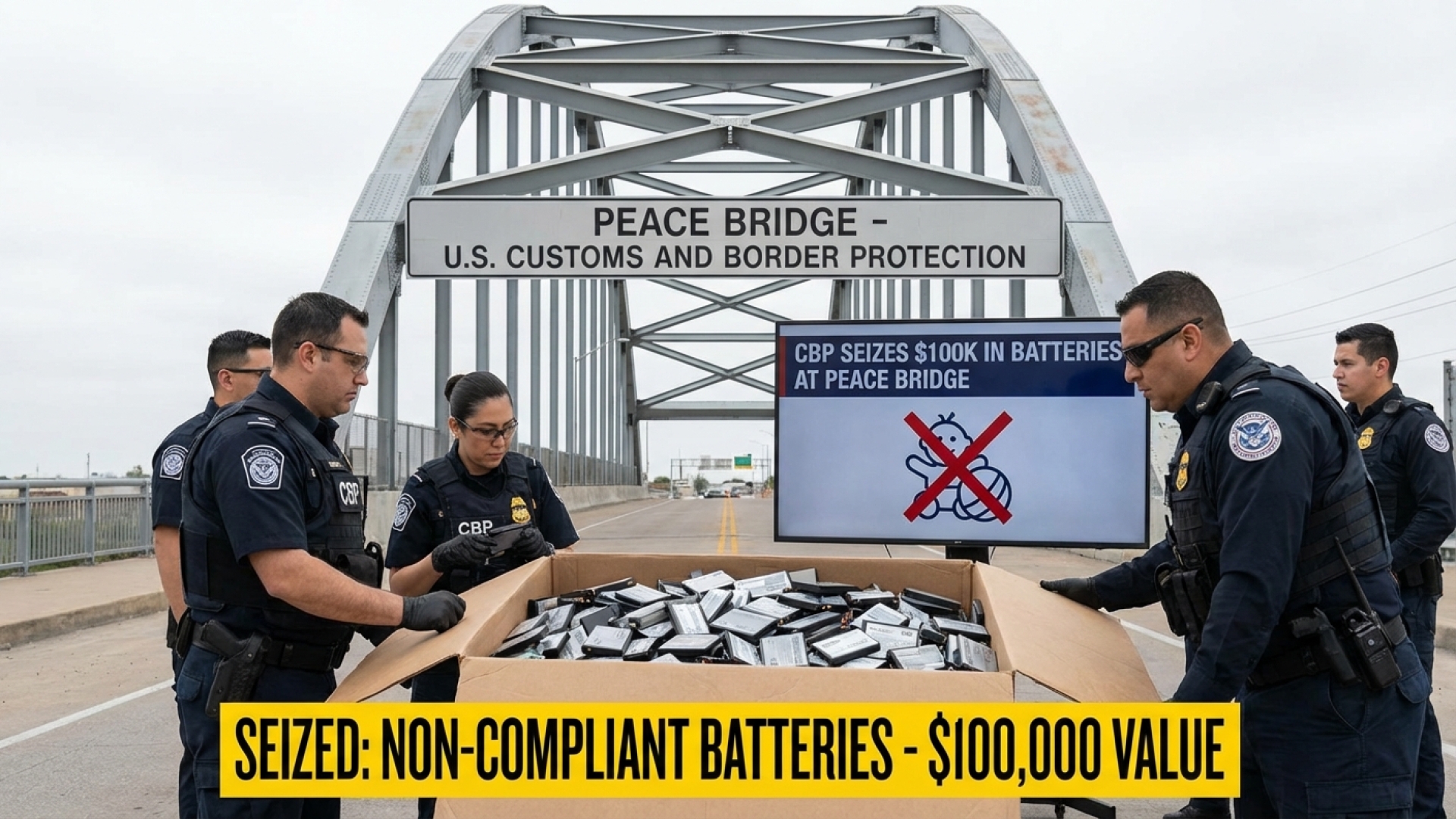
In a major victory for regional consumer protection, federal officers stationed at the Peace Bridge in Buffalo recently intercepted a massive shipment of noncompliant batteries valued at approximately $100,000. This significant seizure highlights the rigorous efforts of U.S. Customs and Border Protection (CBP) to prevent hazardous products from entering Western New York households. The incident serves as a critical reminder of the strict safety standards mandated by Reese’s Law, a federal statute designed to shield children from the life-threatening risks associated with small, ingestible batteries.
Major Intervention at the Peace Bridge
The seizure was the culmination of an investigative process that began in early February at the Peace Bridge warehouse. CBP officers, known for their vigilant oversight of international commerce entering the Buffalo region, flagged a shipment containing nearly 350,000 hearing aid batteries. Following a formal inspection on March 26, samples were coordinated with the Consumer Product Safety Commission (CPSC) for analysis.
The CPSC confirmed that the batteries failed to meet the necessary safety criteria, specifically violating federal mandates regarding child-resistant features. Consequently, the entire $100,000 shipment was detained, preventing these potentially lethal items from reaching local retail shelves or online marketplaces.
| Seizure Detail | Information |
|---|---|
| Location | Peace Bridge Warehouse, Western New York |
| Quantity | Approximately 350,000 units |
| Estimated Value | $100,000 |
| Violation | Noncompliance with Reese’s Law |
| Product Category | Hearing Aid Batteries |
Understanding Reese’s Law and Child Safety
Named in memory of Reese Hamsmith, an 18-month-old who tragically died after swallowing a button battery, Reese’s Law was enacted to address a persistent public health crisis. Button cell and coin batteries—commonly used in small electronics and hearing aids—pose a severe risk if ingested. They can lodge in the esophagus and trigger a chemical reaction that causes catastrophic internal burns in as little as two hours.
To mitigate these risks, the law requires:
- Child-Resistant Compartments: Products must have battery doors that require a tool or a multi-step manual process to open.
- Warning Labels: Clear labeling must be present on both the packaging and the product itself.
- Protective Packaging: Individual batteries sold separately must be encased in packaging that is difficult for young children to open.
For Western New York parents and caregivers, identifying child-resistant button batteries and compliant electronics is a necessary step in home safety. Vigilance at the point of purchase ensures that these “silent killers” remain out of reach of curious hands.
The Responsibility of Manufacturers and Importers
As Western New York continues to serve as a vital gateway for North American trade, the accountability of importers remains a priority for local authorities. Manufacturers have a legal and ethical obligation to ensure that specialized items, such as compliant hearing aid batteries, meet every federal safety benchmark before they arrive at our borders. Failure to do so not only results in significant financial losses for the businesses involved but also endangers the community.
Consumers are encouraged to research products and look for certifications that indicate a manufacturer’s adherence to CPSC standards. Staying informed through resources like the Lake Erie Times Community section can help residents stay updated on local safety alerts and product recalls.
Safeguarding Our Region
The successful interception of 350,000 units at the Peace Bridge underscores the importance of regional investigative journalism and federal oversight. By enforcing Reese’s Law, authorities are effectively reducing the thousands of annual emergency room visits related to battery ingestion. For the families of Buffalo and the surrounding areas, this seizure represents more than just a legal victory—it is a proactive step toward a safer environment for our children.
Disclaimer: The content provided by Lake Erie Times is for informational purposes only and should not be considered as professional legal or financial advice.
Affiliate Disclaimer: Some links on Lake Erie Times are affiliate links. This means that if you make a purchase through these links, we may earn a commission at no additional cost to you. Our recommendations are based on careful research and our commitment to quality journalism.