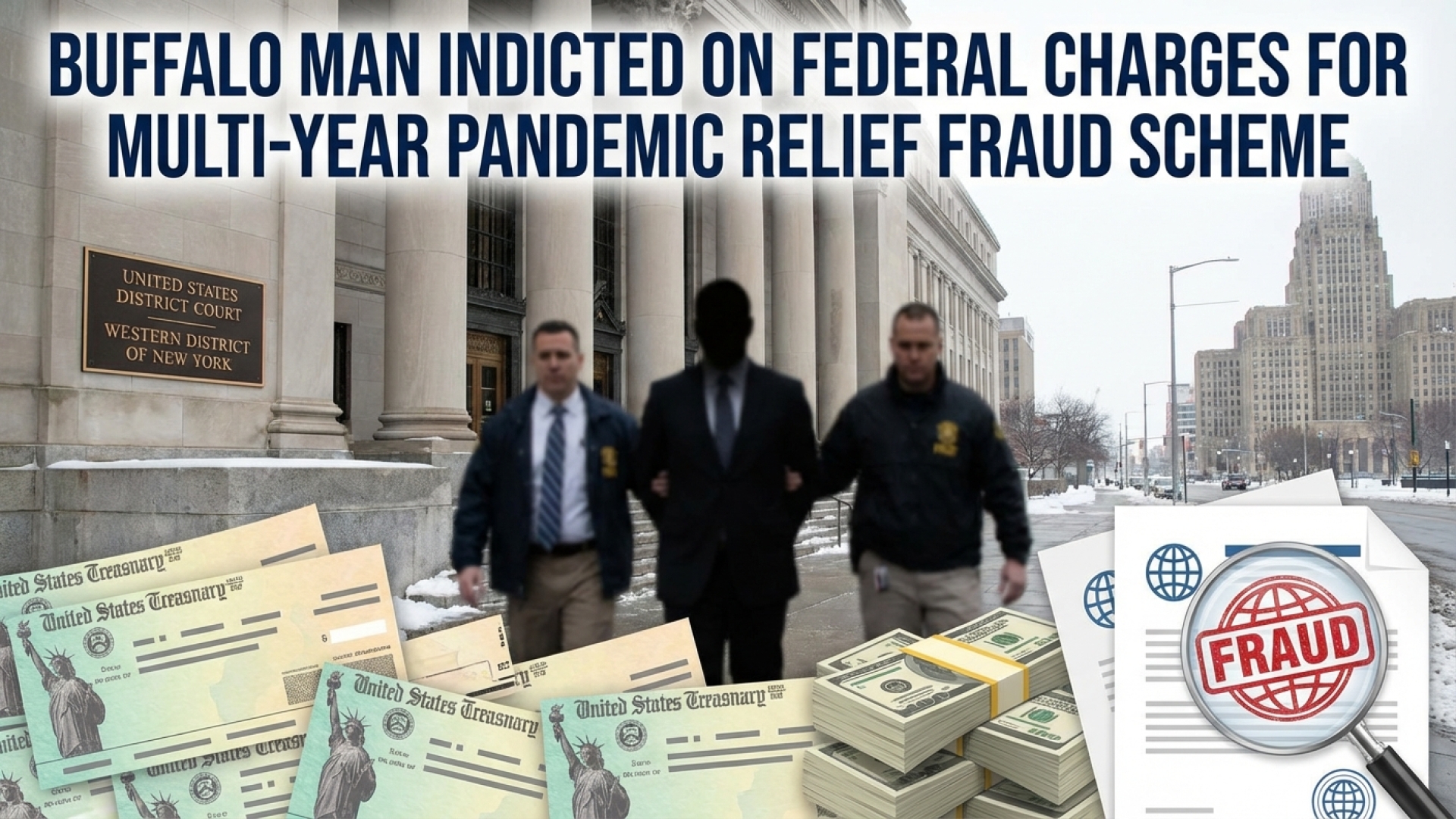
A 24-year-old Buffalo resident is facing a litany of federal charges following a deep-dive investigation into a multi-year conspiracy to defraud financial institutions and the federal government. The case, which highlights ongoing efforts to prosecute pandemic-era relief fraud in Western New York, involves allegations of identity theft and the fabrication of non-existent businesses.
Federal Indictment Unsealed Against Buffalo Resident
Brandon Millender was recently indicted by a federal grand jury on 10 counts, including conspiracy to commit wire fraud, aggravated identity theft, and concealment money laundering. The U.S. Attorney’s Office announced the charges, noting that the legal ramifications for Millender are significant. If convicted on all counts, he faces a maximum penalty of 20 years in federal prison and fines totaling up to $500,000.
As a reporter covering the beat for the Lake Erie Times, I have seen an uptick in federal oversight regarding the distribution of emergency funds. This case serves as a stark reminder of the rigorous audits currently being conducted by the Small Business Administration (SBA) and federal prosecutors.
Anatomy of the PPP Loan Fraud
The indictment alleges that between April 2021 and August 2024, Millender spearheaded a sophisticated operation to exploit the Paycheck Protection Program (PPP). Investigators claim the defendant submitted numerous fraudulent applications for loans and subsequent loan forgiveness by manufacturing “paper” companies. These entities reportedly existed only on the applications, complete with inflated revenue figures and fabricated payroll expenses.
To facilitate the scheme, Millender allegedly utilized stolen personal information, including Social Security numbers and addresses, to open a web of financial accounts. These accounts—ranging from traditional bank lines to digital platforms like CashApp/Block—were used to receive and launder the illicit proceeds.
Scope of Impact and Penalties
The fraudulent activity targeted a variety of local and national financial service providers. According to the U.S. Attorney’s Office, the scheme successfully diverted more than $140,000 in funds intended for struggling small businesses. The following table outlines the key institutions and entities impacted by these alleged actions:
| Affected Institution/Entity | Type of Involvement |
|---|---|
| Small Business Administration (SBA) | Federal Relief Fund Provider |
| Key Bank | Financial Institution |
| Harvest Small Business Finance, LLC | Lending Partner |
| Benworth Capital Partners | Lending Partner |
| CashApp / Block | Digital Payment Processing |
Community Impact and Continued Oversight
For the Buffalo community, these charges underscore the critical importance of integrity in regional economic recovery. While the pandemic relief programs were designed to be a lifeline for legitimate Western New York businesses, the misuse of such funds remains a priority for local law enforcement. For more on how regional policy and legal issues affect our city, visit our Politics and Business sections.
The charges contained in an indictment are merely accusations, and the defendant is presumed innocent unless and until proven guilty in a court of law.
Disclaimer: The content provided by Lake Erie Times is for informational purposes only and should not be considered as professional legal or financial advice. Some links on Lake Erie Times are affiliate links. This means that if you make a purchase through these links, we may earn a commission at no additional cost to you.
About the Author: William Strasmore is a dedicated news reporter in Western New York who delivers in-depth, impartial coverage and incisive analyses on regional issues and community affairs.