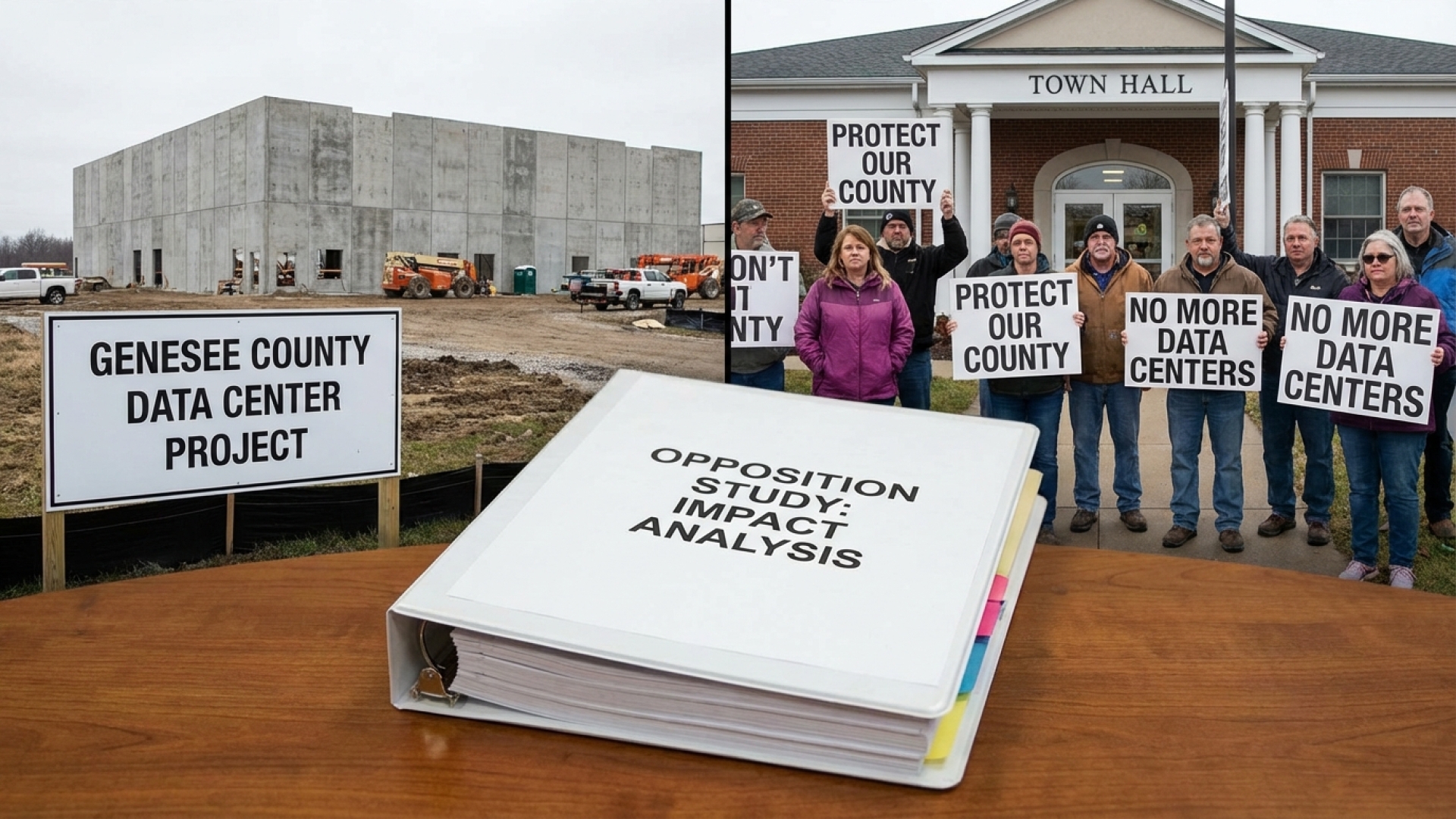
A contentious debate is intensifying in Genesee County as plans move forward for one of the nation’s most massive technological infrastructures. The proposed development, situated at the Science, Technology, and Advanced Manufacturing Park (STAMP) in the town of Alabama, has become a flashpoint for local residents, environmental advocates, and economic planners. While officials see a future of industrial prosperity, critics are raising alarms over the long-term viability and ecological cost of the project.
The Evolution of STAMP and Stream Data Centers
For more than fifteen years, Genesee County economic development leaders have worked to transform 1,200 acres of rural landscape into a premier industrial hub. However, the path to progress at STAMP has been marked by significant hurdles. Previous high-profile tenants, including Plug Power, faced setbacks or withdrawals, while others like Edwards Vacuum have seen their operational timelines delayed well beyond original estimates. This history of “starts and stops” has fueled skepticism among some Western New York community members regarding the park’s ultimate success.
The latest and most ambitious proposal comes from Stream Data Centers. This $20 billion initiative seeks to build a massive complex roughly the size of 40 football fields. To support this massive private investment, the project is slated to receive an estimated $1.5 billion in public subsidies. Proponents argue the scale of the investment justifies the support, pointing to significant regional growth.
According to project filings and local business reports, the anticipated economic impacts include:
| Metric | Projected Impact |
|---|---|
| Total Capital Investment | $20 Billion |
| Estimated Public Subsidies | $1.5 Billion |
| Temporary Construction Jobs | 1,200 |
| Permanent Operational Roles | 125 |
| Project Footprint | ~40 Football Fields |
Opposition Groups Challenge Economic and Environmental Validity
Despite the promise of jobs and tax revenue, the “mega data center” faces a wall of opposition. Sarah Howard, representing the Friends of the Seneca Tuscarora Nation, recently emphasized that the rural character of Alabama makes it an unsuitable site for such high-density industrialization. The sentiment is echoed by local advocates like David Alton of Batavia, who suggests that Western New York’s numerous brownfield sites—land already utilized for industry—would be far more appropriate for such a project than pristine farmland.
Adding weight to these concerns, a newly released study by the Applied Economics Clinic suggests that the economic benefits may be overstated. Opponents argue that the permanent job creation is minimal relative to the massive land use and energy consumption required. Furthermore, the site’s proximity to two major wildlife refuges has sparked fears regarding noise, light pollution, and the potential disruption of local ecosystems.
GCEDC and Developers Defend the Vision
The Genesee County Economic Development Council (GCEDC) has been quick to counter these claims, labeling the opposition’s study as a “flawed” attempt to stall regional progress. In an official statement, the GCEDC alleged that the report intentionally skewed data to mislead the public during the formal review process. They maintain that the STAMP site was specifically designated for this type of high-value, modern industrial use.
Bradley Wells, Senior Project Development Manager for the developer, defended the project’s environmental footprint. Wells stated that the modern design of the campus ensures it will be a “quiet, clean, and high-value neighbor” for the town of Alabama. He maintains that the project aligns with the county’s long-term strategy for technological innovation and economic stability.
Next Steps: Public Hearing
As the local political climate heats up, the community will have a formal opportunity to weigh in. A public hearing is scheduled for Thursday at 4 PM at the Alabama Fire Hall. This meeting is expected to draw significant attendance from both supporters and critics, as the county decides whether this $20 billion bet on the future of data is the right move for rural Genesee County.
Lake Erie Times will continue to monitor the developments at STAMP and provide updates on the outcome of the public hearing and subsequent regulatory decisions.
Disclaimer: The content provided by Lake Erie Times is for informational purposes only and should not be considered as professional legal or financial advice. Some links on Lake Erie Times are affiliate links. This means that if you make a purchase through these links, we may earn a commission at no additional cost to you.