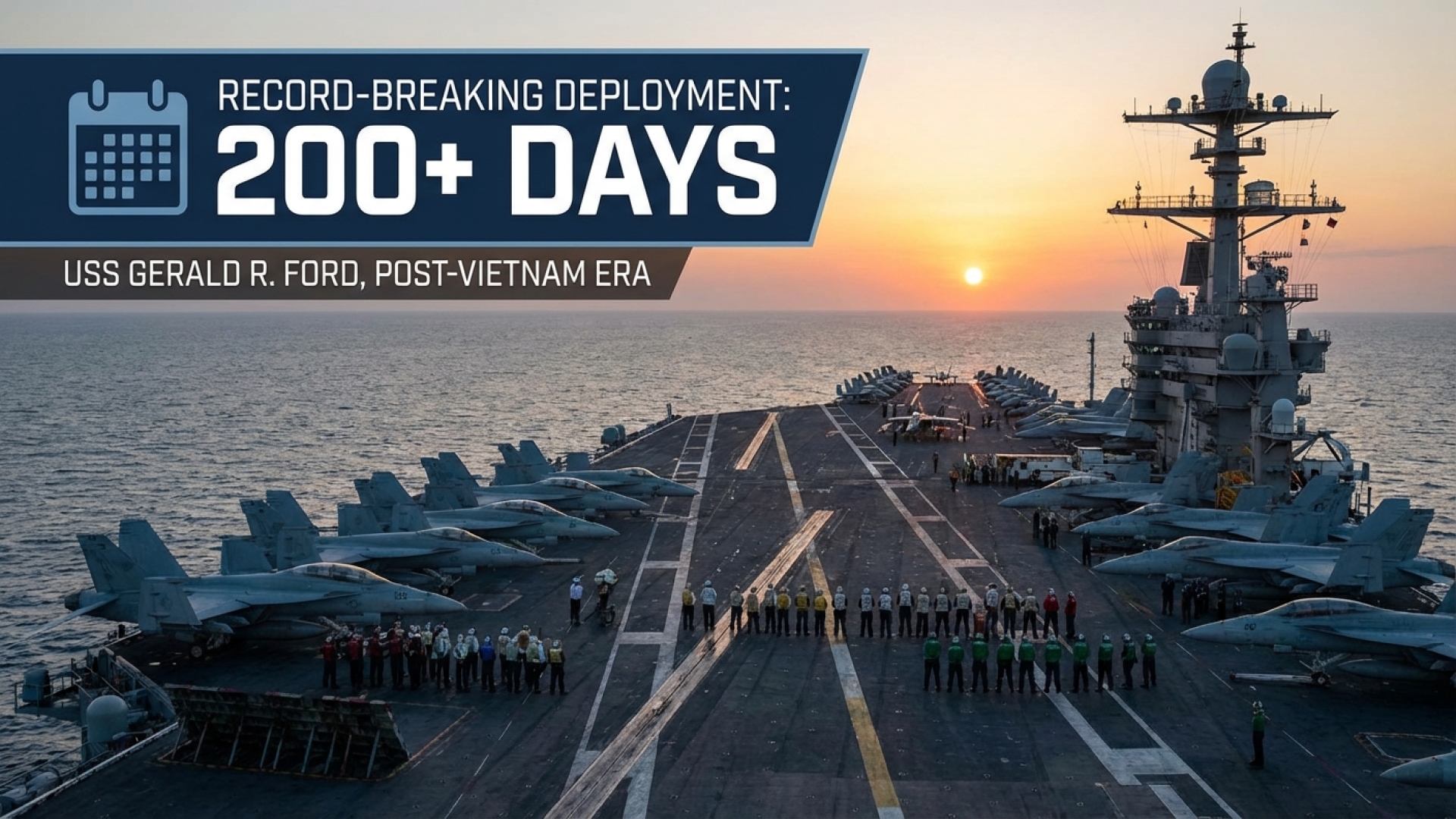
The USS Gerald R. Ford (CVN 78) has officially etched its name into the naval record books, completing the longest deployment for a U.S. aircraft carrier since the Vietnam War. This milestone comes as a testament to the resilience of the American fleet, though it brings to light significant questions regarding the operational pressure placed on modern naval assets and the families who support them, including those across Western New York with loved ones serving at sea.
Departing from its homeport at Naval Station Norfolk, the Gerald R. Ford has navigated a grueling itinerary through the Mediterranean and the Middle East. Tasked with maintaining stability during heightened regional tensions, the carrier’s presence has been a cornerstone of U.S. strategy in response to evolving global conflicts. However, the prestige of a record-breaking mission is currently being weighed against the human cost of prolonged service.
Operational Strain and the Human Cost
Initially scheduled to return to port before the holiday season, the crew’s deployment has been extended twice due to volatility in the Middle East. Current projections suggest the deployment will reach approximately 11 months. For the sailors aboard, these extensions are more than just tactical shifts; they represent nearly a year of separation from home, a duration that hasn’t been seen in over five decades.
| Vessel Name | Conflict/Era | Approx. Deployment Length |
|---|---|---|
| USS Gerald R. Ford (CVN 78) | Modern Era (2023-2024) | 11 Months |
| USS Nimitz (CVN 68) | COVID-19 Pandemic (2020) | 10 Months |
| Various Carriers | Vietnam War | 9-11+ Months |
The Lake Erie Times has closely monitored the impact of military readiness on the Western New York community. Senator Tim Kaine of Virginia has been a vocal advocate for the crew, raising alarms regarding the mental health and well-being of the personnel. Kaine’s inquiries to Navy leadership emphasize that while the ship’s advanced technology is a marvel of engineering, the “wear and tear” on the sailors is reaching a critical threshold.
Living Conditions and Safety Concerns
The psychological burden of an extended deployment was further compounded by a recent onboard fire. While the fire was contained, it rendered several berthing areas uninhabitable, leaving hundreds of sailors without proper sleeping quarters. This incident has served as a flashpoint for critics of the Navy’s current deployment cycles, highlighting the difficulties of maintaining a “state-of-the-art” vessel under constant operational duress.
As the USS Gerald R. Ford prepares for an anticipated return to Norfolk in May, the Navy faces a difficult balancing act. Ensuring maritime security requires a persistent presence, yet the sustainability of 11-month deployments is under intense scrutiny. For the families in the Buffalo region and beyond, the safe return of these sailors remains the primary focus, while policymakers must now grapple with the long-term effects on recruitment and retention within the fleet.
Disclaimer: The content provided by Lake Erie Times is for informational purposes only and should not be considered as professional legal or financial advice. Some links in this article may be affiliate links; we may earn a commission at no additional cost to you based on our commitment to quality journalism.