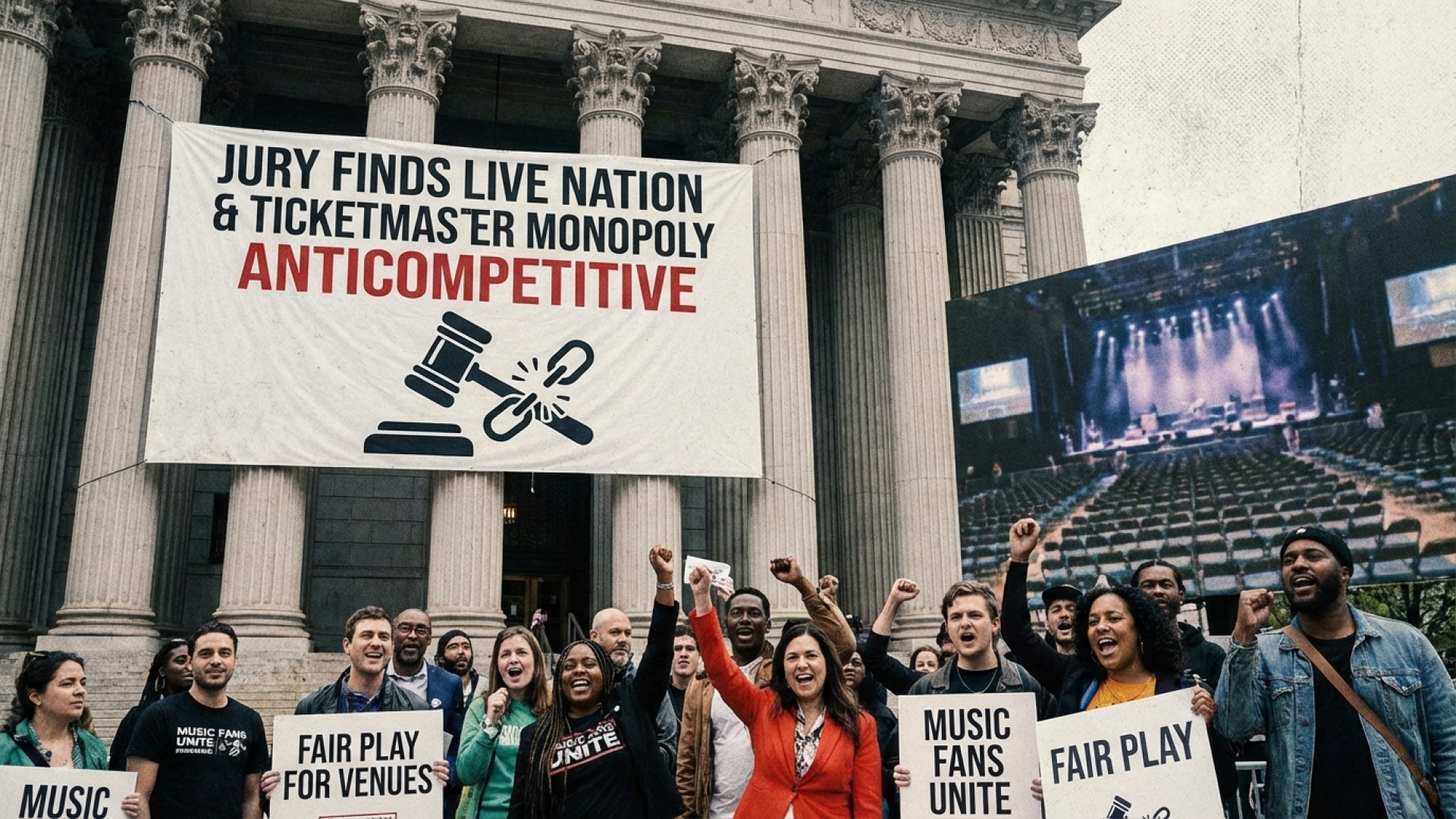
A New York jury has delivered a landmark verdict against entertainment behemoth Live Nation and its subsidiary Ticketmaster, finding the entities guilty of maintaining an anticompetitive monopoly over major concert venues. The decision, reached after four days of intense deliberation, marks a pivotal moment in a civil case that has been closely monitored by industry analysts and concertgoers from Buffalo to Manhattan.
For residents in Western New York, where venues like the Darien Lake Amphitheater and Buffalo’s KeyBank Center rely heavily on these platforms, the verdict carries significant weight. As the Lake Erie Times continues to track regional economic shifts, this ruling suggests a potential sea change in how live events are priced and managed across the Empire State.
Quantifying Market Dominance
Live Nation Entertainment’s reach is unparalleled, with the company owning, operating, or holding equity in hundreds of global venues. Its subsidiary, Ticketmaster, remains the primary gateway for live event access. During the trial, legal counsel for the participating states presented data illustrating the sheer scale of this dominance.
| Market Category | Estimated Market Share |
|---|---|
| Major Concert Events | 86% |
| Overall Live Events (including Sports) | 73% |
Established in 1976 and merged with Live Nation in 2010, Ticketmaster has long been accused of using its market position to stifle smaller competitors. Jeffrey Kessler, an attorney representing the coalition of states, characterized the organization as a “monopolistic bully” that systematically drove up costs for the average ticket buyer.
The Defense: Success Is Not a Crime
Throughout the proceedings, Live Nation’s legal team maintained that their market position was the result of operational excellence rather than predatory practices. Defense attorney David Marriott argued that pricing structures and ticketing protocols are largely dictated by the artists, sports franchises, and independent venues themselves.
“Success is not against the antitrust laws in the United States,” Marriott stated, asserting that the company’s growth was a natural byproduct of its efficiency and the high demand for its integrated services.
From Pearl Jam to Modern Litigation
The tension between artists and the ticketing giant is far from new. In the mid-1990s, the band Pearl Jam famously challenged Ticketmaster’s business model, filing an anti-monopoly complaint with the U.S. Department of Justice. While that initial effort did not result in federal prosecution, it laid the groundwork for decades of public scrutiny.
The current legal battle saw a shift in momentum during the transition between federal administrations. While the Justice Department under President Joe Biden initially pushed for aggressive action, a recent settlement was reached involving a cap on service fees at certain amphitheaters and the introduction of new ticketing options for independent promoters. This settlement could theoretically allow competitors like SeatGeek or AXS to gain a foothold in markets previously locked down by Ticketmaster. However, more than 30 states, including New York, moved forward with the trial, arguing that federal concessions did not go far enough to protect consumers.
Internal Revelations and the Taylor Swift Debacle
The trial featured high-stakes testimony, including an appearance by Live Nation CEO Michael Rapino. Under oath, Rapino addressed the 2022 Taylor Swift ticketing crisis, which left millions of fans unable to purchase seats. While Rapino attributed the failure to a sophisticated cyberattack, the prosecution focused on internal communications that suggested a different corporate culture.
Evidence presented included messages from executive Benjamin Baker, in which he described certain pricing tiers as “outrageous” and claimed the company was “robbing them blind.” Baker later apologized on the stand, characterizing his comments as “immature and unacceptable.”
The Road Ahead for WNY Concertgoers
As an investigative reporter covering community affairs and regional events for the Lake Erie Times, I have observed how rising ticket costs impact the cultural fabric of Western New York. This verdict represents a victory for those advocating for transparency and competition.
While the immediate impact on ticket prices remains to be seen, the ruling provides a legal framework for future challenges to the Live Nation-Ticketmaster vertical integration. For now, the industry awaits the sentencing and remedy phase of the trial, which could determine if the company will be forced to divest certain assets or alter its exclusive venue contracts.
Lake Erie Times is your comprehensive source for the latest news and insights from Buffalo and the broader Western New York region. Our commitment to quality journalism ensures you stay informed on the issues that matter most to our community.
Disclaimer: The content provided by Lake Erie Times is for informational purposes only and should not be considered as professional legal or financial advice. Some links on our site may be affiliate links; however, our recommendations are based on rigorous research and journalistic integrity.