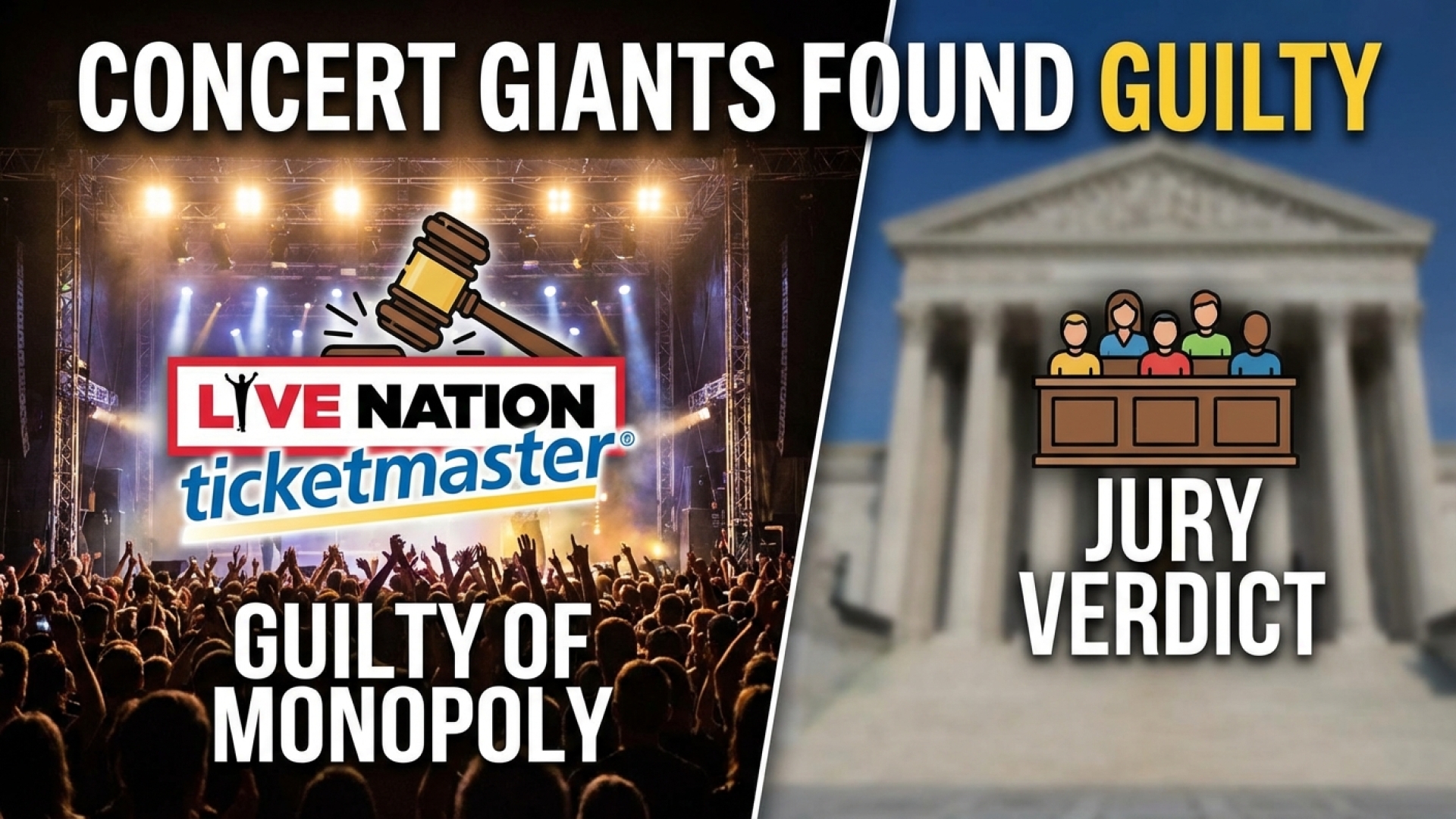
A Manhattan federal jury has delivered a seismic blow to the concert industry’s most powerful entity, finding Live Nation and its subsidiary Ticketmaster guilty of operating an illegal monopoly. This landmark verdict, following a high-stakes civil case, offers a rare, unvarnished look at the internal mechanics of a company that has long dominated the live entertainment landscape—a dominance felt acutely by concert-goers across Western New York, from Buffalo’s KeyBank Center to the Darien Lake Amphitheater.
Federal Jury Affirms Monopolistic Control
The decision came after four days of deliberation, concluding a trial that scrutinized the business relationship between Live Nation and the venues it controls. The jury found that the company maintained anti-competitive control over major concert venues, stifling rival promoters and ticketing platforms. While the U.S. Department of Justice initially sparked the investigation, dozens of states pushed the case forward, arguing that the company’s reach has become a barrier to a fair market. The presiding judge has now tasked legal teams with proposing a schedule for the remedies phase, which could potentially reshape how live events are sold and managed.
The Scale of Dominance: By the Numbers
For decades, critics have argued that the 2010 merger between Live Nation and Ticketmaster created an entity too large to challenge. The following data, presented during the trial, illustrates the current market capture of the combined firm:
| Market Segment | Estimated Control |
|---|---|
| Major Concert Venues | 86% |
| Overall Live Events (including Sports) | 73% |
| Booking and Venue Management | Hundreds of Venues Worldwide |
Allegations of Market Bullying
The core of the litigation focused on “bully” tactics. Plaintiffs argued that Live Nation leveraged its vast portfolio of artists and venues to pressure stadium owners into exclusive contracts. This exclusivity prevented venues from using alternative ticketing services like SeatGeek or AXS, which in turn eliminated price competition. Jeffrey Kessler, the lead attorney for the states, characterized the company as a “monopolistic bully” responsible for the skyrocketing costs of attendance.
In its defense, Live Nation contended that it is a victim of its own success rather than a predator. Defense counsel argued that ticket prices are set by the artists and their management teams, not the ticketing platform, and that the company’s size is a byproduct of efficient operations and a superior product.
Western New York Impact and Historical Context
The frustrations voiced in the Manhattan courtroom echo sentiments often shared by residents in the Buffalo region. As the primary gatekeeper for major tours visiting the Lake Erie area, the Live Nation-Ticketmaster ecosystem has faced local scrutiny regarding service fees and ticket availability. Historically, this tension is not new; the industry has faced similar complaints dating back to the 1990s when Pearl Jam famously challenged Ticketmaster’s fee structure. However, the current verdict represents the first time a legal challenge of this scale has successfully branded the company a monopoly in a court of law.
Trial Revelations: Cyberattacks and Controversial Emails
The trial featured high-profile testimony from Live Nation CEO Michael Rapino, who was questioned extensively about the 2022 Taylor Swift ticketing collapse. While Rapino attributed that incident to a sophisticated cyberattack, the trial also brought to light embarrassing internal communications. Jurors were shown messages from executive Benjamin Baker, who referred to customers as “so stupid” and joked about “robbing them blind.” Though Baker later apologized, calling the remarks “immature,” the evidence appeared to bolster the prosecution’s narrative of a company disconnected from the interests of the public.
What Comes Next?
While the jury has spoken on the existence of a monopoly, the “remedies” are still to be decided. This next phase is critical for the future of the industry. Possible outcomes range from mandated changes in contract lengths with venues to the potential forced divestiture of Ticketmaster from Live Nation. For Western New York music fans, the hope is that a more competitive market will eventually lead to more transparent pricing and improved access to the region’s premier cultural events.
For continued coverage on how regional business and legal shifts affect our community, stay connected with the Lake Erie Times business section.
About the Author: William Strasmore is a dedicated news reporter for the Lake Erie Times, specializing in investigative journalism and regional affairs. With a commitment to accuracy and integrity, William provides the Western New York community with in-depth analysis of the issues that matter most to Buffalo and the surrounding region.
Disclaimer: The content provided by Lake Erie Times is for informational purposes only and should not be considered as professional legal or financial advice. Some links on Lake Erie Times are affiliate links. This means that if you make a purchase through these links, we may earn a commission at no additional cost to you.