Skywatchers in Buffalo and across Western New York on the hunt for the northern lights may find it harder than usual to coordinate their sightings. The National Oceanic and Atmospheric Administration (NOAA) has reported that its primary prediction tool is currently experiencing an outage, making real-time forecasting for the aurora borealis a significant challenge for local enthusiasts eager to witness the celestial display over Lake Erie.
To ensure you are prepared for sudden visibility despite these technical difficulties, equipping yourself with the right gear is essential. A high-quality pair of astronomy binoculars can significantly enhance your ability to spot faint glows on the horizon, while a professional cold-weather viewing gear set is indispensable for the often-freezing night temperatures common in our region during peak viewing months.
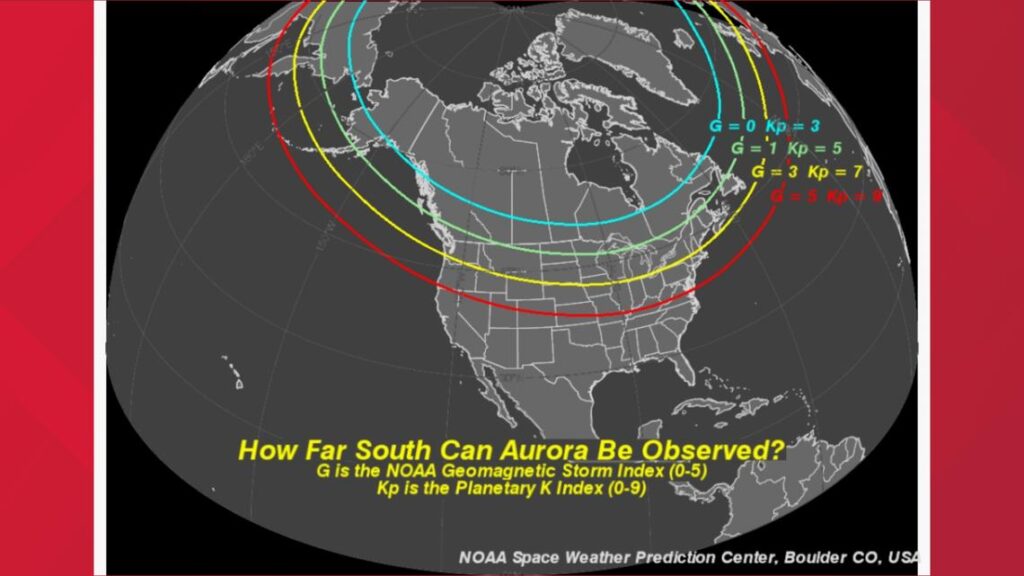
The NOAA confirmed that its aurora timeline viewer—a vital resource displaying a map of how far south the northern lights will be visible—is currently offline. “The Aurora Timeline Viewer Product will be unavailable until further notice,” the agency stated, citing technical issues. This tool is typically the go-to resource for residents in the northern United States to determine if a trip to a dark-sky location is warranted.
In the interim, the Space Weather Prediction Center recommends that observers utilize the agency’s three-day forecast. While this text-based update lacks the interactive visual map, it is updated twice daily. By matching the forecasted Kp value with generalized visibility lines, Western New Yorkers can estimate the likelihood of a local appearance. Additionally, the 30-minute forecast model remains functional, providing a short-term window for aurora activity.
Understanding the Kp Index
The “Kp” index is the metric used to measure geomagnetic activity. A higher index indicates a more intense and widespread display. For those hoping to document these rare events, a low-light astrophotography camera is highly recommended to capture the intricate details of the auroral display that the naked eye might miss.
| Kp Index | Activity Level | Visibility & Geographic Reach |
|---|---|---|
| 0 – 2 | Low | Aurora is dim and restricted to high polar latitudes. |
| 3 – 5 | Moderate | Aurora moves further from poles; becomes brighter with visible motion. |
| 6 – 7 | High | Aurora may be visible along the northern U.S. border, including Western NY. |
| 8 – 9 | Extreme | Spectacular displays; aurora may be seen directly overhead in mid-latitudes. |
What Drives the Northern Lights?
The northern lights are the result of solar particles interacting with Earth’s magnetic field. The sun continuously emits solar wind, which can intensify during “coronal mass ejections” or solar flares. When these particles collide with gases in our upper atmosphere, they release energy in the form of light.
The specific gases involved dictate the colors of the display—oxygen typically produces green and red, while nitrogen results in blue and purple hues. While wide-field viewing is best for the aurora, many local observers also utilize a night sky telescope to view other celestial bodies while waiting for the lights to peak. Lake Erie Times will continue to monitor the status of NOAA’s forecasting tools to keep the Buffalo community informed of future viewing opportunities.
The content provided by Lake Erie Times is for informational purposes only and should not be considered as professional legal or financial advice. Some links on Lake Erie Times are affiliate links. This means that if you make a purchase through these links, we may earn a commission at no additional cost to you. Our recommendations are based on careful research and our commitment to quality journalism.