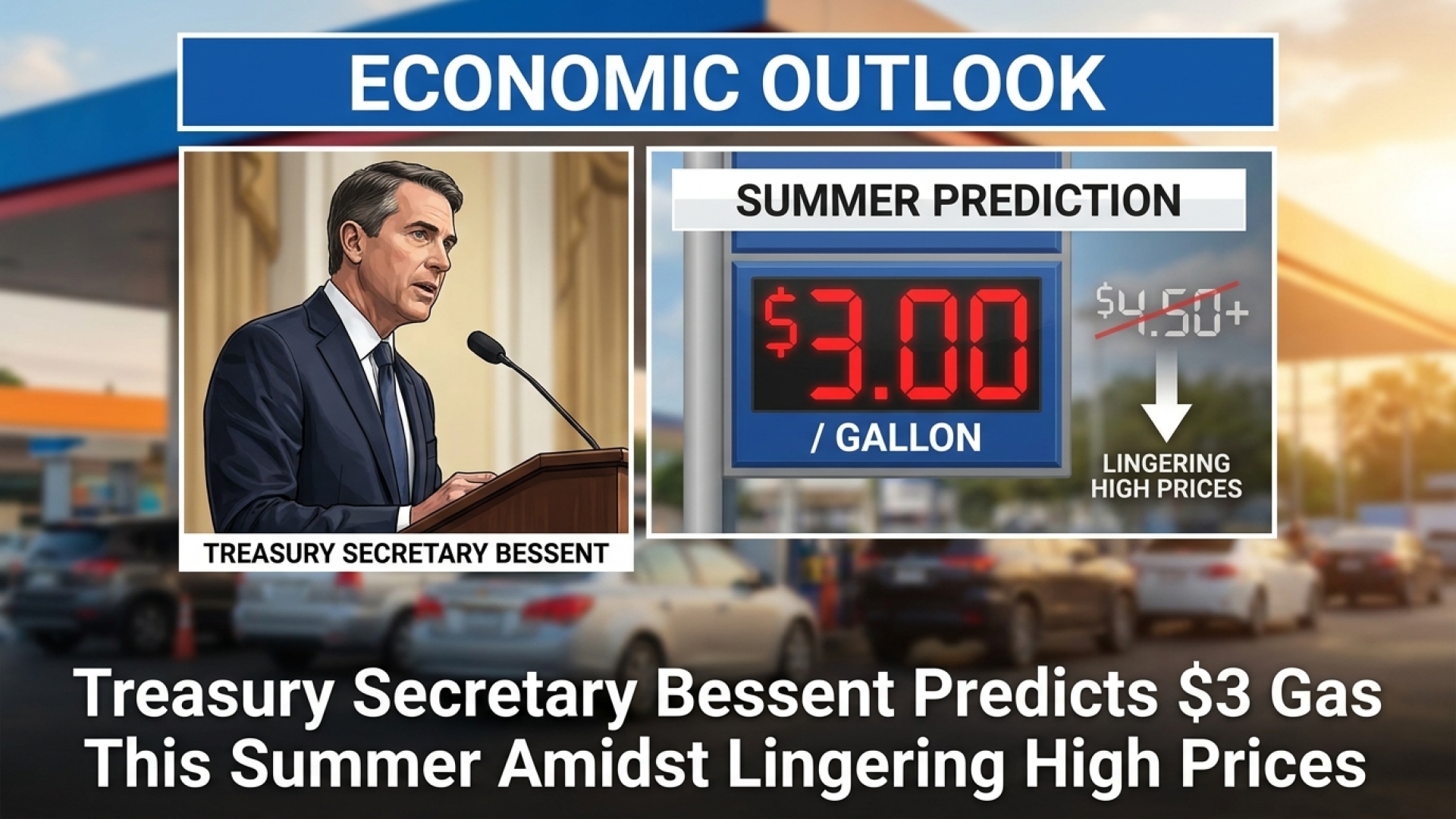
While Treasury Secretary Scott Bessent projects a return to $3 gas by late summer, commuters across Western New York continue to face significant pressure at the pump. National averages remained elevated on Thursday, even as international diplomatic efforts and shifting trade routes began to influence the global energy market.
Current National and Regional Averages
According to data from AAA, the national average for a gallon of regular gasoline sat at $4.093 on Thursday. While this represents a marginal decrease from earlier in the week, prices are approximately 92 cents higher than this time last year. For residents in the Buffalo-Niagara region, these fluctuations are a primary driver of the local business and economic climate.
Diesel fuel, a critical component for the region’s logistics and transportation sectors, saw a slight dip to $5.614 per gallon. Despite this minor reprieve, diesel remains near record highs, maintaining significant strain on local supply chains and the cost of consumer goods.
Projecting a Summer Decline: The Bessent Outlook
Treasury Secretary Scott Bessent recently offered an optimistic timeline for relief, suggesting that gas prices could drop below the $4 threshold between June and September. Bessent noted that discussions with Middle Eastern finance ministers suggest a potential surge in production following the anticipated reopening of the Strait of Hormuz.
“I’m optimistic that during the summer we will see gas with a $3 in front of it sooner rather than later,” Bessent told reporters, citing the possibility of increased pumping within one week of the waterway’s stabilization. This development is closely watched by political analysts who see energy costs as a pivotal issue for the upcoming season.
Geopolitical Tensions and the Strait of Hormuz
The current volatility stems largely from a complex situation in the Middle East. Despite a ceasefire agreement with Iran, the Strait of Hormuz—a conduit for 20% of the world’s crude oil—remains restricted. Competing blockades involving both Iranian and U.S. military forces have choked trade routes, keeping global crude prices frequently above the $100-per-barrel mark.
Regional Comparison of Gas Prices
Fuel costs continue to show wide disparities across the United States. While Western New York residents feel the burn of New York’s specific tax structures, the West Coast remains the most expensive region in the country.
| State/Region | Average Price (Regular) | Market Standing |
|---|---|---|
| California | $5.864 | Highest in Nation |
| Hawaii | $5.659 | Significantly Elevated |
| Washington | $5.388 | Above $5 Average |
| New York Average | $4.251 | Regional Context |
| Oklahoma | $3.435 | Lowest in Nation |
Why Local Prices Vary
As William Strasmore frequently explores in his community reports, the price at the pump is determined by more than just global oil markets. Several local factors play a role:
- State Taxation: New York’s fuel taxes significantly outpace states like Alaska, which maintains some of the lowest fees in the country.
- Logistics: Proximity to refineries and the reliability of regional pipelines impact the final retail price.
- Market Competition: Local gas station density often dictates how quickly stations lower prices to attract customers. Retailers often use gasoline as a “loss leader” to drive foot traffic for higher-margin interior sales.
Historical Context and Economic Impact
To provide perspective, the all-time record for national average gas prices was set in June 2022 at just over $5 per gallon, spurred by the initial conflict in Ukraine. The current surge, initiated by the February 28 escalation in the Middle East, mirrors that volatility. High fuel costs do more than affect drivers; they ripple through the lifestyle and budgets of every Western New York household by increasing the cost of delivery, air travel, and groceries.
The Associated Press and Lake Erie Times staff contributed to this report. For more in-depth reporting on local economic shifts, visit our local news section.
Disclaimer: The content provided by Lake Erie Times is for informational purposes only and should not be considered as professional legal or financial advice. Some links on Lake Erie Times are affiliate links. This means that if you make a purchase through these links, we may earn a commission at no additional cost to you.