Flesh-Eating “Screwworm” Parasite Nears U.S. Border: What Western New York Residents Should Know
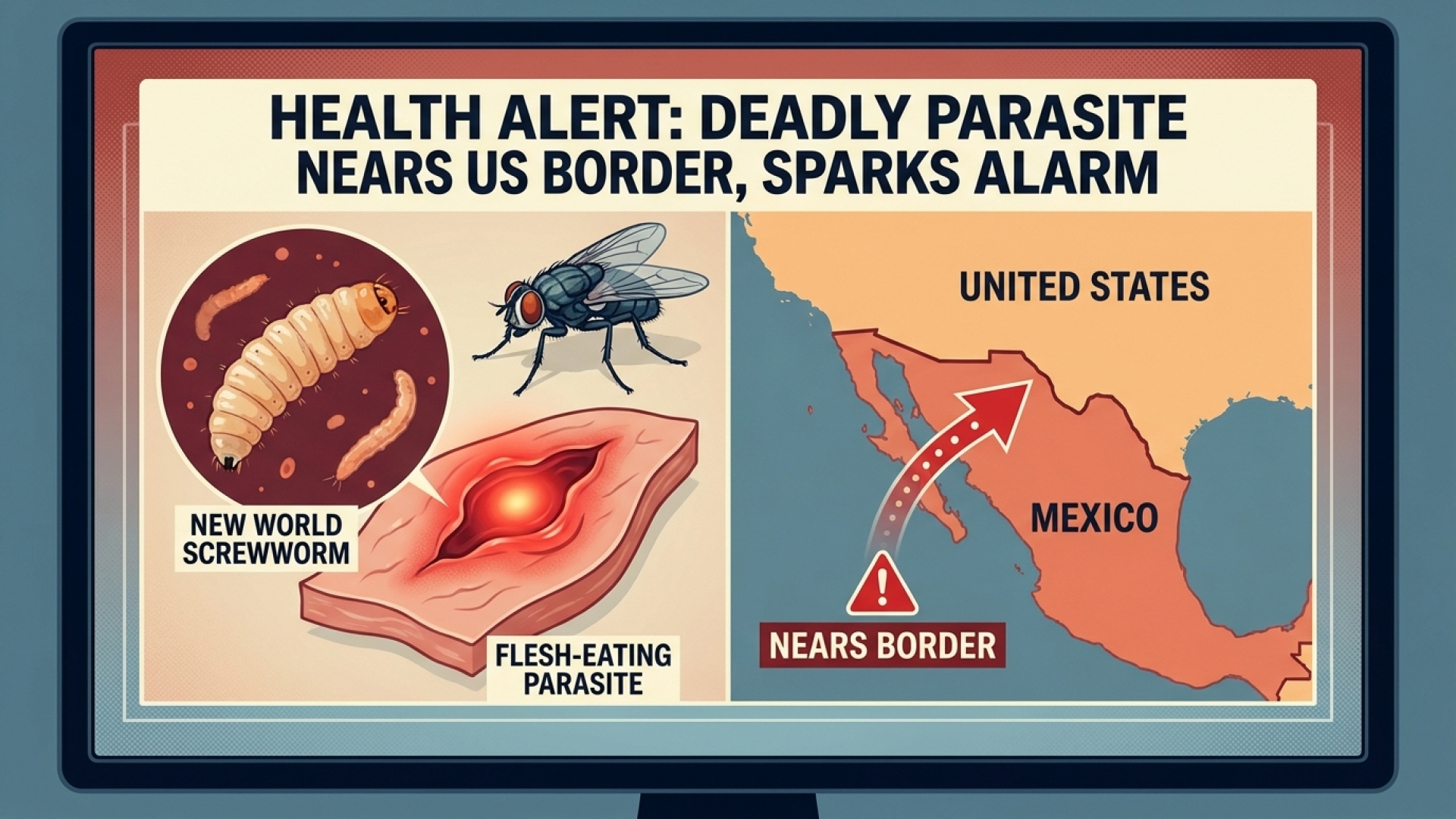
While Western New York remains focused on the seasonal shifts of Lake Erie, a biological threat is mounting thousands of miles to the south that has federal officials and agricultural experts on high alert. The New World screwworm, a notoriously aggressive flesh-eating parasite, has been detected within 90 miles of the U.S. border, marking its closest approach in decades.
At Lake Erie Times, we prioritize keeping our community informed on regional and national issues that impact our economy and health. Although the current sightings are concentrated near the Texas-Mexico border, the potential for rapid spread through livestock transport and travel makes this a significant concern for the nation’s $600 billion agricultural sector—including the dairy and cattle farms that power the Western New York economy.
The Biology of a Biological Hazard
The New World screwworm (Cochliomyia hominivorax) differs from common houseflies in its chilling reproductive cycle. While most flies seek out decaying matter, the screwworm targets living, warm-blooded animals. The female fly lays eggs in even the smallest of open wounds. Once they hatch, the larvae—distinguished by their screw-like ridges—burrow into the living tissue to feed.
This infestation, known as myiasis, can cause profound tissue destruction. Historically, this parasite caused nearly $3.6 billion in annual losses across South America and the Caribbean. If left untreated, infections in livestock or humans can be fatal within days as the larvae consume healthy muscle and nervous tissue.
Rapid Proliferation Near the Border
The situation escalated recently when a confirmed case was identified in Nuevo León, Mexico. This follows a troubling report from the Centers for Disease Control and Prevention (CDC) highlighting a spike in cases in Tamaulipas, where infections nearly quadrupled in a single week. Texas Agriculture Commissioner Sid Miller has labeled the situation an “imminent threat,” noting that the parasite does not respect international boundaries.
| Feature | New World Screwworm | Common Blowfly |
|---|---|---|
| Primary Target | Live, warm-blooded tissue | Decaying matter/carcasses |
| Larval Appearance | Wood-screw shape with dark breathing tubes | Smooth, tapered maggots |
| Human Risk | High; requires medical extraction | Low; usually accidental ingestion |
| Economic Impact | Devastating to livestock industries | Minimal/Decomposer role |
Protecting Livestock and Public Health
For our readers in the Western New York agricultural community, vigilance is the primary line of defense. The USDA maintains a sterile insect technique program to combat spread, but local monitoring remains essential. Livestock owners should conduct frequent inspections of their herds, paying close attention to recent brandings, ear tags, or natural abrasions.
For travelers and the general public, the CDC recommends the following protective measures:
- Wound Care: Keep all scratches, cuts, or surgical sites covered and clean when outdoors.
- Insect Prevention: Utilize repellents and treat outdoor gear with 0.5% permethrin.
- Professional Consultation: If you observe larvae in a wound, do not attempt to remove them. Seek immediate medical attention to ensure the parasite is identified and extracted without further tissue damage.
Healthcare providers in the region have been alerted to screen patients who exhibit unusual larval infestations, particularly those who have recently traveled to the southern U.S. or Latin America.
Reporting and Community Vigilance
Early detection is the only way to prevent the screwworm from re-establishing itself in the United States. Residents are urged to report any suspicious cases to local or state health departments immediately. By staying informed and proactive, we can protect both our local community and the broader American agricultural landscape from this invasive threat.
Editor’s Note: This report was compiled by William Strasmore, a dedicated news reporter for Lake Erie Times, specializing in regional investigative journalism and community affairs.
Disclaimer: The content provided by Lake Erie Times is for informational purposes only and should not be considered as professional medical, legal, or financial advice. Some links on Lake Erie Times are affiliate links. This means that if you make a purchase through these links, we may earn a commission at no additional cost to you. Our recommendations are based on careful research and our commitment to quality journalism.