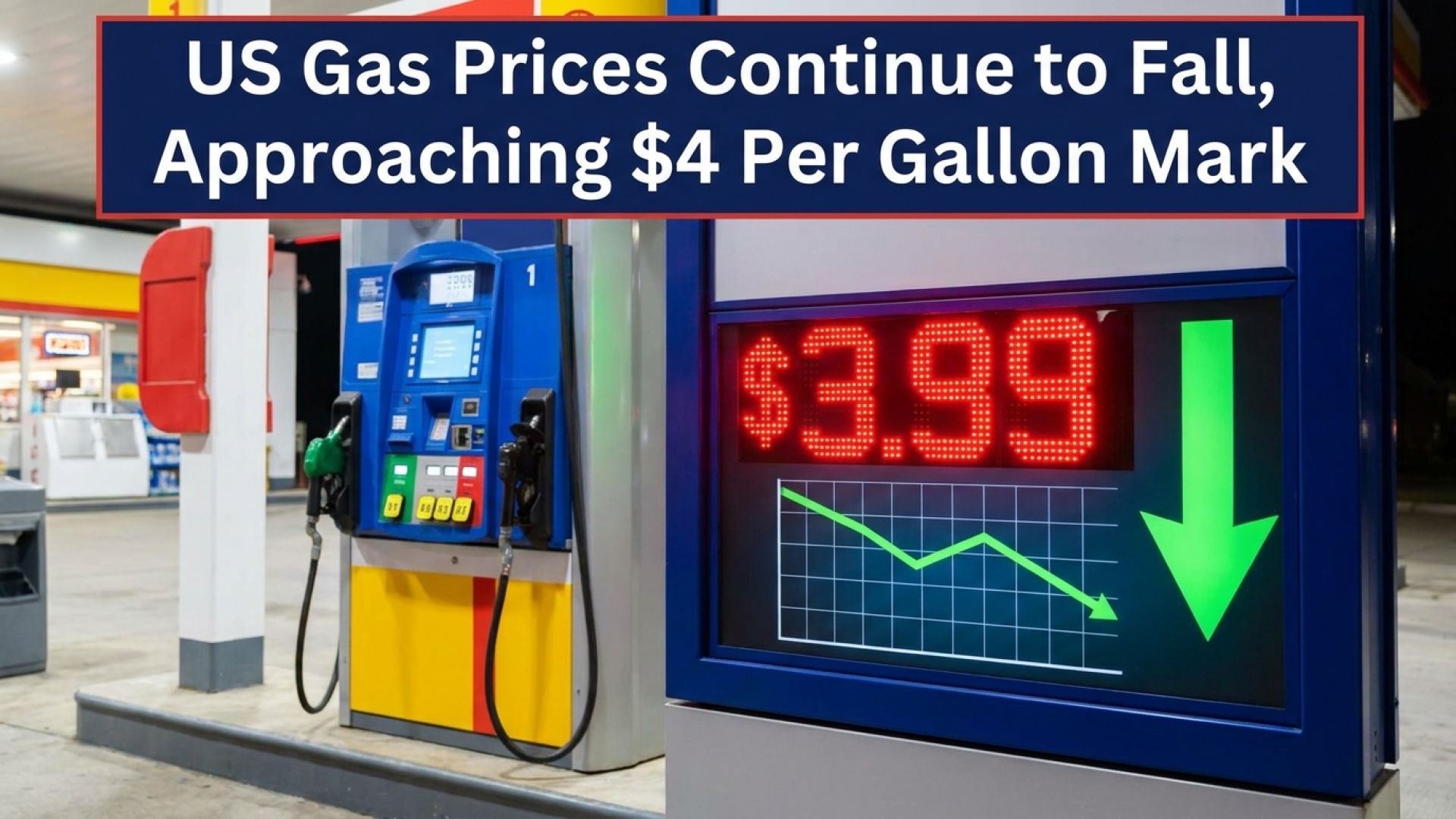
As Western New York motorists navigate the daily commute from Buffalo to the surrounding suburbs, a slight reprieve at the pump is finally beginning to materialize. Following a period of intense volatility, gas prices across the region and the nation continued their downward trajectory this Friday, edging closer to the $4 per gallon mark.
According to the latest data from AAA, the national average for a gallon of regular gasoline settled at $4.076 on Friday. This marks a steady decline from Thursday’s $4.093 and Wednesday’s $4.108. For local drivers in the Lake Erie region, these marginal daily drops are a welcome sign, though current costs remain significantly higher than pre-conflict levels.
Geopolitical Shifts Impacting the Pump
The cooling of prices is largely attributed to shifting dynamics in the Middle East. President Donald Trump recently announced a 10-day ceasefire between Israel and Lebanon, providing a temporary halt to a conflict that has kept global energy markets on edge. Simultaneously, diplomatic efforts led by Pakistan are attempting to facilitate new negotiations between the U.S. and Iran before the current ceasefire expires.
Treasury Secretary Scott Bessent signaled further optimism for the coming months. Speaking to reporters on Wednesday, Bessent suggested that gas prices featuring a “$3” handle could return by summer, provided the Strait of Hormuz remains navigable. Middle Eastern finance ministers have reportedly indicated that oil production could ramp back up within a week of the straits being fully cleared of current blockades.
Currently, the Strait of Hormuz—a vital artery for 20% of the world’s crude oil—remains a point of contention. Despite a ceasefire with Iran, a U.S. military blockade initiated earlier this week continues to impact the free flow of maritime trade, keeping global supply chains under pressure.
National and Regional Price Comparison
While the national trend is downward, the cost of refueling varies drastically depending on geography. Western New York remains in a middle-ground position compared to the extreme highs of the West Coast and the lower rates found in the South.
| Region Status | State | Average Price (Per Gallon) |
|---|---|---|
| Highest Prices | California | $5.856 |
| Highest Prices | Hawaii | $5.659 |
| Highest Prices | Washington | $5.386 |
| Lowest Prices | Oklahoma | $3.423 |
| Lowest Prices | Kansas | $3.491 |
| Lowest Prices | North Dakota | $3.606 |
Diesel fuel also saw a modest reduction on Friday, falling two cents to an average of $5.593. However, these prices remain near historic highs, continuing to drive up the cost of logistics and consumer goods throughout the Great Lakes region.
The Economics of the Local Gas Station
For Buffalo residents wondering why prices at a station in Amherst might differ from those in South Buffalo, the answer lies in a mix of taxation and operational costs. Last year, California’s taxes and fees added roughly 71 cents to every gallon, whereas states with lower overhead, like Alaska, charged as little as 9 cents. Beyond taxes, local competition and proximity to regional refineries play critical roles in determining the final price at the pump.
Industry experts, including Neal Walters of Kearney, note that gas stations often use fuel as a “loss leader.” By displaying competitive prices on large street-side signs, retailers aim to draw customers into the store to purchase higher-margin items like coffee or snacks, where the real profit is generated.
Contextualizing the Current Crisis
The current energy climate is a direct result of the escalation following the U.S. and Israeli actions involving Iran on February 28. With crude oil repeatedly surging past $100 per barrel, the costs associated with refining gasoline, diesel, and jet fuel have remained volatile. While we are currently seeing a dip, the national average for a gallon of gas is still approximately 92 cents higher than it was at this time last year.
For historical context, the record for the highest national average for regular gasoline remains $5.01, set in June 2022. While we are currently below those peak levels, Lake Erie Times will continue to monitor local fluctuations and regional policy changes that affect the wallets of Western New Yorkers.
For more insights on how these trends affect our local economy, visit our Business Section.
About the Author: William Strasmore is a dedicated news reporter for Lake Erie Times, providing in-depth coverage of community affairs and regional economic issues in Western New York.
Disclaimer: The content provided by Lake Erie Times is for informational purposes only and should not be considered as professional legal or financial advice. Affiliate Disclaimer: Some links on Lake Erie Times are affiliate links. If you make a purchase through these links, we may earn a commission at no additional cost to you.
The Associated Press contributed to this report.