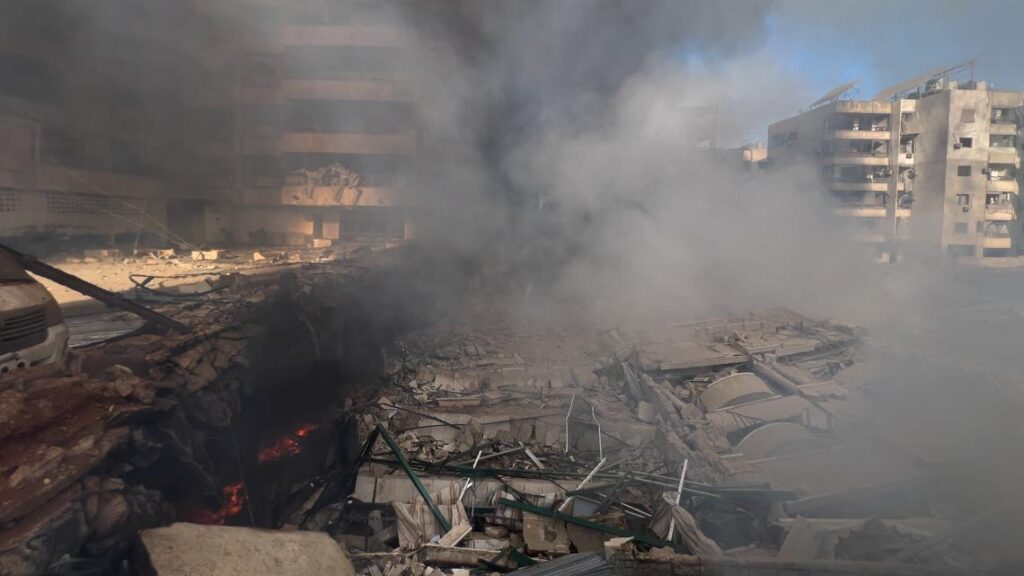
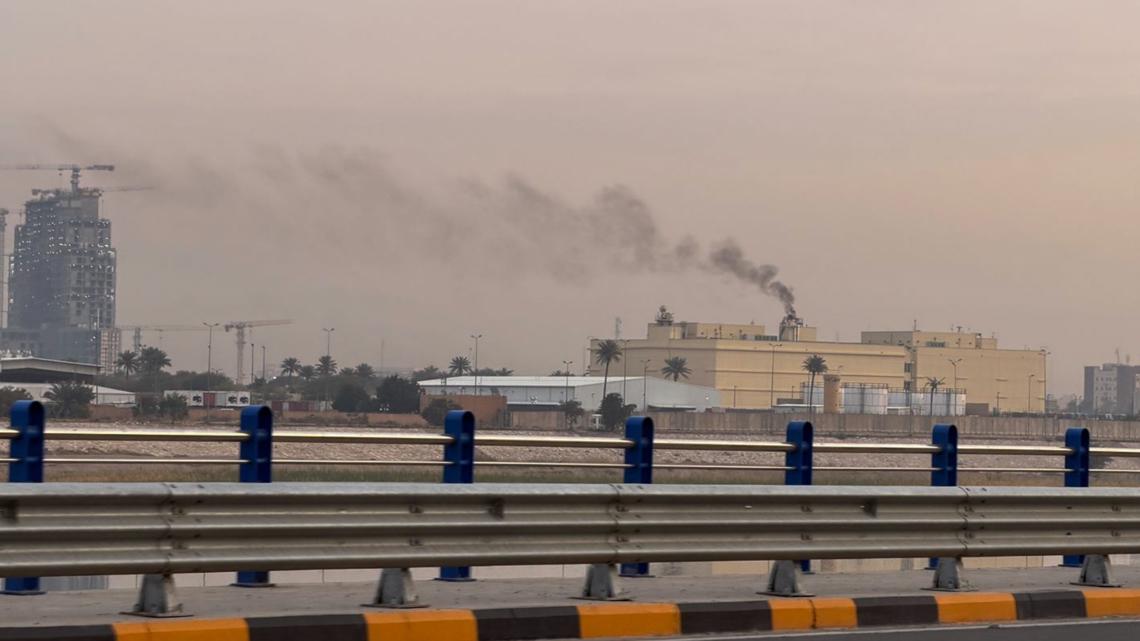
The United States has launched strikes targeting military sites on Iran’s Kharg Island, a crucial hub for the country’s oil exports. This action follows President Donald Trump’s conditional warning that Iran’s oil infrastructure could become a target if the passage of ships through the vital Strait of Hormuz is disrupted. This escalation unfolds amidst Iran’s ongoing barrage of missile and drone attacks on Israel and neighboring Gulf states, which has significantly impacted shipping through the Strait, responsible for a fifth of the world’s traded oil. In response, additional U.S. forces have been deployed to the region, and the conflict continues to deepen the humanitarian crisis in Lebanon, where nearly 800 people have been killed and 850,000 displaced by Israeli strikes against Iran-backed Hezbollah militants.
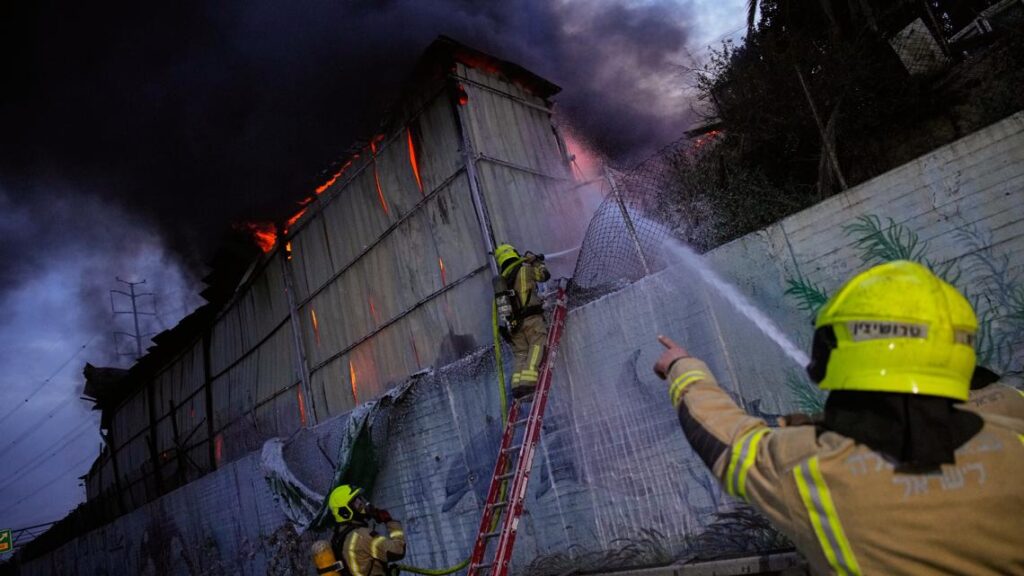
Marines and Assault Ship Bolster US Forces in Middle East
In a significant bolstering of American military presence, approximately 2,500 Marines from the 31st Marine Expeditionary Unit and the amphibious assault ship USS Tripoli have been ordered to deploy to the Middle East. These Marine Expeditionary Units are highly versatile, capable of conducting amphibious landings, enhancing embassy security, facilitating civilian evacuations, and providing critical disaster relief. While their deployment does not automatically signal an imminent ground operation, it significantly increases the region’s operational capacity. The USS Tripoli, along with its accompanying amphibious assault ships and the 31st MEU, typically operates out of Japan and has been positioned in the Pacific Ocean. Recent satellite imagery placed the USS Tripoli near Taiwan, indicating a journey of over a week to reach the waters off Iran. Currently, the U.S. Navy maintains a substantial presence in the Arabian Sea, including 12 ships such as the aircraft carrier USS Abraham Lincoln and eight destroyers. Should the USS Tripoli join this flotilla, it would become the second-largest vessel in the region after the Lincoln. While the precise number of U.S. service members on the ground in the Middle East remains undisclosed, Al-Udeid Air Base in Qatar, one of the region’s largest, typically houses around 8,000 U.S. troops.
Trump Confirms Kharg Island Strikes, Issues Further Warnings to Iran
Following initial reports, President Trump confirmed that the United States carried out precision strikes on military sites located on Iran’s Kharg Island in the Persian Gulf, a key terminal for the nation’s oil exports. In a social media post, Trump emphasized that Iran’s oil infrastructure itself was intentionally spared for now. However, he reiterated a stark warning: if Iran or any other entity interferes with shipping through the Strait of Hormuz, he would reconsider his decision not to “wipe out the Oil Infrastructure.” This action followed a prior warning from Iranian parliament Speaker Mohammad Bagher Qalibaf, who stated that attacks on Iran’s southern maritime frontier islands would lead Iran to “abandon all restraint.” Subsequently, Iran’s joint military command intensified its threats, vowing to target all U.S.-linked oil, economic, and energy facilities across the region if its own oil infrastructure is hit. The command specifically warned that it would attack cities in the United Arab Emirates, claiming the U.S. utilized “ports, docks and hideouts” within UAE cities for launching strikes, urging people to evacuate these areas. Despite the strikes, Iran’s semiofficial Fars news agency reported that the U.S. actions caused no damage to the oil infrastructure on Kharg Island, though it did confirm at least 15 explosions targeting an air defense facility, a naval base, the airport control tower, and an offshore oil company’s helicopter hangar.
Missile Strike Targets US Embassy Compound in Baghdad
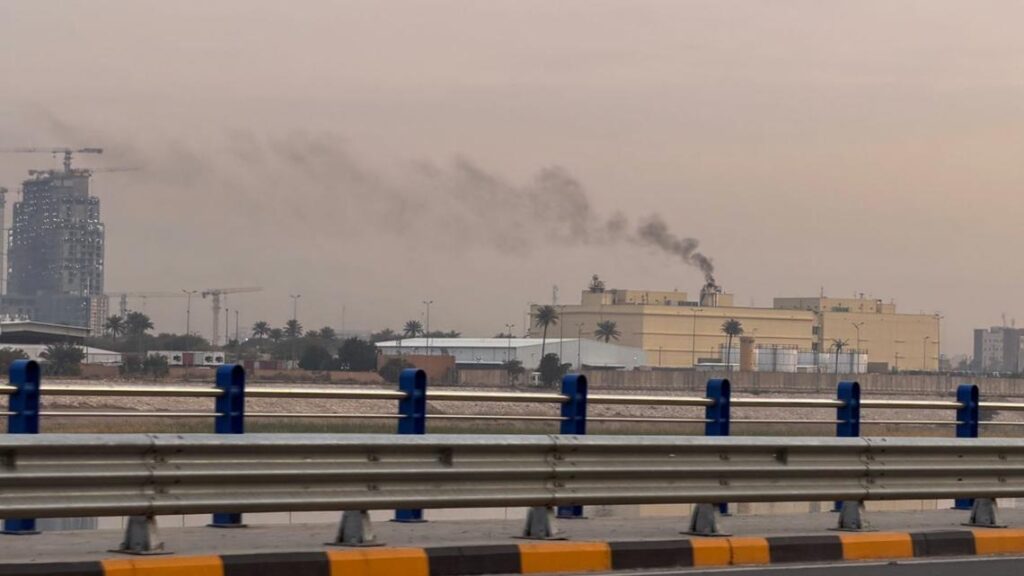
A recent missile strike targeted a helipad situated within the U.S. Embassy compound in Baghdad, according to Iraqi security officials. Associated Press footage captured a column of smoke rising over the embassy complex on Saturday morning. This extensive diplomatic facility, one of the largest U.S. embassies globally, has been a frequent target of rockets and drones launched by Iran-aligned militias. The U.S. Embassy in Baghdad had renewed its Level 4 security alert for Iraq on Friday, cautioning that Iran and its allied militia groups have a history of attacks against U.S. citizens, interests, and infrastructure, and may persist in targeting them.
Broader Regional Conflicts and US Defense Posture
The cumulative military impact of ongoing conflicts has been substantial. Israel has reported additional strikes within Iran, targeting infrastructure, with its air force hitting over 200 targets in a 24-hour period, including missile launchers, defense systems, and weapons production sites. In Washington, U.S. Defense Secretary Pete Hegseth stated that a total of more than 15,000 enemy targets have been struck since the war’s commencement, averaging over 1,000 targets daily. Hegseth also addressed concerns regarding the critical Strait of Hormuz, assuring reporters that measures were being taken and that there was “no need to worry about it.”