In a decisive move to break a twenty-year planning stalemate, Mayor Sean Ryan has formally requested that the City of Buffalo be granted lead agency status for the Scajaquada Expressway redevelopment project. In a recent letter to the New York State Department of Transportation (NYSDOT), Mayor Ryan outlined the city’s intent to helm the urban renewal effort, signaling a shift toward local autonomy in shaping Western New York’s infrastructure.
Strategic Funding and Regional Coordination
Central to the Mayor’s proposal is the securing of $56 million within the Transportation Improvement Plan (TIP). This capital is earmarked to propel the “Region Central” vision into its next phase, involving a comprehensive environmental review and design process. A primary goal of this local leadership is to ensure the project remains in lockstep with the NYSDOT’s ongoing Route 33 initiative. By synchronizing these two major corridors, the administration aims to create a cohesive transportation network that prioritizes the quality of life for Buffalo residents over mere highway throughput.
| Project Component | Detail |
|---|---|
| Requested Funding | $56 Million (via TIP) |
| Primary Framework | Region Central Vision |
| Strategic Partner | NYSDOT (Route 33 Coordination) |
| Project Goal | Multi-modal Parkway Conversion |
A Legacy of Gridlock
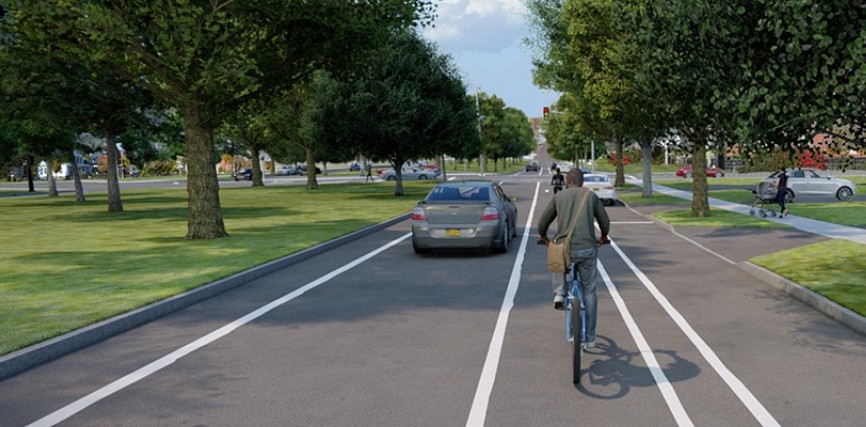
The history of the Scajaquada Expressway redevelopment is one of prolonged delays, with formal planning efforts stretching back two decades. In 2020, planning responsibilities shifted from the state to the Greater Buffalo Niagara Regional Transportation Council (GBNRTC), which eventually produced the 2023 “Region Central” plan. This plan advocates for transforming the corridor into a multi-modal parkway designed for pedestrians, cyclists, and motorists alike.
Reflecting on the timeline, Mayor Ryan emphasized the need for a departure from the status quo, citing “two decades of deadlocked planning for an expressway that no longer serves its intended function.” His push for lead agency status is rooted in the belief that the city must “determine its own destiny” regarding its internal footprint and community connectivity.
NYSDOT Response and Community Engagement
While the NYSDOT has not yet issued a final decision on the transfer of agency status, the department remains engaged with the local political landscape. State officials recently affirmed their commitment to the “Queen City Forward” initiative, focusing on mobility and economic vitality.
Public participation remains a vital component of this process. The NYSDOT has scheduled a community listening session to discuss the future of the corridor:
- Location: Canisius University Science Hall Commons
- Date: April 16, 2026
- Time: 5:00 PM
As of now, the timeline for the NYSDOT’s ruling on the city’s leadership role remains uncertain. For more in-depth coverage of regional developments, visit the Lake Erie Times community news section.
About the Author: William Strasmore is a dedicated news reporter for the Lake Erie Times. With an extensive background in investigative journalism, William focuses on community affairs, local politics, and major regional events across Western New York.
Disclaimer: The content provided by Lake Erie Times is for informational purposes only and should not be considered as professional legal or financial advice. Some links on Lake Erie Times are affiliate links. This means that if you make a purchase through these links, we may earn a commission at no additional cost to you.