Key Provisions of the Executive Order
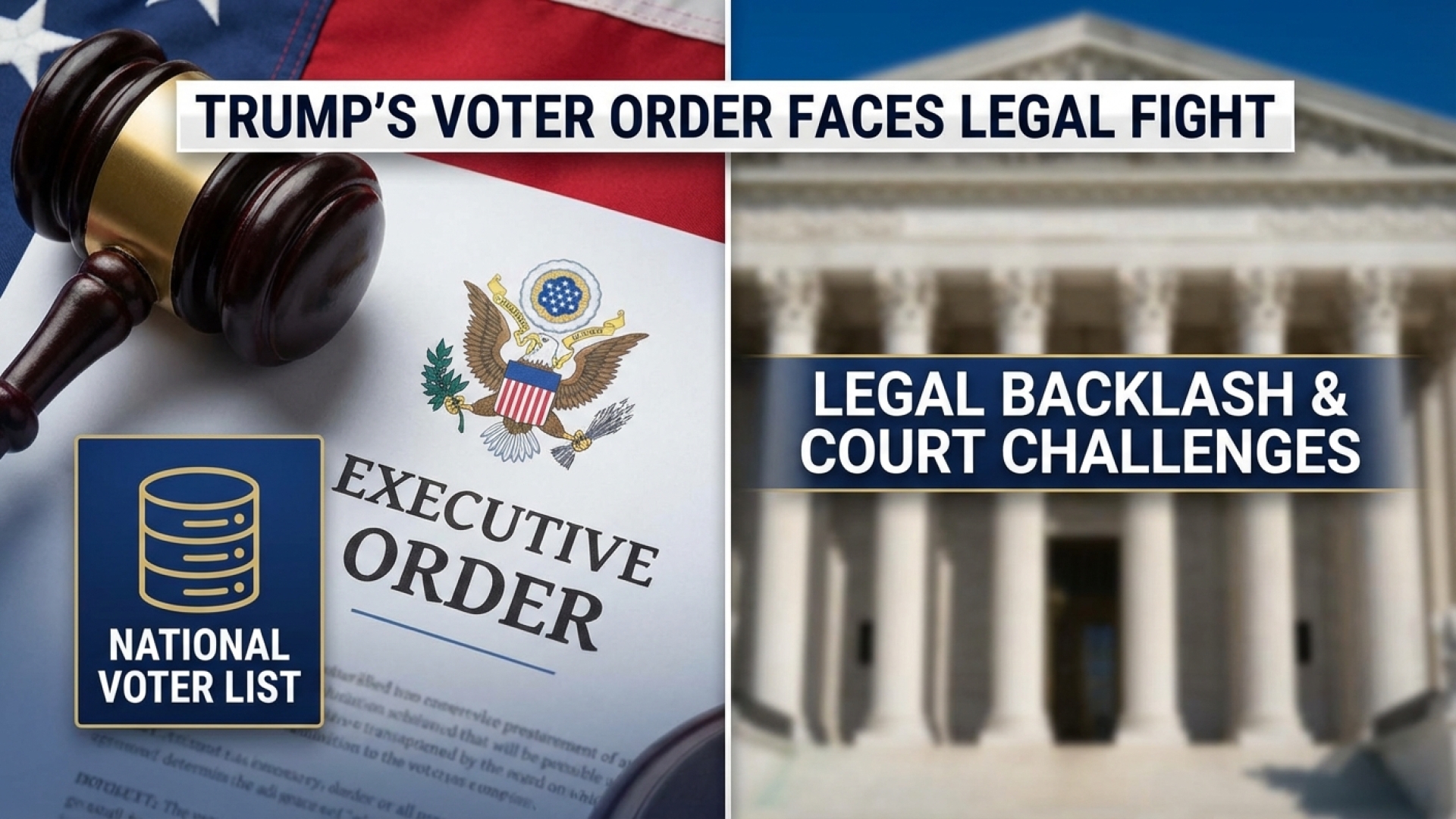
The executive order directs the Department of Homeland Security (DHS), in collaboration with the Social Security Administration (SSA), to compile a list of eligible voters for every state. This federal oversight aims to restrict the U.S. Postal Service from delivering absentee ballots to any individual not appearing on this federally approved roster.| Provision | Description | Intended Goal |
|---|---|---|
| National Voter Roster | DHS and SSA to compile a list of “verified” eligible voters. | Standardize eligibility across state lines. |
| USPS Restrictions | Prohibits mailing ballots to those not on the new federal list. | Limit distribution of mail-in ballots. |
| Security Enhancements | Mandates secure envelopes with unique barcodes. | Enhance tracking and prevent duplication. |
Legal Backlash and Constitutional Challenges
The order was met with immediate resistance. Top election officials in Oregon and Arizona—states with robust mail-in systems—have already announced intentions to sue. They argue the President is overstepping constitutional bounds, as election administration is traditionally a state-level responsibility. “We don’t need decrees from Washington, D.C.,” said Tobias Read, Oregon’s Secretary of State. Arizona’s Adrian Fontes criticized the effort as an attempt to “pick a desired list of voters.” Legal experts, including David Becker of the Center for Election Innovation and Research, note that the Constitution’s “Elections Clause” grants Congress the power to regulate federal elections, but it does not explicitly grant the President authority over state-run administration. Furthermore, the U.S. Postal Service is governed by an independent board, making it difficult for the executive branch to dictate its delivery protocols.Context: Previous Federal Overreach Attempts
This is not the first instance of the administration seeking federal control over state ballots. An order from March 2025 proposed a documentary proof-of-citizenship requirement for federal registration. However, that move was largely blocked by legal challenges from voting rights groups and state attorneys general who characterized it as an unconstitutional power grab. In Western New York, local officials have historically emphasized the security of existing verification processes. The New York State Board of Elections operates under strict state statutes that would likely conflict with this new federal directive, potentially leading to a standoff between Albany and Washington.Analyzing the Evidence of Voter Fraud
While the administration has prioritized election security investigations, including a special attorney appointment by Attorney General Pam Bondi, data regarding widespread fraud remains scarce. A 2025 report by the Brookings Institution found that mail-in voting fraud occurred in only 0.000043% of cases—roughly four cases per 10 million ballots. Critics have pointed out that the President himself has used mail-in ballots in recent Florida elections. The White House clarified that his opposition is specifically aimed at “universal” mail-in voting, rather than absentee voting for specific needs like military service or travel.Concerns Over the DHS SAVE System
The order’s reliance on the DHS SAVE system has also raised alarms. Used for verifying citizenship status, the system has been criticized by voting-rights groups for utilizing data sets that can be incomplete or outdated. Because many states do not collect full Social Security numbers during registration, bulk searches can produce “false positives,” potentially flagging eligible citizens as ineligible. As this legal battle unfolds, William Strasmore and the Lake Erie Times will continue to provide updates on how these federal mandates impact Buffalo and the surrounding Western New York communities.Disclaimer: The content provided by Lake Erie Times is for informational purposes only and should not be considered professional legal or financial advice. Some links on Lake Erie Times are affiliate links. If you make a purchase through these links, we may earn a commission at no additional cost to you.