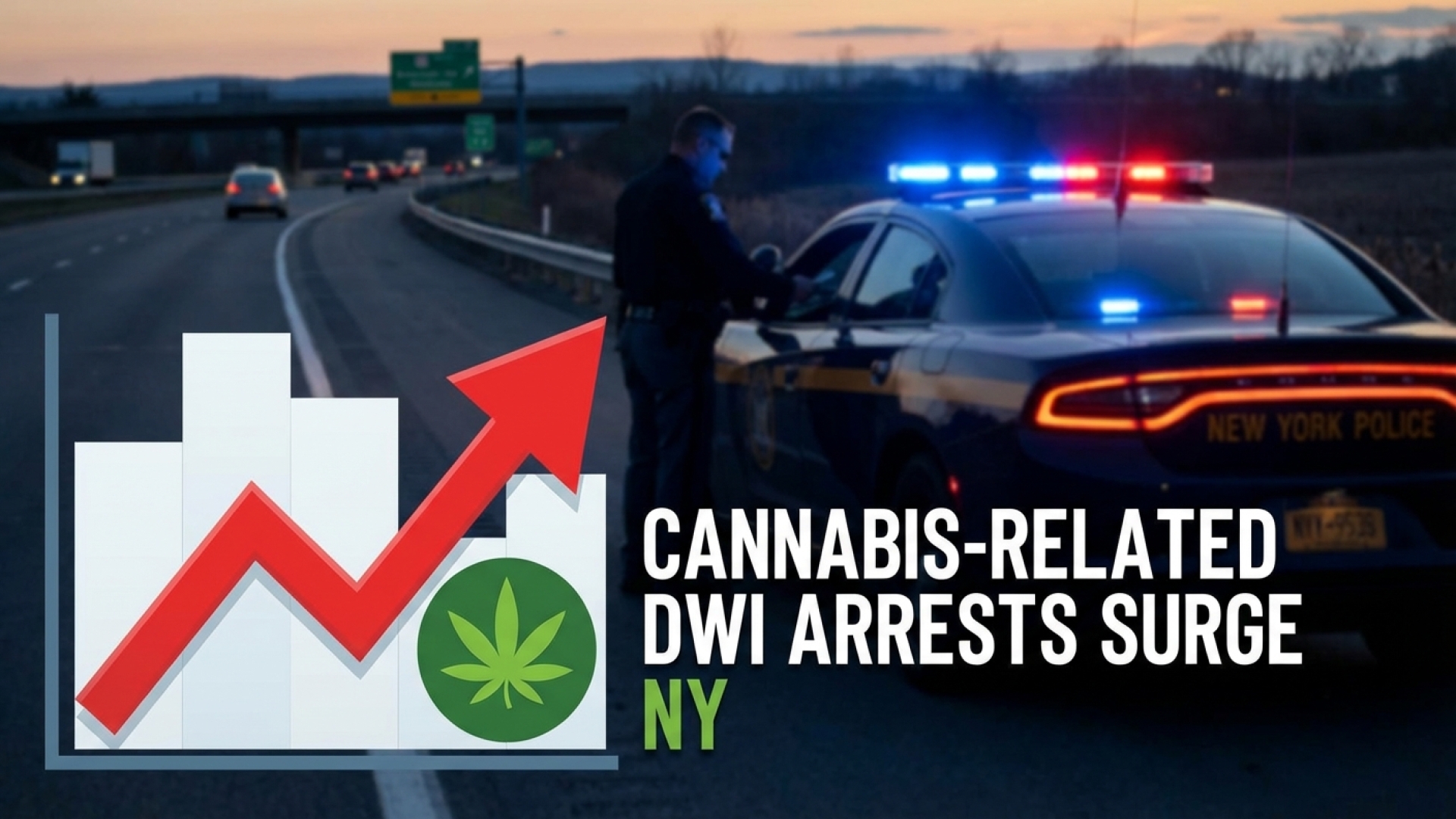
New York State Police are sounding the alarm on a significant surge in cannabis-related driving while intoxicated (DWI) arrests across the region. Since the legalization of adult-use cannabis in New York in March 2021, law enforcement agencies in Western New York and beyond have documented a troubling shift in road safety dynamics.
For residents in Buffalo and the surrounding Western New York counties, the statistics reflect a growing challenge for local patrols. Trooper James O’Callaghan, a public information officer for the State Police, noted that drug-related DWI arrests have climbed by approximately 20 percent statewide. This trend suggests that while the legal status of cannabis has changed, public awareness regarding the dangers of operating a vehicle under its influence has not kept pace.
Data Breakdown: Rising Impairment on New York Roads
The increase is not limited to cannabis alone. State Police data indicates a dual rise in both controlled substances and alcohol impairment. The following table illustrates the recent spikes in DWI arrests reported by state authorities:
| Arrest Category | Percentage Increase | Observation Period |
|---|---|---|
| Drug-Related DWI (Cannabis/Other) | 20% | Post-March 2021 |
| Alcohol-Related DWI | 17% | 2023–2025 |
This data highlights a broader crisis of impaired driving. While alcohol remains a persistent issue, the 20% jump in drug-related cases underscores the significant role cannabis now plays in traffic safety enforcement across the Western New York region.
The Potency Gap: “Whiskey and Above”
One of the primary concerns for law enforcement is the potency of modern, legal cannabis products. Trooper O’Callaghan emphasized that today’s cannabis is far more intoxicating than varieties seen in previous decades. In terms of cognitive and motor skill impairment, O’Callaghan compared the effects of modern cannabis to “whiskey and above.”
This high level of potency means that even minimal consumption can result in significant impairment. Despite frequent public service announcements (PSAs) and state-funded awareness campaigns, the message of “Drive High, Get a DUI” is struggling to gain traction with some motorists. Law enforcement experts warn that the perception of cannabis as a “safer” alternative to alcohol does not translate to safety behind the wheel.
Enhanced Enforcement in Western New York
To combat these rising figures, law enforcement agencies are intensifying their efforts to secure community safety. Expect to see an increased presence of State Police and local Buffalo-area patrols utilizing sobriety checkpoints and roving patrols specifically trained to identify drug impairment.
The objective of these rigorous enforcement measures is to decrease the number of preventable accidents and fatalities on the Thruway and local routes. The directive from officials remains steadfast: if your plans involve cannabis or alcohol, you must arrange for alternative transportation. Whether through ride-sharing apps, public transit, or a designated driver, staying off the road while impaired is the only way to avoid arrest and protect the lives of fellow New Yorkers.
The content provided by Lake Erie Times is for informational purposes only and should not be considered as professional legal or financial advice. Some links on Lake Erie Times are affiliate links. This means that if you make a purchase through these links, we may earn a commission at no additional cost to you. Our recommendations are based on careful research and our commitment to quality journalism.