
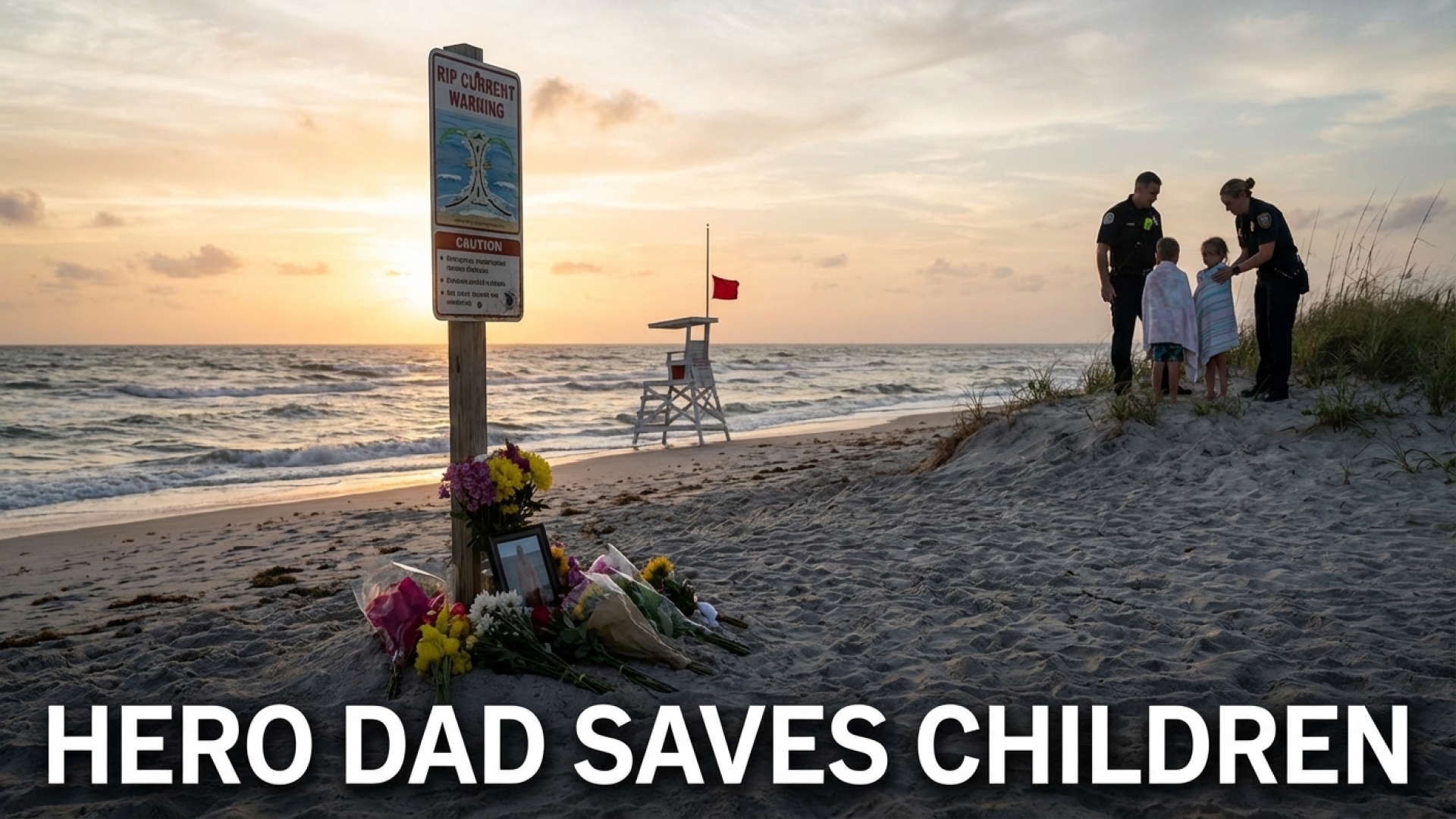
A tragic incident on a Florida beach has claimed the life of a Maine father, serving as a somber reminder for Western New York families planning their own coastal getaways. Ryan Jennings, who was vacationing with his family in south Florida, died last week after successfully rescuing two of his children from a powerful rip current.
The Jennings family, including Ryan’s wife Emily and their three children—with a fourth on the way—were visiting Ryan’s parents when they decided to spend the day at Juno Beach. What began as a routine family outing turned into a life-or-death struggle when two of the children were pulled away from the shore by an offshore current. Witnesses report that Ryan reacted instinctively, plunging into the water to reach his children. While he was able to guide them to safety, the exertion and the force of the water left him unable to save himself.
Described by friends and community members as a “devoted father” whose final act of bravery defined his character, Jennings leaves behind a grieving family currently stranded in Florida as they navigate the aftermath of the tragedy. A GoFundMe campaign has been established to support Emily Jennings and the children; the fund has already surpassed $100,000, reflecting a massive outpouring of community support.
The Science of Rip Currents: A Hidden Coastal Threat
While the beauty of the coastline is a major draw for travelers from the Buffalo and Western New York region, the ocean harbors significant risks. Rip currents are responsible for approximately 80% of beach rescues and result in roughly 100 fatalities annually in the United States. Understanding these phenomena is the first step toward prevention.
Rip currents are narrow, powerful channels of water that flow from the shore back out to sea. They typically form at breaks in sandbars or near structures like jetties and piers. Unlike popular myths suggest, these currents do not pull swimmers under the water; instead, they pull them away from the land at speeds that can exceed five miles per hour—faster than an Olympic swimmer.
How to Identify and Survive a Rip Current
For those visiting coastal regions or even swimming in the deeper sections of Lake Erie where similar “undertows” can occur under specific weather conditions, recognizing the water’s behavior is vital. Look for a gap in the breaking waves, a channel of churning or choppy water, or a line of foam or debris moving steadily seaward.
If you find yourself caught in the grip of a rip current, the National Weather Service and safety experts recommend the following protocol:
| Action | Reasoning |
|---|---|
| Remain Calm | Panic leads to exhaustion, which is the primary cause of drowning in currents. |
| Do Not Swim Against the Current | You cannot outswim a rip current. Fighting it will only drain your energy. |
| Swim Parallel to Shore | Rip currents are narrow. By swimming sideways, you can exit the channel and reach breaking waves. |
| Float and Signal | If you cannot swim out, stay afloat and wave for help. |
Community Safety and Preparedness
In his investigative coverage of community issues, William Strasmore emphasizes that regional safety awareness extends beyond our local borders. Whether at a local beach in Western New York or on a vacation in the South, the “Break the Grip of the Rip” safety campaign suggests that swimmers should always check surf zone forecasts and ensure they are swimming in areas monitored by lifeguards.
If you witness someone in distress, the safest course of action is to alert a lifeguard or call 911 immediately. Attempting a rescue without proper training and flotation equipment often leads to multiple casualties. Instead, try to throw a buoyant object—such as a cooler, life ring, or surfboard—to the person in the water.
The Jennings family tragedy serves as a poignant reminder of the power of nature. As the Western New York community looks toward the travel season, prioritizing water safety and situational awareness can prevent further heartbreaks.
Disclaimer: The content provided by Lake Erie Times is for informational purposes only and should not be considered as professional legal or financial advice.
Affiliate Disclaimer: Some links on Lake Erie Times are affiliate links. This means that if you make a purchase through these links, we may earn a commission at no additional cost to you. Our recommendations are based on careful research and our commitment to quality journalism.