
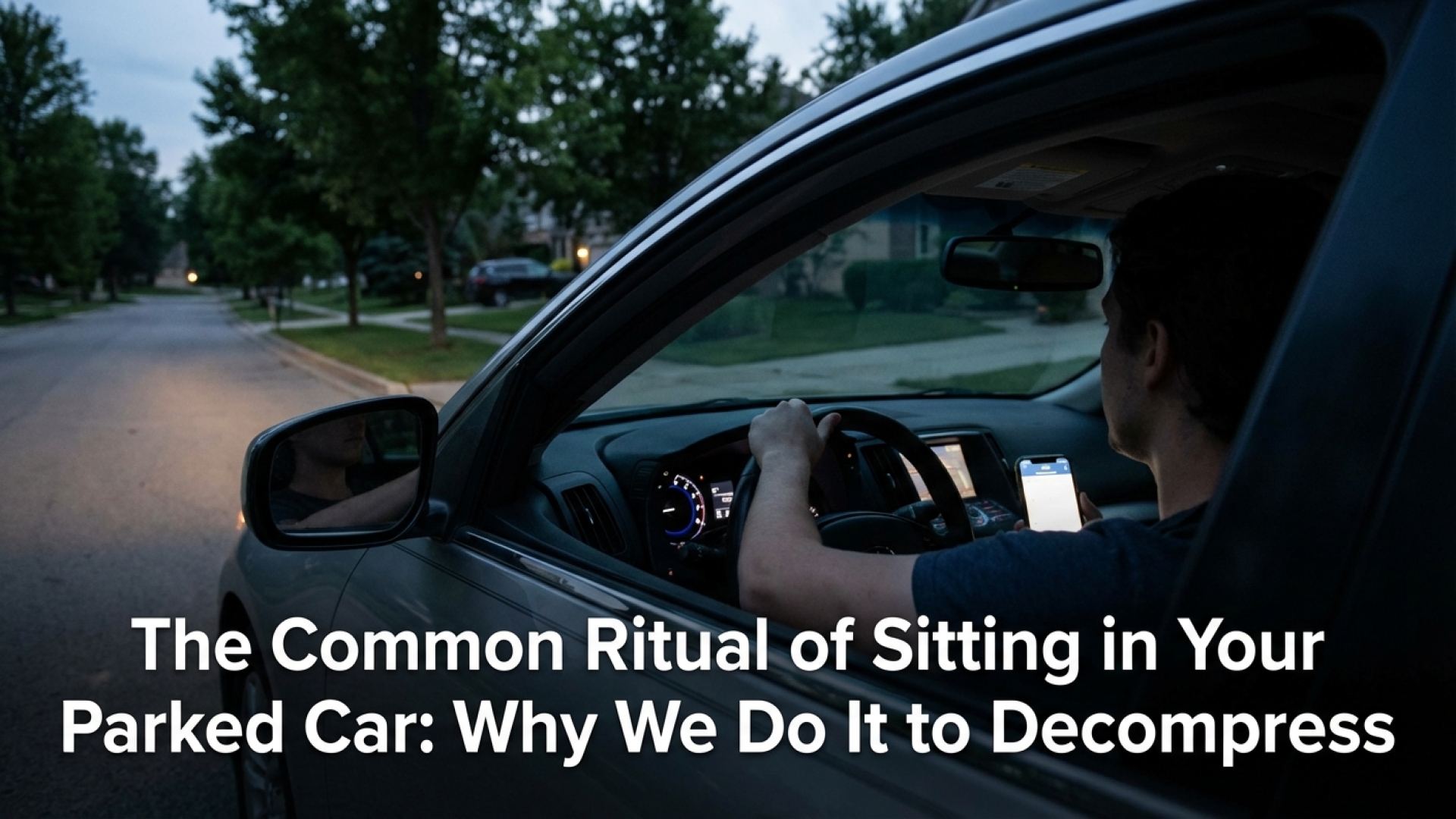
Whether you’re pulling into a driveway in Amherst or navigating a crowded parking lot in South Buffalo, you’ve likely experienced it: the ritual of the parked car. It starts the moment you put the vehicle in park. Instead of grabbing your bags and heading inside, you stay. You might be scrolling through your phone, finishing a podcast, or simply staring out the windshield at the Lake Erie horizon. This behavior, once seen as a quirk, is now recognized as a vital transitional tool for residents across Western New York.
As a reporter covering the pulse of our community, I’ve observed this phenomenon becoming increasingly prevalent. In an era where the lines between work and home have blurred, the car has become the final frontier of true privacy. It is not just about stalling; it is about a psychological transition that many of us in the Buffalo region need to survive the daily grind.
The Science of the “Transition Zone”
Psychologists refer to these moments as a “buffer” between different roles. For the Western New York commuter—who may have just braved a snowy trek down the I-190 or navigated the afternoon rush on the 33—the car serves as a decompression chamber. It allows the brain to shift from “employee mode” or “commuter mode” into “family mode.”
Research suggests that these brief periods of solitude function as an emotional reset. In this space, you have total environmental control. You choose the temperature, the volume of the music, and the level of social interaction (which, in this case, is zero). This sense of autonomy is a powerful antidote to the stressors of a demanding workday or the chaotic energy of a busy household.
Evaluating Your Car Ritual
Not all time spent in a parked car is created equal. To understand if your ritual is helping or hindering your mental health, it is useful to look at how that time is spent. A mindful pause can lower your heart rate and prepare you for the evening, while mindless scrolling can actually increase cortisol levels.
The following table outlines the differences between a productive decompression and a counterproductive habit:
| Activity Type | Mindful Decompression | Avoidance Behavior |
|---|---|---|
| Digital Use | Listening to a specific song or guided meditation. | Doomscrolling social media or checking work emails. |
| Mental State | Intentional breathing and “leaving the day behind.” | Ruminating on negative interactions or “spiraling.” |
| Duration | 5 to 15 minutes of scheduled “me-time.” | Staying so long you are late for dinner or commitments. |
| Outcome | Feeling refreshed and ready to engage with family. | Feeling drained, guilty, or disconnected. |
When the Ritual Becomes Avoidance
While I advocate for the benefits of a quiet moment, it is important to distinguish between self-care and avoidance. If you find that you are staying in your car because you dread what is waiting for you inside—whether that is a stressful home dynamic or overwhelming responsibilities—the car is no longer a tool for wellness; it is a symptom of a larger issue. If the thought of leaving the vehicle causes genuine anxiety, it may be time to address the underlying stressors in your life or consult a professional.
However, for the vast majority of us in Western New York, this ritual is simply a way to reclaim a sliver of the day for ourselves. In a world that constantly demands our attention, choosing to sit in silence for ten minutes before facing the world is a radical and necessary act of self-preservation.
Next time you see a neighbor sitting in their car in the driveway, don’t knock on the window. They aren’t lost; they are simply refueling their mental tank for the miles ahead.
Disclaimer: The content provided by Lake Erie Times is for informational purposes only and should not be considered as professional legal or financial advice.
Affiliate Disclaimer: Some links on Lake Erie Times are affiliate links. This means that if you make a purchase through these links, we may earn a commission at no additional cost to you. Our recommendations are based on careful research and our commitment to quality journalism.
For more insights into local community life and wellness, visit our Lifestyle section or follow the latest local news at Lake Erie Times.