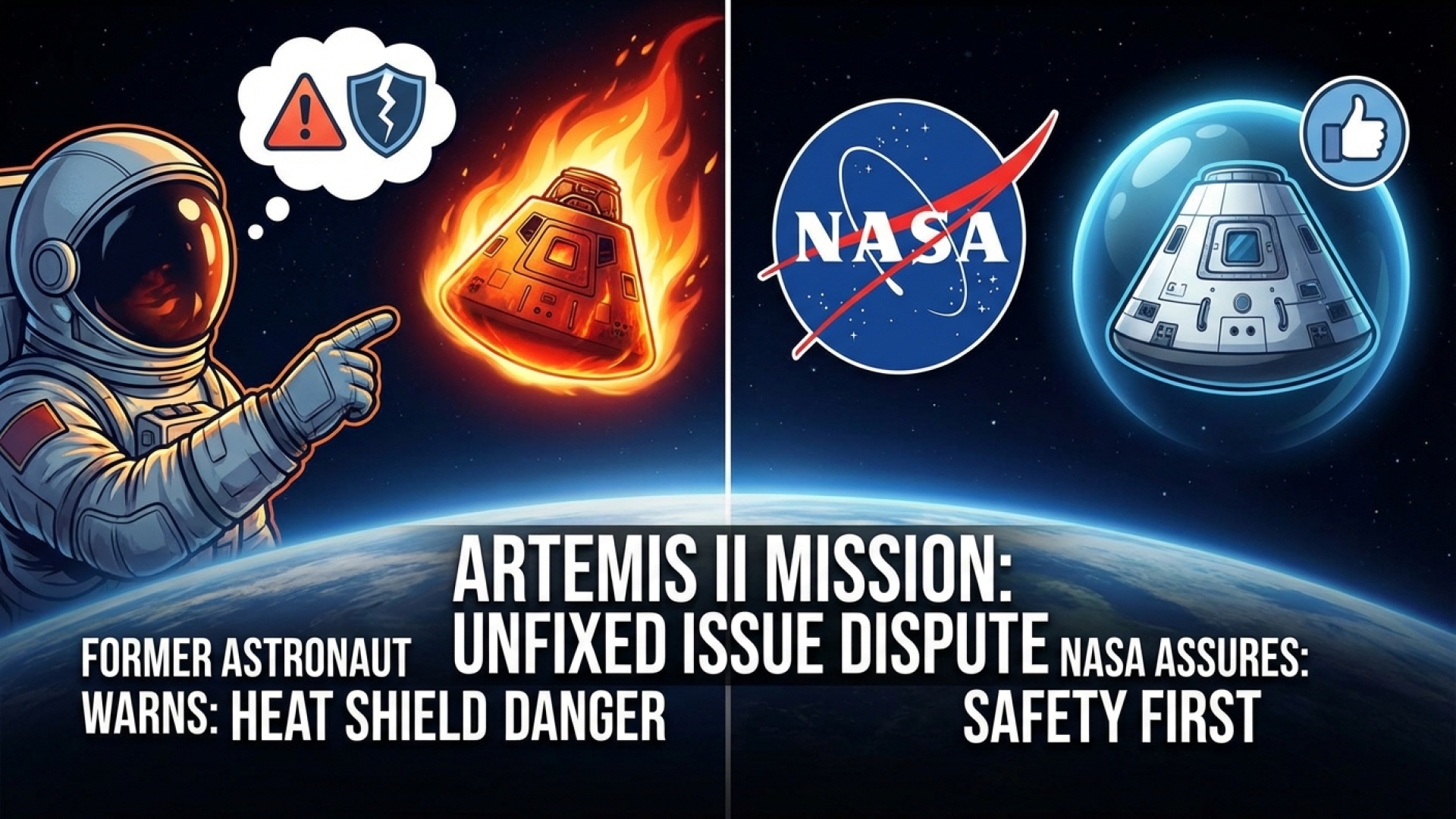
As the Artemis II mission nears its critical reentry phase, a former NASA astronaut is raising serious alarms regarding the safety of the crew. The core of the concern lies with the Orion heat shield—a vital component designed to protect astronauts from the extreme temperatures of atmospheric reentry. Following significant damage observed during the uncrewed Artemis I mission in 2022, questions persist about whether the spacecraft is truly ready for human passengers.
Here at the Lake Erie Times, we prioritize delivering in-depth analysis on issues that impact our national progress and safety. Investigative reporter William Strasmore has reviewed the mounting evidence and conflicting reports surrounding the mission’s integrity.
Whistleblower Concerns: Former Astronaut Challenges NASA Safety
Charles Camarda, a former astronaut and senior advisor for innovation at Johnson Space Center, has gone on the record stating that the Artemis II crew may be at unnecessary risk. Camarda’s warnings are based on an extensive review of program documents and his professional history in safety protocol evaluation. He points to a mechanical failure during the Artemis I mission where the Orion heat shield suffered unexpected “char loss” and cracking upon its return from the Moon.
NASA’s subsequent analysis concluded that gases trapped within the shield’s material were unable to vent properly during a specific reentry technique, creating pressure that caused the shield to flake. To address this, NASA opted to modify the spacecraft’s reentry trajectory for future missions rather than redesigning the shield materials—a decision Camarda finds dangerously insufficient.
Comparing Perspectives: The Heat Shield Debate
To better understand the divergence in safety assessments, the following table summarizes the conflicting viewpoints between the independent expert and the space agency:
| Issue | NASA Stance | Charles Camarda (Former Astronaut) |
|---|---|---|
| Root Cause | Gas buildup due to specific reentry skip maneuver. | Inherent structural failure of the heat shield material. |
| The Solution | Modified trajectory to manage temperature and pressure. | Full redesign or material replacement is required. |
| Analytical Tools | Confident in current modeling and internal temp data. | Deems tools “woefully inadequate,” citing similarities to Challenger-era failures. |
| Safety Margin | Crew remains “well within” established safety parameters. | Potential for “loss of crew” if historical errors are ignored. |
Divergent Views on Safety and History
Strasmore’s analysis highlights that Camarda’s critique goes beyond engineering; it targets NASA’s organizational culture. Camarda draws chilling parallels to the analytical failures that preceded the Challenger and Columbia disasters, citing dysfunctional organizational behaviors and gaps in engineering training. “We are trying to prevent the loss of the Artemis II crew,” Camarda stated, emphasizing that neglecting critical warnings is a recurring theme in aerospace tragedies.
On the other hand, NASA representatives, including former Associate Administrator James Free, have remained firm. The agency asserts that the internal temperatures of the capsule remained stable in the mid-70s during the Artemis I issues, which “exceeded expectations.” NASA maintains that the adjusted entry angle, though it limits landing windows, keeps the spacecraft within safe thermal limits.
The Road Ahead for Artemis II
Despite the warnings, the mission is proceeding. The Artemis II mission is scheduled for splashdown off the coast of San Diego on Friday, shortly after 5 p.m. PT. For the Western New York community and the nation, the hope remains that NASA’s calculations are correct and that the lessons of the past have been truly learned.
For more in-depth reporting on national issues affecting our region, stay tuned to the Lake Erie Times.
Disclaimer: The content provided by Lake Erie Times is for informational purposes only and should not be considered as professional legal or financial advice. Some links on Lake Erie Times are affiliate links. This means that if you make a purchase through these links, we may earn a commission at no additional cost to you.