As Western New York residents plan their summer travel and cross-country adventures, a recent federal sentencing serves as a stark reminder that national park regulations are matters of life and death, not merely suggestions. William Strasmore, reporting for the Lake Erie Times, takes a closer look at a recent incident in Yellowstone that has sparked renewed discussions on tourist safety and the preservation of fragile ecosystems.
Federal Court Issues Jail Time for Thermal Trespassing
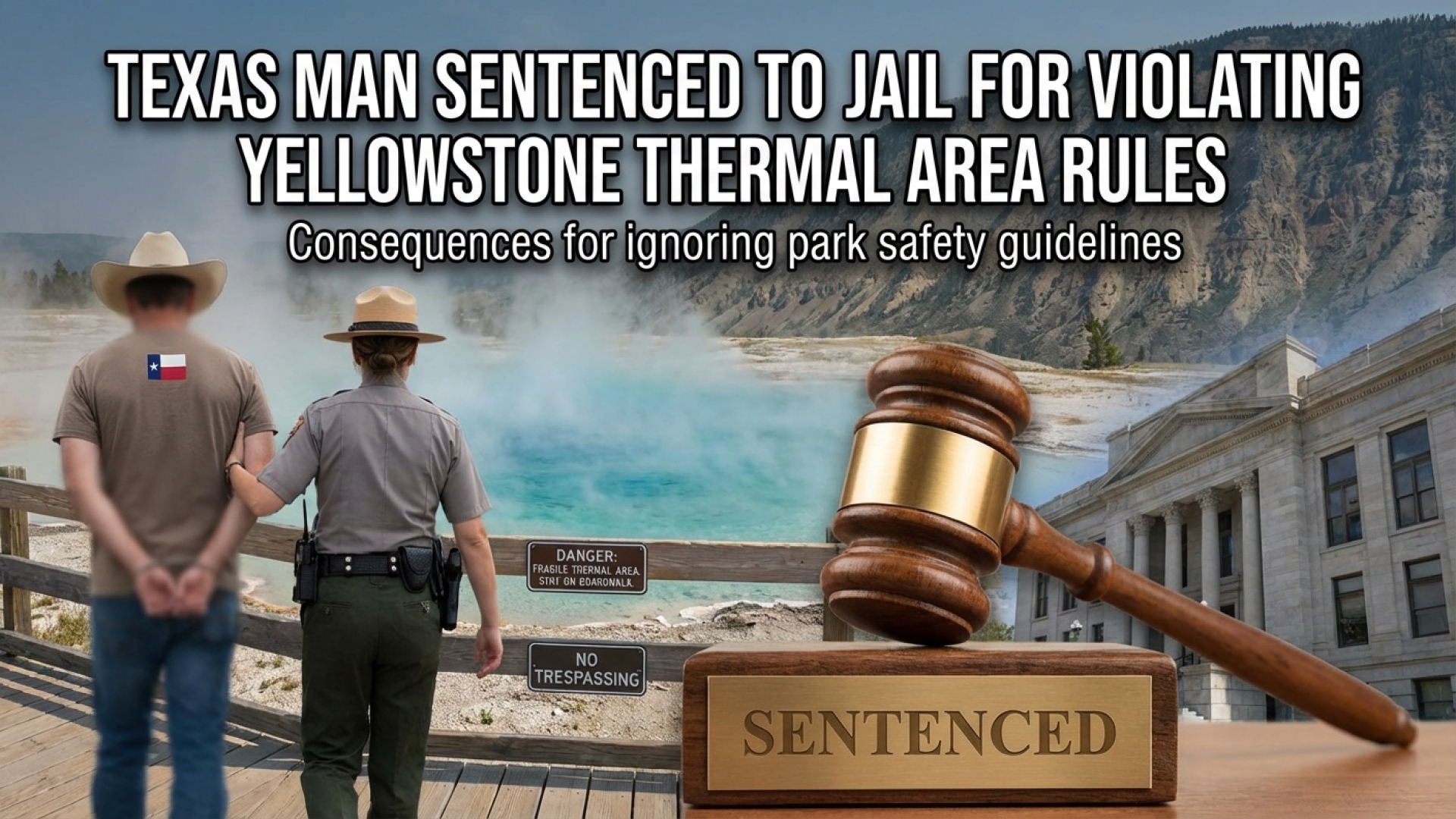
Eric Bedient, a 50-year-old resident of Frisco, Texas, was recently sentenced to five days in jail after pleading guilty to charges of walking off-trail in one of the most volatile environments in North America. Bedient’s illegal excursion took place within the Mammoth Hot Springs area of Yellowstone National Park, where he ventured onto delicate hydrothermal crusts that are as dangerous as they are beautiful.
According to court documents filed in the U.S. District Court for the District of Wyoming, Bedient trespassed directly onto several iconic features, including Canary Spring, Mound Terrace, Palette Hot Spring, and Jupiter Terrace. The intrusion was not victimless; his footprints left lasting damage on the travertine formations, which take decades to accumulate through complex mineral deposits. For Western New Yorkers who frequent our own natural wonders like Niagara Falls or Letchworth State Park, the concept of staying behind safety railings is familiar, yet this case demonstrates the severe federal consequences of overstepping those bounds.
The Science of Danger: Why “Thermal Soup” is a Reality
The prosecution of this case was intended to serve as a deterrent. U.S. Attorney Darin Smith emphasized that Yellowstone’s thermal basins are among the most hazardous natural features on the planet. The risk is not merely a fine; it is a “thermal soup” scenario where the ground—a thin, brittle crust over boiling water—can give way without warning.
The statistics are sobering. Over 20 people have died from severe burns after entering or falling into the park’s scalding springs. Beyond the heat, the thermal runoff contains high concentrations of hazardous bacteria and fungi. Federal officials stress that these regulations exist to protect the visitor’s life as much as the park’s geological integrity.
| Safety Category | Yellowstone Regulation | WNY Local Parallel (e.g., Niagara Falls) |
|---|---|---|
| Pathways | Must stay on designated boardwalks. | Strict adherence to safety railings and marked trails. |
| Water Contact | No touching or swimming in thermal features. | No crossing barriers near the gorge or rapids. |
| Pets | Prohibited in all thermal areas. | Leash laws strictly enforced in state parks. |
| Legal Consequence | Federal jail time and heavy fines. | State/Local fines and potential trespassing charges. |
Ensuring a Safe Visit to National Treasures
For our readers at the Lake Erie Times who may be visiting Wyoming this season, the National Park Service (NPS) has reiterated several non-negotiable rules for navigating thermal basins. Adhering to these is critical for maintaining the accessibility of these sites for future generations:
- Boardwalk Compliance: Thermal crusts are thin; staying on boardwalks prevents breaking through into boiling water.
- Hydrology Awareness: Never touch the water or runoff; temperatures frequently exceed the boiling point.
- Prohibited Activity: Swimming or soaking in hot springs is a federal offense and medically hazardous.
- Environmental Stewardship: Do not throw objects into springs, as this can “plug” the thermal plumbing and cause the feature to die.
As William Strasmore continues to track regional and national issues affecting the community, this case serves as a vital reminder: our parks are shared treasures that require collective respect. For more information on travel safety or local environmental news, visit our Community Section.
Disclaimer: The content provided by Lake Erie Times is for informational purposes only and should not be considered as professional legal or financial advice. Some links on Lake Erie Times are affiliate links. This means that if you make a purchase through these links, we may earn a commission at no additional cost to you.