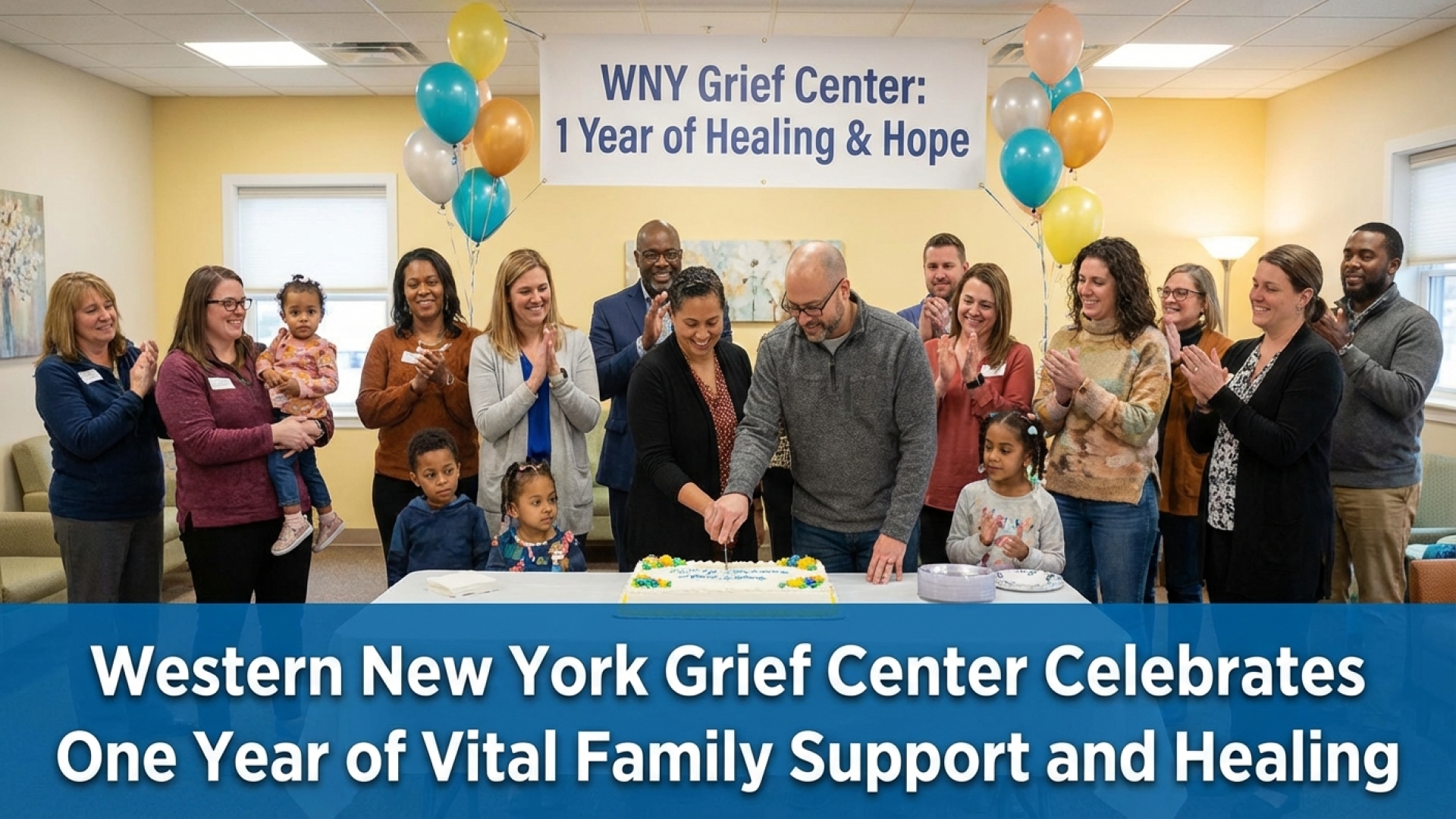
What began as a visionary effort to address a critical gap in Western New York’s social services has transformed into a vital lifeline for dozens of families. The Western New York Compassion Connection, a peer-support grief center dedicated to children and their families, is celebrating its first anniversary. In just twelve months, the center has significantly altered the landscape of bereavement support across Buffalo and the surrounding suburbs.
Filling the “Grief Desert” in Western New York
For years, Western New York was described by advocates as a “grief desert”—a region severely lacking in specialized, accessible support for children processing the death of a loved one. Co-founder Gwen Mysiak established the center to ensure that no local family has to navigate the isolation of loss without a community to lean on. Unlike clinical therapy environments, the center focuses on peer-led support, providing a space where participants “walk together” without the pressure of being “fixed.”
Maria Kreutinger is one of many Buffalo-area parents who found solace at the center. Following the death of her husband from brain cancer, Kreutinger sought a program that could accommodate both her needs and those of her young children, Fred (6) and Ernie (4). “I started coming here in April of last year,” Kreutinger told Lake Erie Times. “It is a wonderful, community-driven place where we can grieve, and my kids can connect with others in similar situations. It has been a massive boost for our family; we are finally able to grieve together.”
The Staggering Reality of Childhood Bereavement
The necessity for such a resource is backed by sobering regional data. Statistics provided by the Compassion Connection highlight the profound vulnerability of youth in our community. To better understand the scope of the issue in Erie County, consider the following data:
| Metric | Statistic |
|---|---|
| Erie County children losing a parent/sibling by age 18 | 1 in 11 |
| Erie County youth losing a parent/sibling by age 25 | Approx. 1 in 5 |
| Increased risk of substance abuse for bereaved youth | 175% |
| Youth suicide deaths involving a grieving child | 1 in 4 |
Jonathan McGrath, who facilitates the center’s support group for fathers, emphasizes that these statistics represent a call to action. “Bereaved youth are significantly more likely to face challenges later in life without proper intervention,” McGrath noted. He highlighted that the fathers’ group provides a rare space where local men feel comfortable dropping their guard. “Guys aren’t always great at articulating feelings, but here they realize they aren’t alone.”
A Year of Growth and Community Impact
In its inaugural year, the organization has served over 95 families directly and reached thousands more through partnerships with Western New York schools and workplaces. Currently, the center hosts ten distinct support groups tailored to specific roles—such as mothers or fathers—and specific types of loss.
The programming is as creative as it is emotional. Children often engage in “memory work,” such as crafting quilt squares decorated with photos and mementos of their lost loved ones. These individual pieces are eventually joined into a community quilt, symbolizing the shared journey of the participants. All services are provided at no cost to the families, sustained by a network of over 100 trained volunteers, many of whom are bereaved individuals themselves.
Looking Ahead
As the Western New York Compassion Connection enters its second year, the focus remains on expansion and accessibility. Mysiak credits the “overwhelming” support from the Buffalo community as the “rocket fuel” that has allowed the center to grow so rapidly. For families like the Kreutingers, the center’s presence means the difference between sinking and swimming in the wake of tragedy.
“Grief isn’t linear, and it isn’t going away,” Kreutinger said. “Having a safe space to grieve—that is everything.”
For more information on local community resources and health news, visit the Lake Erie Times Community section.
Disclaimer: The content provided by Lake Erie Times is for informational purposes only and should not be considered professional legal, financial, or clinical advice.