
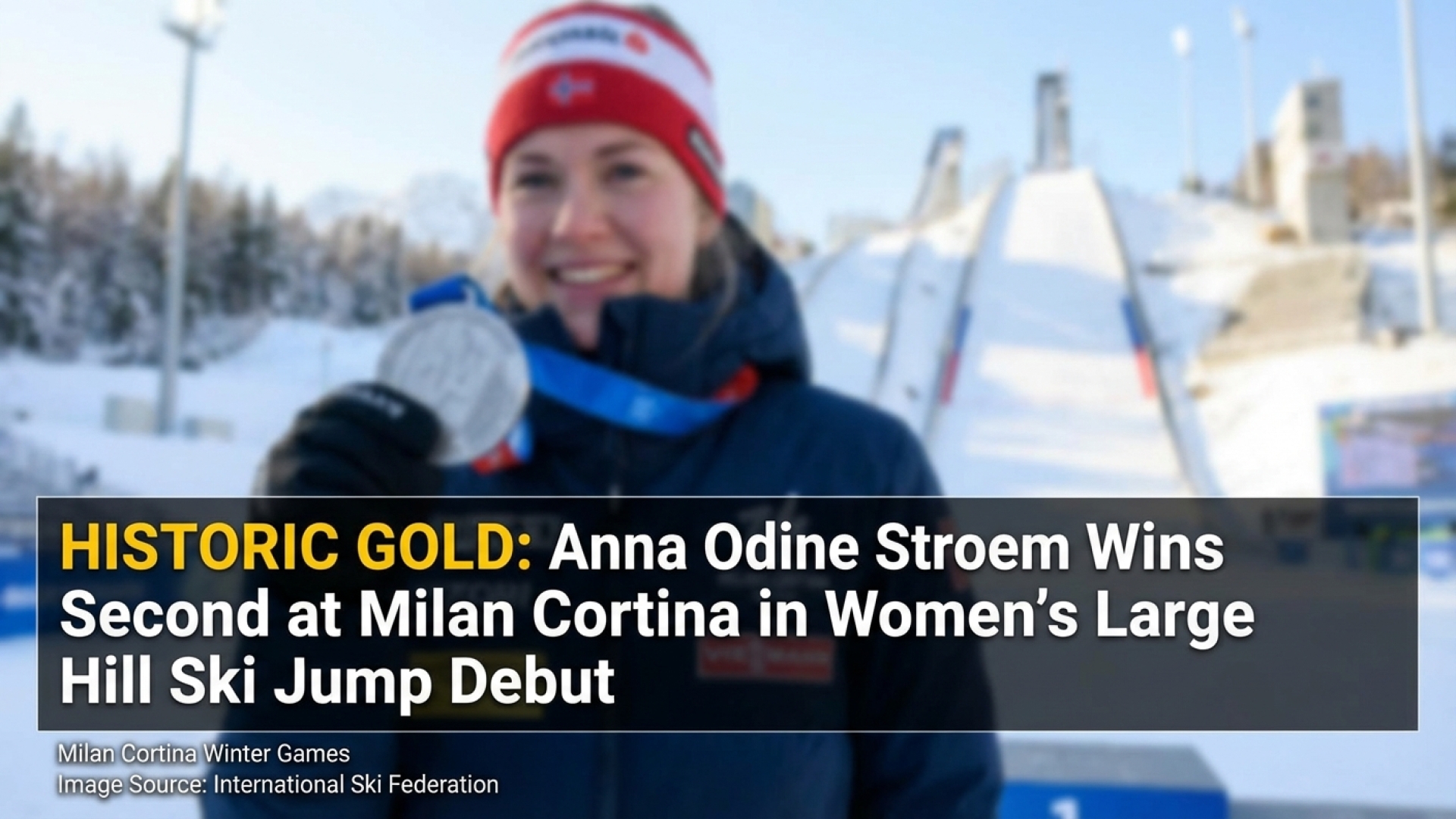
While the world turns its eyes toward the Milan Cortina Games, winter sports enthusiasts from Buffalo to the slopes of Ellicottville are witnessing a landmark shift in Olympic history. In a definitive performance for the ages, Norway’s Anna Odine Stroem captured her second gold medal during the Olympic debut of the women’s large hill ski jump. This victory not only cements Stroem’s legacy but also marks the successful culmination of a long-standing battle for gender equality within the sport.
Anna Odine Stroem’s Historic Double Gold
Competing at the Predazzo Ski Jumping Stadium, Stroem delivered a masterclass in technical precision. Her final jump of 132 meters (approximately 433 feet) secured her place at the top of the podium. The victory was bolstered by exceptional style points and strategic wind compensation, highlighting the technical evolution of the women’s field. This gold is the latest addition to Stroem’s impressive Milan Cortina haul, following her earlier triumph on the normal hill and a silver medal in the mixed team event.
“It’s been an unbelievable championship for me,” Stroem remarked following the medal ceremony. “I don’t think much can top this.” Her performance reinforces Norway’s status as a global powerhouse in international sports, a topic of frequent discussion among regional analysts who follow the Winter Games.
Norway Secures a Podium Sweep of the Top Two Spots
The Norwegian team’s depth was on full display as Eirin Maria Kvandal claimed the silver medal. Kvandal, a two-time world champion, actually out-distanced Stroem with a jump of 133.5 meters (438 feet), though the final scoring favored Stroem’s overall technical execution. The presence of Prime Minister Jonas Gahr Støre at the event underscored the national significance of the win. Støre noted the resilience of these athletes, who spent years advocating for the right to compete on the large hill—a stage previously reserved exclusively for men.
Milan Cortina Women’s Large Hill Results
| Rank | Athlete | Nationality | Medal |
|---|---|---|---|
| 1 | Anna Odine Stroem | Norway | Gold |
| 2 | Eirin Maria Kvandal | Norway | Silver |
| 3 | Nika Prevc | Slovenia | Bronze |
A Family Legacy: Nika Prevc Earns Bronze
Slovenian standout Nika Prevc secured the bronze, further enriching her family’s legendary status in the sport. Prevc, the defending World Cup and world champion, entered the competition as a heavy favorite. Despite a slow start that saw her in fifth place after the first round, her resilience allowed her to climb back into medal contention. The Prevc name is synonymous with excellence; Nika’s brothers, Peter and Cene, are both Olympic medalists. In a historic first for the Games, Nika and her brother Domen Prevc became the first siblings to win medals at the same Olympics, with Domen taking gold in the men’s large hill and the pair winning the mixed team event together.
The Path to Equality in Winter Sports
The introduction of the women’s large hill at Milan Cortina is more than just a new event; it is a milestone for inclusivity. While women have competed on the normal hill since 2014, the large hill remained a barrier for nearly a decade. For Western New Yorkers who value community progress and equal opportunity, this expansion of the Olympic program reflects a broader trend toward fairness in global athletics.
Norway continues to dominate the overall medal count with 26 total medals, including 12 gold, leading the charge ahead of host nation Italy. Conversely, the event marked a rare podium absence for Japan, as Nozomi Maruyama finished in eighth place.
For more updates on global events and how they resonate with our community, stay tuned to the Lake Erie Times. Reported by William Strasmore.
Disclaimer: The content provided by Lake Erie Times is for informational purposes only and should not be considered as professional legal or financial advice.
Affiliate Disclaimer: Some links on Lake Erie Times are affiliate links. This means that if you make a purchase through these links, we may earn a commission at no additional cost to you. Our recommendations are based on careful research and our commitment to quality journalism.