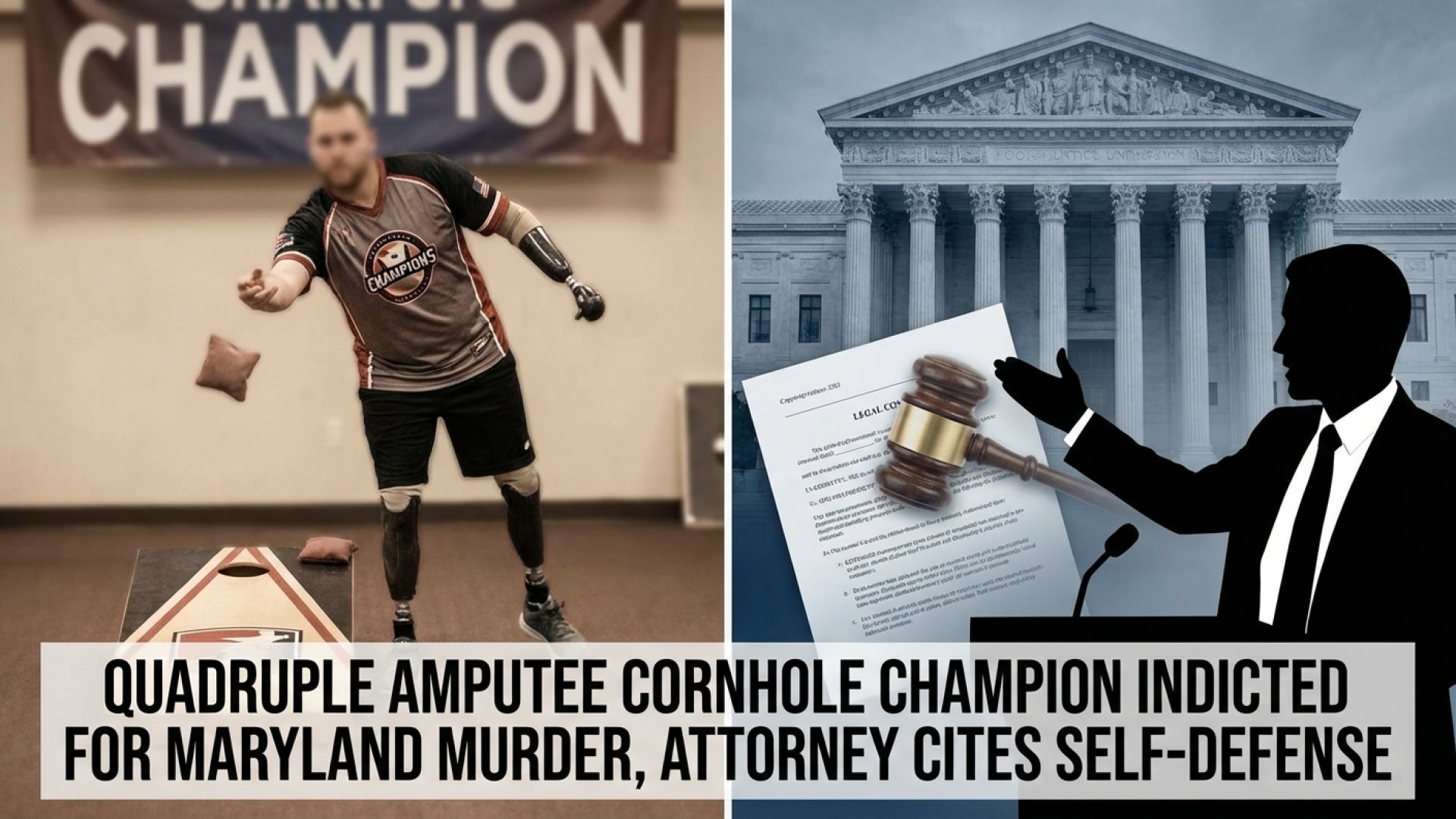
A Maryland grand jury has handed down a first-degree murder indictment against Dayton Webber, a prominent quadruple amputee and recognized champion in the professional cornhole circuit. The indictment follows a fatal shooting last month in La Plata, Maryland, which resulted in the death of his associate, Bradrick Wells. While the incident occurred outside the Western New York region, the profile of the accused and the nature of the charges have drawn significant national attention, prompting a closer look at the legal complexities of the case.
Formal Charges and Legal Implications
The indictment, unsealed this past Friday, outlines a series of severe allegations. Webber faces a primary charge of first-degree murder, a conviction for which carries a potential life sentence. Beyond the murder charge, the grand jury included two counts of reckless endangerment and one count of transporting a loaded handgun in a vehicle. Prosecutors allege that Webber shot Wells during an argument while inside a vehicle on March 22, an act that investigators claim moved beyond a simple dispute into a criminal fatality.
Case Overview: Maryland v. Dayton Webber
| Legal Category | Details |
|---|---|
| Primary Defendant | Dayton Webber (24) |
| Victim | Bradrick Wells |
| Primary Charge | First-Degree Murder |
| Secondary Charges | Reckless Endangerment (2 counts), Loaded Handgun in Vehicle |
| Defense Argument | Self-Defense / “Kill or be Killed” |
| Prosecution Stance | No evidence of self-defense; premeditated elements |
The Defense Strategy: A Claim of Self-Defense
Hammad Matin, the defense attorney representing Webber, has built his initial strategy around the concept of justifiable homicide. Matin argues that his client acted out of an immediate fear for his life, describing the situation as a “kill or be killed” scenario. According to the defense, the shooting was a reactive measure during a high-stress confrontation rather than a premeditated act of violence. Matin asserts that as the facts emerge, the evidence will show Webber was unable to retreat or handle the threat by any other means.
Prosecution Challenges the Narrative
Conversely, the Charles County State’s Attorney’s Office is moving forward with a starkly different interpretation of the events. Deputy State’s Attorney Karen Piper Mitchell has stated publicly that the current investigation, supported by witness testimony and forensic evidence, shows “no evidence of self-defense.” The prosecution’s focus remains on the loss of life and the accountability of the shooter, emphasizing that the indictment was secured through a rigorous review of the circumstances leading up to the fatal encounter.
Evidentiary Review and Procedural Status
Law enforcement officials are currently prioritizing the preservation of physical evidence, including items recovered after Webber sought medical attention at a Virginia hospital shortly after the incident. Maintaining a strict chain of custody is paramount as the case transitions toward the discovery phase. While a specific trial date has yet to be finalized, the legal teams for both the state and the defense are preparing for a protracted courtroom battle.
At the Lake Erie Times, we remain committed to providing our readers with analytical coverage of significant legal developments. While our primary focus is Western New York, cases involving public figures like Webber highlight broader issues of criminal justice and the legal standards of self-defense that impact communities nationwide.
Disclaimer: The content provided by Lake Erie Times is for informational purposes only and should not be considered professional legal or financial advice.