
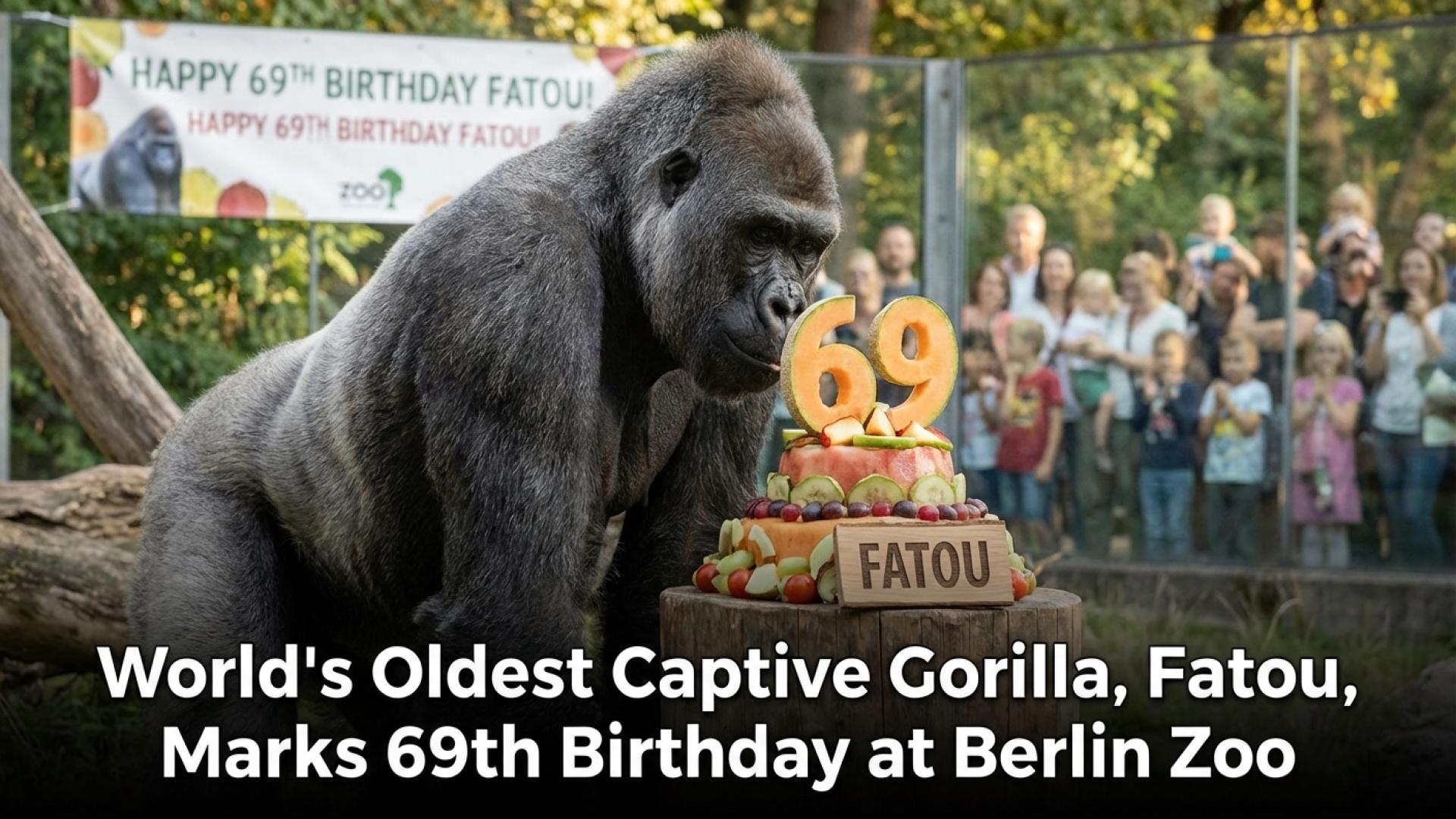
While the focus of the Lake Erie Times remains firmly on the pulse of Western New York, certain global stories resonate deeply with our local community of animal lovers and conservationists. In a remarkable display of longevity that has captured the attention of primate experts from Buffalo to Berlin, Fatou, the world’s oldest gorilla in captivity, recently celebrated her 69th birthday.
This milestone is more than just a celebration; it is a testament to the evolution of veterinary science and specialized geriatric care for endangered species. As we look at our own local initiatives in Western New York community enrichment, the story of Fatou provides a fascinating case study in animal welfare.
An Unprecedented Milestone in Primate Longevity
Fatou arrived at the Berlin Zoo in 1959, estimated to be approximately two years old at the time. With her “official” birthday marked as April 13th, her 69th year cements her status as a biological marvel. In the wild, Western lowland gorillas typically have a life expectancy of 35 to 40 years. Fatou has nearly doubled that lifespan, a feat that William Strasmore notes is indicative of the rigorous, individualized care protocols modern zoological institutions now employ.
She currently holds the title of the zoo’s most senior resident. This distinction was passed to her in 2024 following the death of Ingo the flamingo, who reached the age of at least 75. For those following global conservation efforts from our lifestyle and regional news sections, Fatou’s health offers valuable data for researchers studying aging primates.
Specialized Nutrition for a Senior Resident
Ensuring the health of a 69-year-old gorilla requires a strict departure from traditional primate diets. For her birthday feast, keepers provided a nutritious spread of cherry tomatoes, beets, leeks, and lettuce. Notably absent was any form of traditional birthday cake; zoo officials strictly avoid refined sugars, which are detrimental to the health of aging primates.
| Metric | Wild Gorilla Average | Fatou (Berlin Zoo) |
|---|---|---|
| Lifespan | 35–40 Years | 69 Years |
| Dietary Focus | Foraging/Wild Vegetation | Low-Sugar/Geriatric Nutrition |
| Social Structure | Troop-based | Independent/Enclosure-specific |
The Extraordinary Journey from West Africa
Fatou’s presence in Europe is the result of a historical narrative that sounds like something out of a mid-century novel. Born in the wild in West Africa, she was reportedly acquired by a French sailor. Legend has it the sailor used the young gorilla to settle a bar tab in Marseille, France. Eventually, she was purchased by the Berlin Zoo, where she has resided for over six decades. While modern ethical standards for animal acquisition have shifted drastically, Fatou’s history remains a significant chapter in the records of international wildlife trade.
Life in the Golden Years
Today, Fatou enjoys a quiet life in her own enclosure. Seniority has brought the same challenges faced by many elderly residents in our own local Buffalo neighborhoods: she deals with arthritis, some hearing loss, and a lack of teeth. To accommodate her, keepers soften her food and monitor her mobility closely.
Primate supervisor Christian Aust notes that while she remains friendly with her familiar keepers, she has developed a “stubborn” streak—a characteristic many suggest is well-earned after nearly seven decades. Her continued vitality serves as an inspiration for wildlife preservation advocates globally. As we continue to cover major regional and international events at the Lake Erie Times, the story of Fatou stands as a rare and heartening update in the world of natural science.
Disclaimer: The content provided by Lake Erie Times is for informational purposes only and should not be considered as professional legal or financial advice.
Affiliate Disclaimer: Some links on Lake Erie Times are affiliate links. This means that if you make a purchase through these links, we may earn a commission at no additional cost to you. Our recommendations are based on careful research and our commitment to quality journalism.