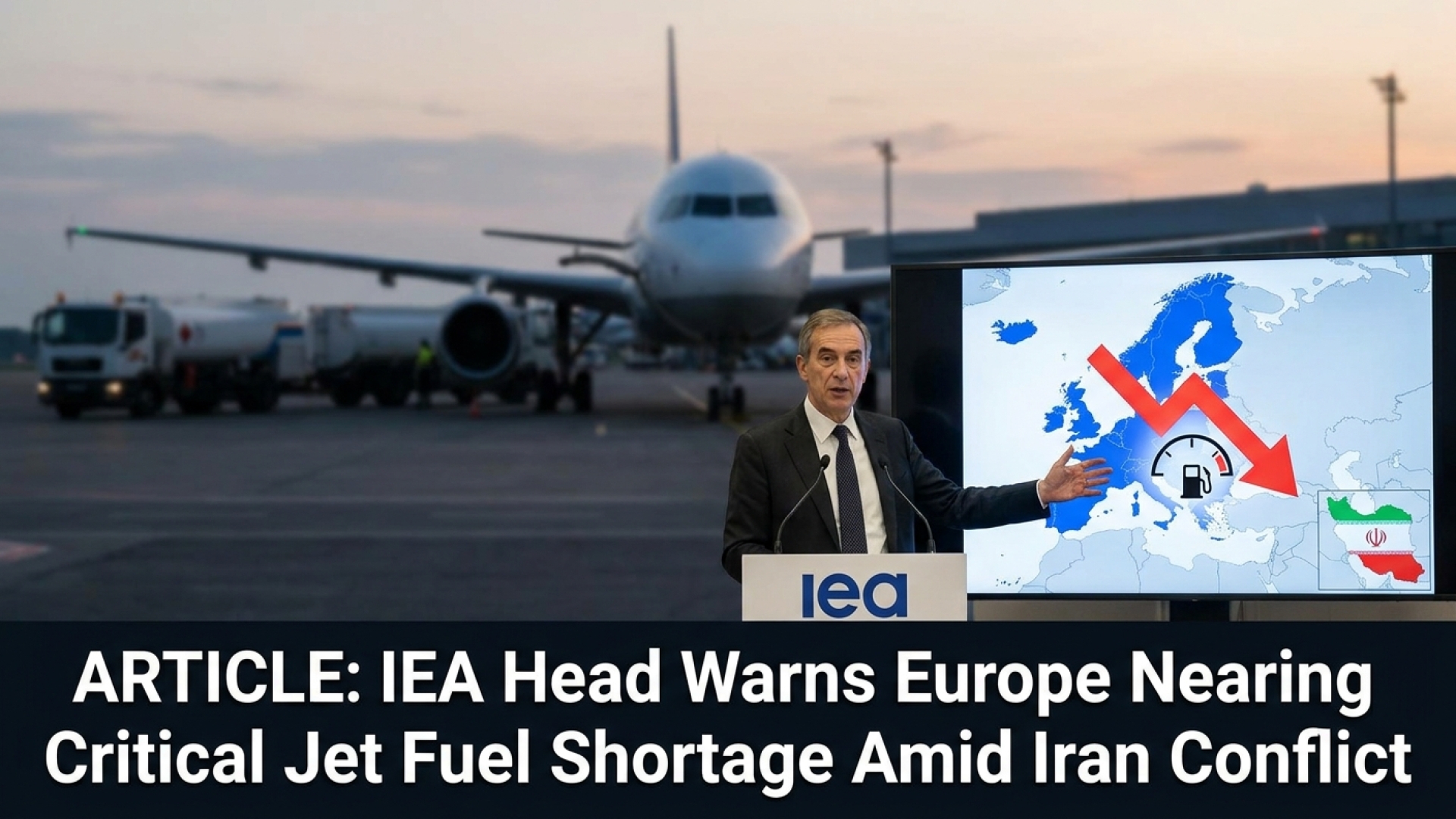
As the conflict involving Iran continues to disrupt global energy corridors, the International Energy Agency (IEA) has issued a sobering warning that carries significant implications for international travel and the global economy. For residents in Western New York and travelers utilizing the Buffalo Niagara International Airport, the ripples of this crisis are expected to manifest in rising costs and logistical hurdles in the coming months.
Europe’s Looming Fuel Exhaustion
IEA Executive Director Fatih Birol recently cautioned that Europe may have only “six weeks or so” of jet fuel supplies remaining. This precarious situation is a direct result of oil supplies being blocked by the ongoing hostilities. Should the deadlock continue, widespread flight cancellations across the continent are almost certain, creating a domino effect for transatlantic travel frequently accessed by New York residents.

The Strait of Hormuz: A Global Bottleneck
Birol categorized the current environment as the “largest energy crisis we have ever faced.” Central to the turmoil is the Strait of Hormuz, a vital waterway that handles nearly 20% of the world’s traded oil. The prolonged closure of this passage threatens to suppress global economic growth while driving inflation to new heights.
Western New York’s industrial and transportation sectors are particularly sensitive to these global shifts. As an investigative reporter for Lake Erie Times, I have observed how such international disruptions often lead to localized price spikes at gas stations in Buffalo, Cheektowaga, and Amherst.
| Impact Area | Projected Consequence |
|---|---|
| Aviation | Flight cancellations and surging ticket surcharges. |
| Energy Costs | Higher petrol, natural gas, and electricity prices. |
| Global Trade | Supply chain delays for over 110 oil tankers currently stalled. |
| Recovery Time | Up to two years to restore pre-conflict production levels. |
Regional Impact and Airline Responses
While the crisis is centered in the Middle East and Europe, the airline industry is already bracing for impact. U.S. carriers, including Delta Air Lines, are monitoring the situation closely as fuel costs climb. Meanwhile, international carriers like KLM have already announced the cancellation of 160 flights next month due to “rising kerosene costs” that have rendered certain routes unsustainable.
For Western New Yorkers planning travel, the message is clear: expect increased ticket fares and add-on fees. The economic pain is not limited to the wealthy; the IEA notes that developing nations and weaker economies will face the most significant challenges, including potential recessions.
A Shift in Global Energy Policy
The IEA has criticized the “toll booth” system applied by Iran to ships passing through the strait, warning that it sets a dangerous precedent for international maritime law. With over 80 key energy assets damaged in the conflict, the road to recovery will be long.
Birol suggests this global shock may serve as a catalyst for a faster transition to alternative energy sources, including nuclear power. This shift could redefine energy independence for regions like Western New York, which already relies heavily on a mix of hydroelectric and nuclear energy.
Lake Erie Times Insight
The intersection of energy and geopolitics continues to cast a “dark and long shadow” over the global economy. Here at Lake Erie Times, we remain committed to tracking how these international developments affect our local community in Buffalo and beyond. The vulnerability of the global supply chain to regional conflicts underscores the need for a more resilient and diversified energy strategy.
The content provided by Lake Erie Times is for informational purposes only and should not be considered as professional legal or financial advice.