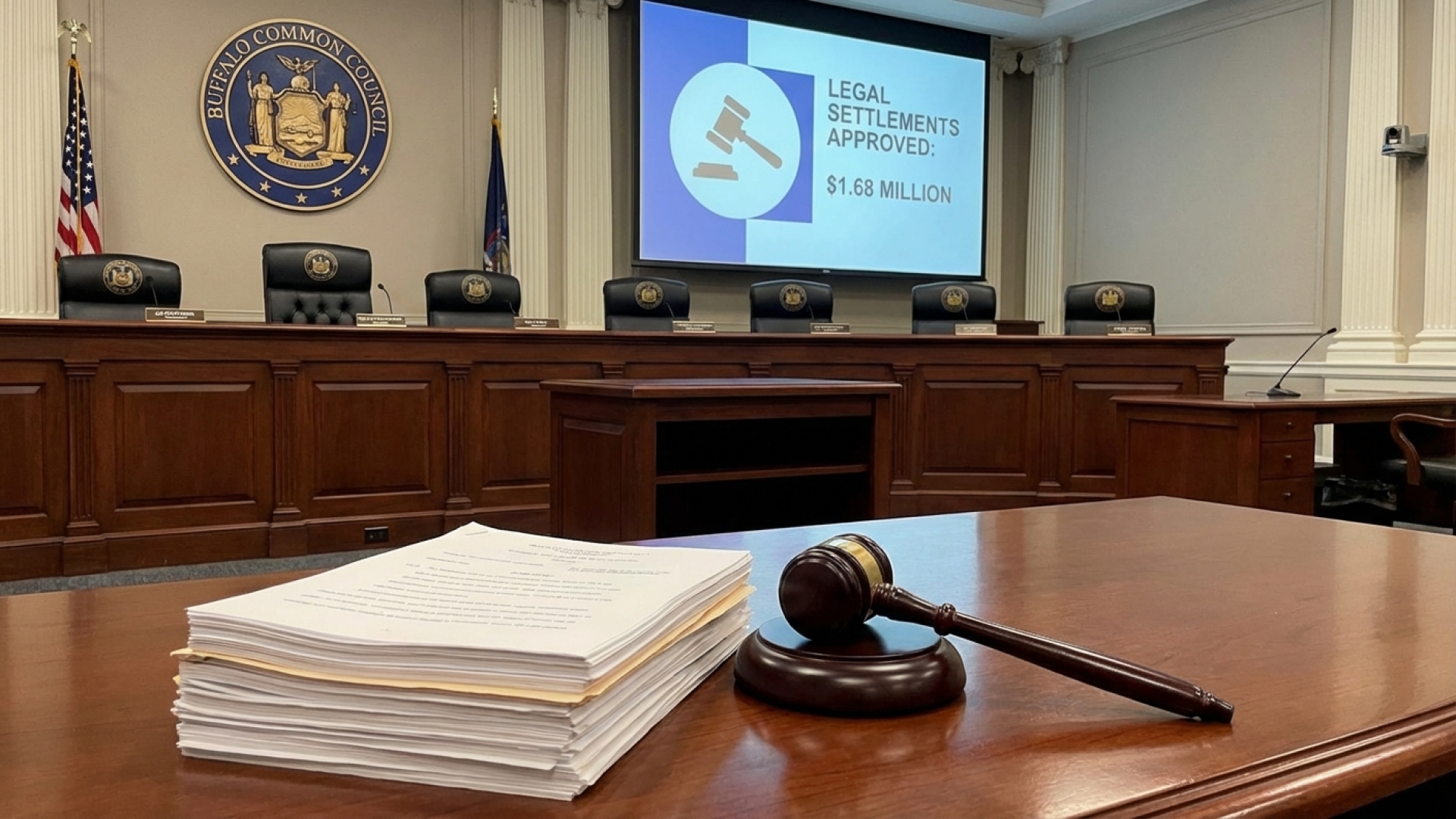
The Buffalo Common Council has moved to settle several high-profile lawsuits, approving a total of $1.68 million in payouts. The decision, reached during a recent session, highlights the ongoing financial strain on the municipal budget and underscores growing concerns regarding city liability and the recurring costs passed on to Western New York taxpayers.
A Breakdown of the Major Settlement Payouts
The settlements cover a range of incidents, from police misconduct and civil rights violations to infrastructure failures. The following table summarizes the primary allocations approved by the Council:
| Case Focus | Settlement Amount | Primary Incident Details |
|---|---|---|
| Police Misconduct | $700,000 | Alleged civil rights violations, false arrest, and malicious prosecution. |
| Property Liability | $245,000 | Structural collapse at 735 Humboldt Parkway causing personal injury. |
| Protest Misconduct | $100,000 | 2020 arrest of Myles Carter; charges were later dismissed. |
| Infrastructure Failure | $60,000 | Falling streetlight pole on Delaware Avenue due to advanced corrosion. |
Liability and the Taxpayer Burden
The largest single payout, a $700,000 settlement, stems from a civil case involving a Buffalo police officer. This case, alongside the $100,000 awarded to Myles Carter—who was tackled during a 2020 protest on Bailey Avenue—renews the local dialogue regarding police oversight and the cost of litigation in Buffalo local news.
Infrastructure maintenance also remains a point of contention. The $60,000 settlement involving a corroded streetlight pole on Delaware Avenue highlights the potential physical and financial risks of aging city assets. Furthermore, the $245,000 payout regarding the collapse at 735 Humboldt Parkway serves as a stark reminder of the liabilities inherent in city-owned properties.
Expert Analysis: Is Prevention Possible?
Paul Wolfe, an attorney and president emeritus of the New York Coalition for Open Government, suggests that while settlements are a standard part of municipal operations, the patterns behind them are troubling. “That money ultimately comes out of the pockets of taxpayers,” Wolfe noted. He emphasized that recurring names in lawsuits and preventable infrastructure decay indicate areas where the city could be more proactive.
“It’s either spend money beforehand or spend it after the fact,” Wolfe added. “After the fact means people are getting injured.” This sentiment is echoed by those following Buffalo politics, where the balance between budget management and public safety is constantly under scrutiny.
City Leadership and Future Oversight
Buffalo Common Councilman David Rivera, who chairs the relevant committee, argued that settling these cases is often the most fiscally responsible path to avoid the unpredictability and high costs of lengthy trials. Some of the cases settled this week date back several years, illustrating the long timeline of legal disputes involving the city.
In response to these payouts, city leaders have expressed a commitment to reducing future liability through enhanced training, stricter department oversight, and more rigorous maintenance schedules. The goal is to identify systemic issues before they result in injury or litigation, thereby protecting both the residents and the city’s financial health.
For more updates on community affairs and regional developments, visit the Lake Erie Times community section.
Disclaimer: The content provided by Lake Erie Times is for informational purposes only and should not be considered as professional legal or financial advice.