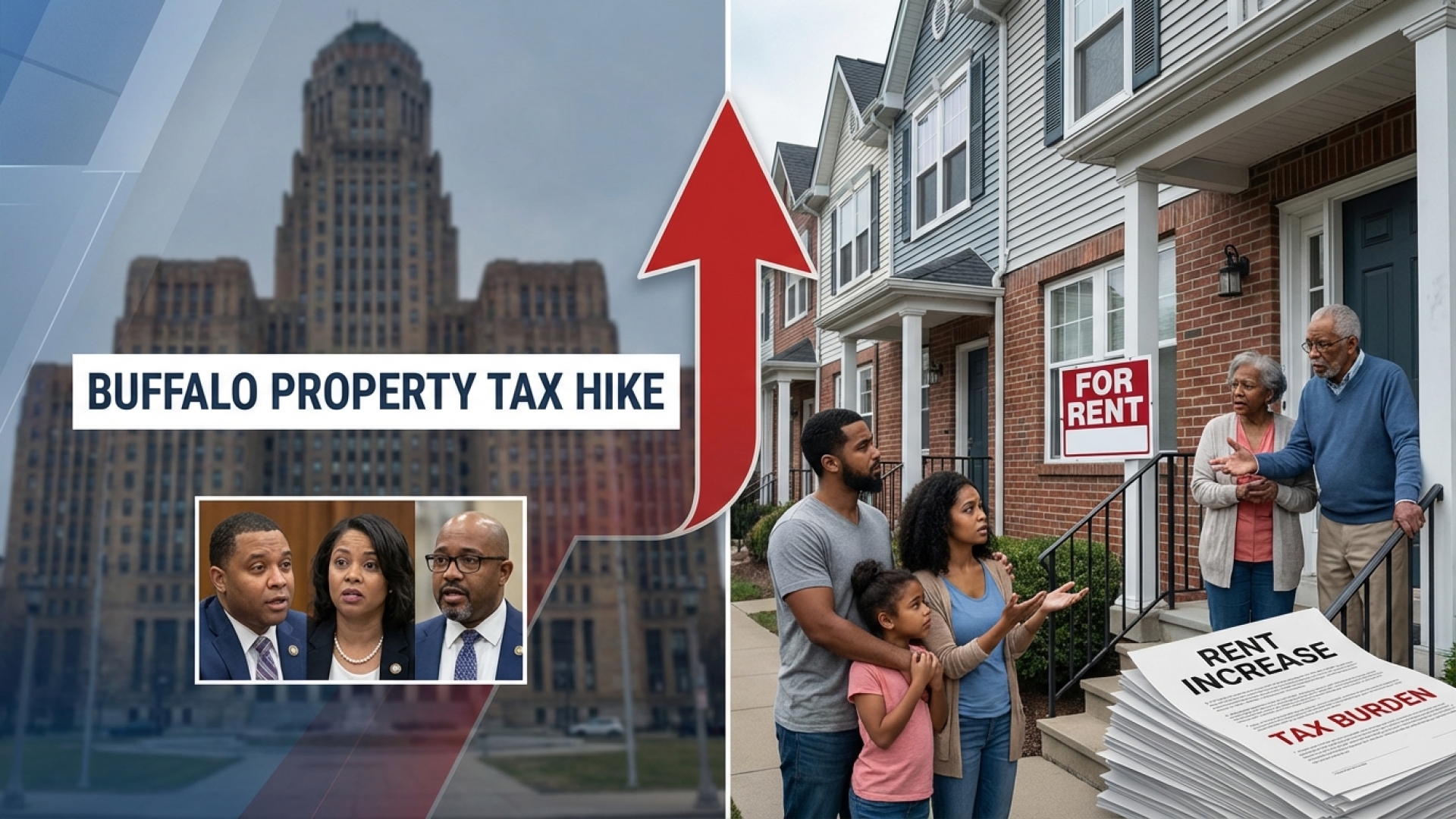
Concerns are mounting within Buffalo City Hall as the administration grapples with a looming fiscal crisis that could trigger substantial property tax hikes and a restructuring of tax classifications. The primary anxiety among local officials centers on how these adjustments might disproportionately impact residents, particularly the high volume of renters across the City of Buffalo.
As the Ryan administration prepares to unveil its upcoming budget proposal, insiders suggest a significant tax increase is not only likely but perhaps unavoidable given the city’s current financial standing. For a region already navigating economic shifts, these proposed changes represent a critical turning point for Western New York’s urban center.
Buffalo’s Fiscal Outlook: A Potential 25% Tax Hike
Mayor Ryan has signaled that the executive budget may include a property tax increase as high as 25%. Beyond the raw numbers, a secondary concern involves the potential loss of the “homestead” tax rate for certain rental properties. Historically, the lower homestead rate has been reserved for owner-occupied residences, providing a financial incentive for homeownership within the city.
Currently, many one, two, and three-family homes in Buffalo qualify for this beneficial rate even if they are occupied by tenants rather than the owner. Common Council members are now questioning whether the city can—or should—maintain this classification for non-owner-occupied units, a move that could significantly alter the local real estate market.
The Debate Over the Homestead Reform Bill
Legislative eyes are also turned toward Albany, where the Homestead Reform Bill seeks to tighten restrictions on these tax classifications. The bill aims to ensure the lower rate is strictly applied to genuine owner-occupied homes, but the proposal has met stiff resistance from local representatives.
North District Common Councilman Joseph Golombek has been a vocal critic of the reform, arguing that the burden will ultimately trickle down to those least able to pay. “This would not really impact the rich at all, except that they would end up raising rents on their properties,” Golombek noted, highlighting the vulnerability of his constituents in the city’s second poorest zip code. He maintains that the reform could exacerbate economic disparities rather than solve fiscal shortfalls.
Administration Downplays Immediate State Legislative Impact
Despite the heated rhetoric surrounding the Homestead Reform Bill, Deputy Mayor Benjamin Swanekamp suggested that the legislation is not currently a fast-tracked priority in the state legislature. Describing the bill as being “on the back burner,” Swanekamp reassured residents that existing regulations remain in place for the time being. This provides a temporary cushion for property owners who rely on current classifications to keep rental costs stable.
Alternative Revenue Strategies: Vacant Properties and Transfer Taxes
While homestead reform may be stalled, other legislative avenues are gaining momentum. Swanekamp highlighted progress on measures designed to tax vacant or abandoned properties at higher rates—a strategy successfully utilized in cities like Detroit and Baltimore to combat urban blight and generate revenue.
Furthermore, the city is seeking authorization for a real estate transfer tax. These initiatives represent a multi-pronged approach by the administration to address Buffalo’s budgetary needs without relying solely on traditional property tax levies.
Timeline for Buffalo’s Financial Future
The full scope of the city’s fiscal strategy will become clear in mid-April when the complete budget is released to the public. For residents and investors alike, this document will serve as a definitive roadmap for Buffalo’s economic health and the cost of living in the Queen City.
As part of our commitment to quality journalism at the Lake Erie Times, we will continue to monitor these developments at City Hall. For more in-depth reporting on local politics and community affairs, visit our Politics section.
Disclaimer: The content provided by Lake Erie Times is for informational purposes only and should not be considered as professional legal or financial advice.