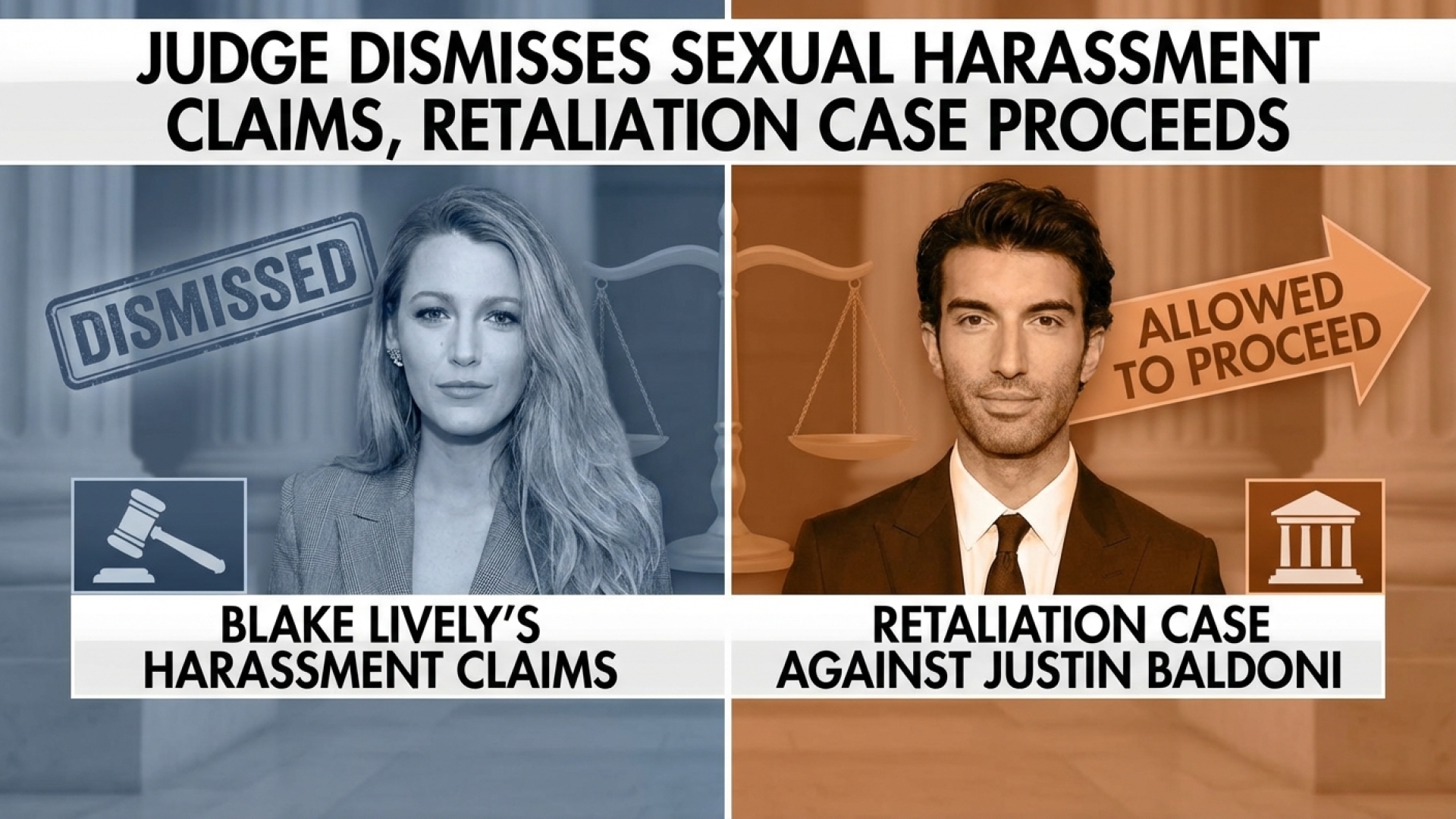
In a significant legal development with implications for the entertainment industry and labor law, a federal judge in Manhattan has issued a pivotal ruling in the ongoing dispute between actors Blake Lively and Justin Baldoni. While the court dismissed direct sexual harassment claims stemming from their collaboration on the film “It Ends With Us,” the case is far from over. Judge Lewis J. Liman ruled that Lively may proceed to trial with serious allegations of retaliation and breach of contract, ensuring that the conduct on the set of the blockbuster adaptation remains under intense judicial scrutiny.
Understanding the Court’s Ruling

The Lake Erie Times has been following the intersection of national media law and workplace safety, a topic of growing concern for our community. In this latest update, Judge Liman’s written decision narrowed the scope of the lawsuit filed last December. Specifically, the court tossed out claims of sexual harassment brought under Title VII of the Civil Rights Act of 1964. However, the judge maintained three other major counts—two involving retaliation and one regarding a breach of a contract rider—setting a jury trial date for May 18.
The Legal Distinction: Employee vs. Independent Contractor
The dismissal of the harassment claims hinged on a technical but vital legal classification. The court determined that Lively operated as an independent contractor during the production of “It Ends With Us,” rather than a traditional employee. Because Title VII is specifically designed to protect employees from workplace discrimination, the judge ruled that Lively was not eligible to seek damages under that specific statute. This distinction highlights the complexities modern performers face when navigating labor protections in the gig-heavy film industry.
Retaliation and the “Smear Campaign” Allegations
Despite the setback on the harassment charge, Lively’s legal team secured a victory regarding claims of retaliation. Judge Liman found sufficient evidence to allow a jury to evaluate whether “It Ends With Us Movie LLC” and Wayfarer Studios—Baldoni’s production company—intentionally sought to damage Lively’s reputation. Lively alleges that after she voiced concerns regarding on-set safety and conduct, the defendants launched a “devastating smear campaign” to preemptively discredit her.
Furthermore, a claim for a breach of a contract rider agreement remains intact. This suggests that contractual obligations regarding the working environment were potentially ignored, a matter that will now be settled in court.
Case Overview: Status of Legal Claims
| Claim Type | Status | Legal Basis / Reasoning |
|---|---|---|
| Sexual Harassment | Dismissed | Lively classified as an independent contractor, not an employee under Title VII. |
| Retaliation (Two Counts) | Moving to Trial | Allegations of a targeted smear campaign to damage Lively’s career. |
| Breach of Contract Rider | Moving to Trial | Failure to uphold specific contractual terms during production. |
| Defamation/Extortion (Countersuit) | Dismissed | Baldoni’s countersuit against Lively and Ryan Reynolds was tossed in June. |
On-Set Conduct and Hostile Work Environment
While the Title VII claims were dismissed, the specific instances of alleged inappropriate behavior remain central to the narrative of the surviving retaliation claims. Lively’s allegations describe a pattern of behavior by Baldoni that she claims created a hostile environment:
- Physical Proximity: Allegations of unwanted physical contact, including Baldoni rubbing his face against her neck and caressing her during scenes in a manner she felt exceeded the script.
- Inappropriate Commentary: Reports that Baldoni made unprofessional comments regarding her attire and allegedly joked about missing “sexual harassment training” when his behavior was challenged.
- Nudity Concerns: Allegations that Baldoni pressured Lively to perform a birth scene naked, which was then filmed on an open set without standard privacy protocols for nonessential personnel.
- Personal Disclosures: Claims that Baldoni shared inappropriate personal details about his past addiction to pornography in front of the crew after Lively mentioned she had never seen such content.
Judge Liman noted that while some actions might fall under the umbrella of creative experimentation or character immersion, they would clearly constitute a hostile work environment in a standard professional setting.
Response from the Legal Teams
Following the ruling, Sigrid McCawley, an attorney for Blake Lively, expressed confidence in the remaining case. “Ms. Lively looks forward to testifying at trial and continuing to shine a light on this vicious form of online retaliation,” McCawley stated. She emphasized that the focus remains on the “extraordinary steps” taken by the defendants to undermine Lively’s reputation after she advocated for a safer workplace.
Context: A Bestseller Meets the Big Screen
The drama on set provides a sharp contrast to the film’s commercial success. Based on Colleen Hoover’s bestselling 2016 novel, “It Ends With Us” is a narrative focused on the cycle of domestic violence. Despite the rumors of friction between the leads, the film debuted to a massive $50 million in August 2024. For those following the lifestyle and culture impacts of this story, the underlying book remains a touchstone for readers globally.
As Western New York readers look toward the May trial, the outcome may set a new precedent for how production companies handle internal disputes and the extent to which independent contractors are protected from retaliatory professional harm. At Lake Erie Times, we remain committed to delivering these incisive analyses on issues that impact our broader cultural and legal landscape.
Disclaimer: The content provided by Lake Erie Times is for informational purposes only and should not be considered professional legal or financial advice. Some links on Lake Erie Times are affiliate links. If you make a purchase through these links, we may earn a commission at no additional cost to you.