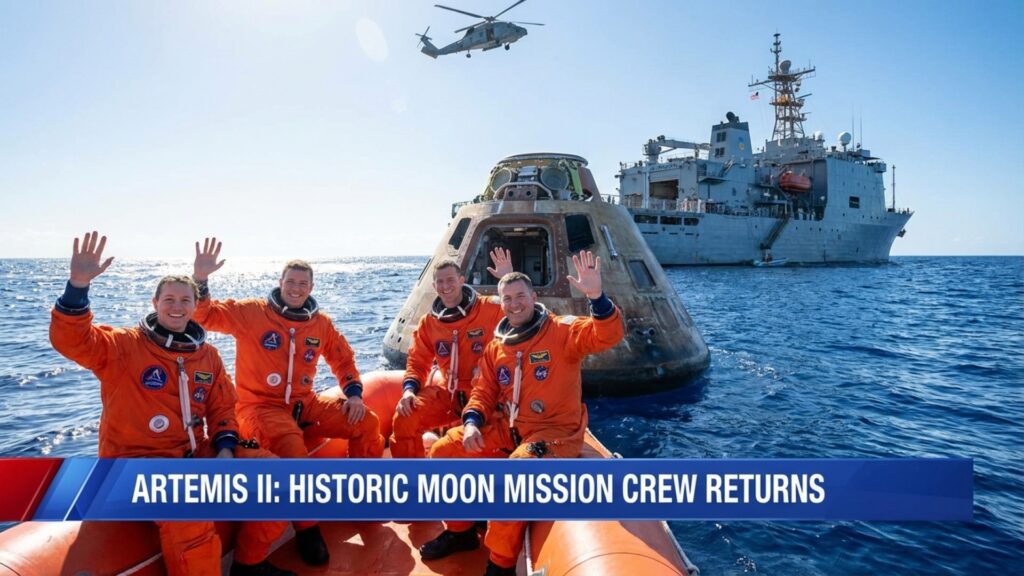
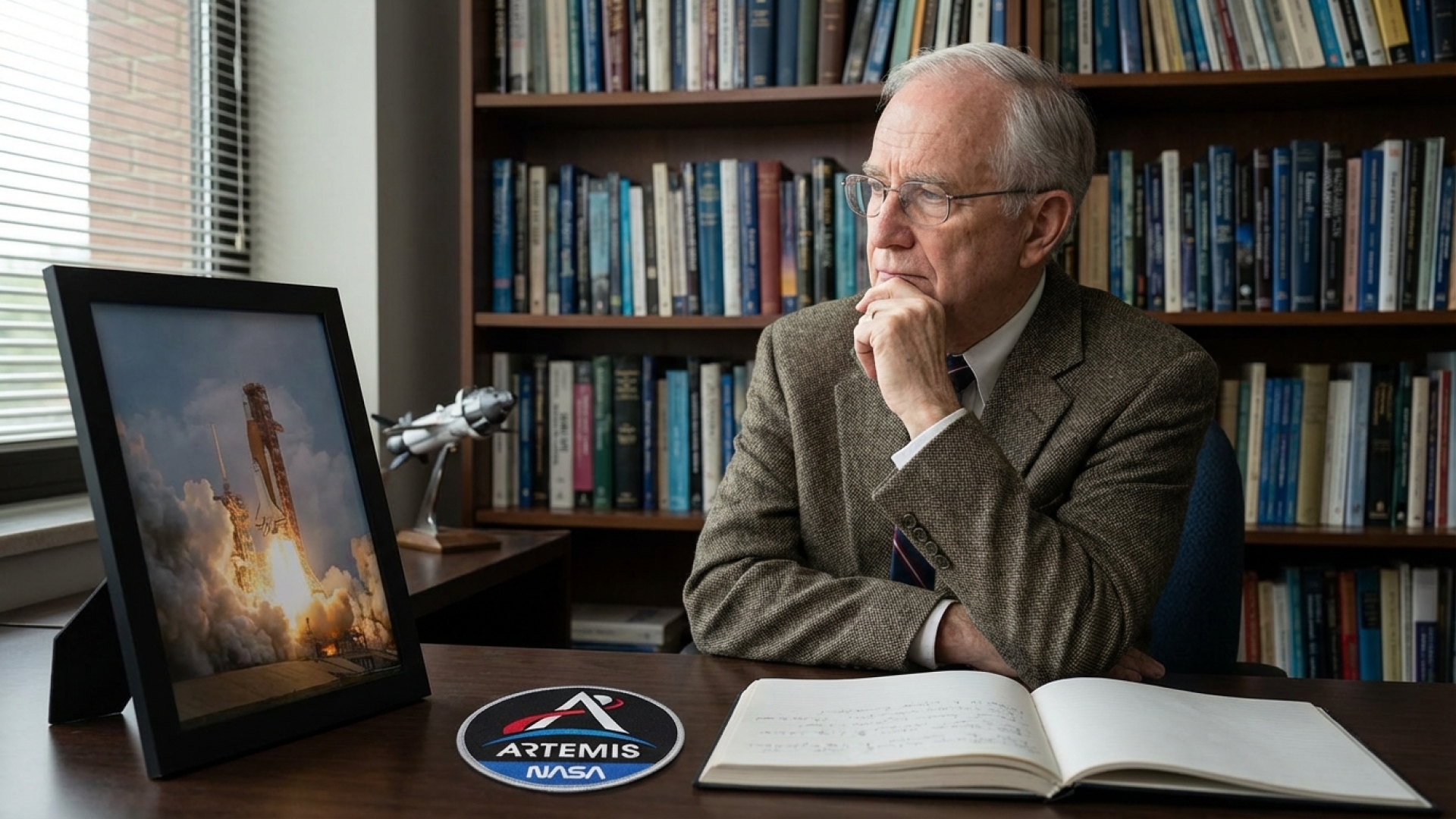
For the Western New York academic community, the upcoming Artemis II mission represents more than just a giant leap for lunar exploration—it is a moment of profound personal reflection. Ryan Hunter, a professor at the University at Buffalo Jacobs School of Medicine, recently found himself at the Kennedy Space Center, witnessing the preparations of astronaut Jeremy Hansen and reflecting on a journey that nearly took him to the stars.
A Canadian native now contributing to the scientific landscape of Buffalo, Hunter’s connection to the mission is deeply personal. Years ago, he was a finalist in the Canadian Space Agency’s (CSA) rigorous astronaut selection process, navigating a gauntlet of physical and intellectual challenges that brought him to the threshold of spaceflight.
A Near-Astronaut’s Perspective on Artemis II
As Jeremy Hansen prepares to become the first Canadian to venture toward the moon, Hunter views the milestone through the lens of both a peer and a scientist. “It’s inspirational for the entire country,” Hunter noted while observing the mission preparations. “There are very few Canadians who have participated in the space program at this level.”
Hunter emphasizes that the mission’s impact extends far beyond national pride. For the students and researchers at the University at Buffalo, the Artemis program serves as a catalyst for the next generation. “Being a scientist myself, I see how this provides hope for younger researchers. It demonstrates that the boundaries of our discipline are constantly expanding,” he said.
From the Rink to the Research Lab
Hunter’s trajectory toward the Jacobs School of Medicine was not always a straight line. Like many Canadians, his early years were defined by the ice. “I grew up playing hockey,” he recounted. “Once I realized that a professional career in sports wasn’t my destiny, I pivoted to academics.”
That pivot led him to a distinguished career in the biological sciences. His expertise in medicine and microbiology eventually converged with a fascination for the “final frontier.” This intersection of biology and space exploration is summarized in his professional transition below:
| Career Phase | Focus Area | Key Milestone |
|---|---|---|
| Early Years | Athletics | Competitive Hockey in Canada |
| Academic Pivot | Biological Sciences | Advanced Training in Medical Sub-disciplines |
| Space Ambition | Astronaut Candidate | Finalist for the Canadian Space Agency |
| Current Role | Medical Research | Professor, UB Jacobs School of Medicine |
The Search for Life Beyond Earth
The spark that ignited Hunter’s interest in the Canadian Space program was a fundamental scientific question: Is there life beyond our planet? This curiosity regarding astrobiology drove him to consider what biosignatures scientists should look for in extreme environments.
“I became interested in life beyond Earth and started thinking about what we might look for to determine if life exists in other places,” Hunter explained. This curiosity prompted him to apply for the CSA nearly two decades ago after seeing a call for applicants during his scientific training.
While his career eventually anchored him in the research corridors of Buffalo rather than the lunar surface, Hunter remains a vital link between Western New York and the global scientific community. His journey serves as a reminder that the spirit of exploration is as much about the research conducted in our local laboratories as it is about the rockets launched from the coast.
About the Author: William Strasmore is a dedicated news reporter for the Lake Erie Times, covering Western New York with a focus on regional politics, scientific advancement, and community affairs. With a background in investigative journalism, Strasmore provides incisive analyses on the issues that shape Buffalo and beyond.
Disclaimer: The content provided by Lake Erie Times is for informational purposes only and should not be considered as professional legal or financial advice. Some links on our site may be affiliate links; we may earn a commission at no additional cost to you, supporting our commitment to quality journalism.