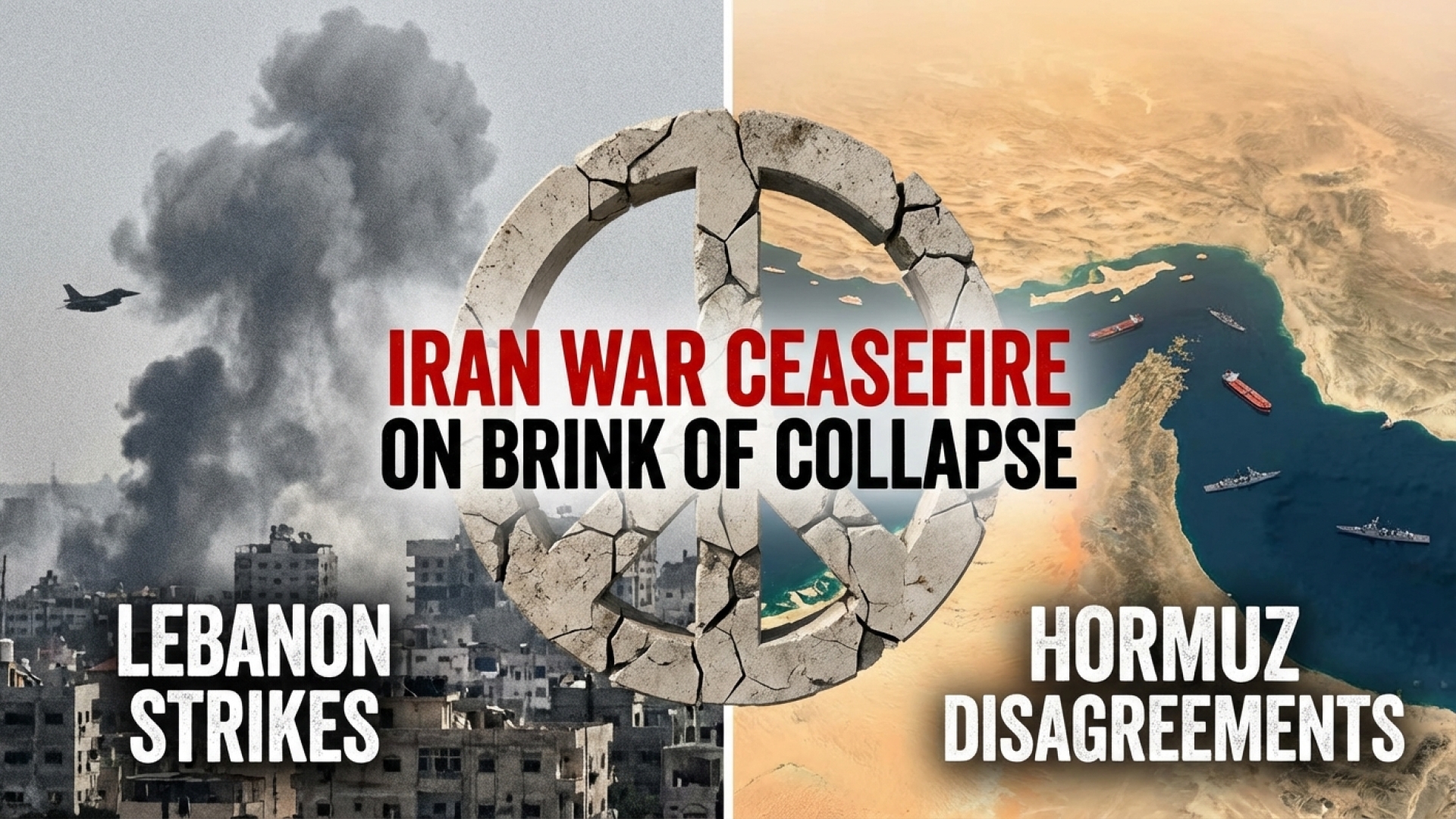
The fragile ceasefire in the Iran-Israel conflict faced a violent test on Thursday as intense Israeli bombardments struck Beirut, complicating a diplomatic effort that already hangs by a thread. While world leaders touted a potential pause in hostilities, the reality on the ground—and the continued blockade of the Strait of Hormuz—presents a dire outlook for global stability and economic interests reaching as far as Western New York.
Hours after the initial ceasefire announcement, a wave of airstrikes hit the Lebanese capital, marking the deadliest single day in the country since the war began on Feb. 28. The escalation highlights a fundamental disagreement: while Iran suggests the deal includes its regional proxies like Hezbollah, Israel and the United States maintain that the pause applies specifically to direct state-on-state conflict.
Conflicting Narratives and Nuclear Stakes
At the heart of the deadlock is Iran’s nuclear ambition. Mohammad Eslami, head of the Atomic Energy Organization of Iran, clarified Thursday that any permanent settlement must include the internationally recognized right for Tehran to enrich uranium—a point the U.S. has historically rejected. As local politics and international diplomacy intersect, the upcoming talks in Pakistan will likely hinge on whether a middle ground exists regarding Iran’s stockpile of highly enriched material.
In Lebanon, the human cost of the diplomatic friction is mounting. At least 182 people were killed on Wednesday as Israeli forces targeted Hezbollah infrastructure, including an strike that killed Ali Yusuf Harshi, a key aide to the militant group’s leadership. For residents in the Western New York community watching these events, the volatility underscores the difficulty of achieving a lasting peace in a region defined by proxy warfare.
The Strait of Hormuz and the Buffalo Economy
For Western New Yorkers, the most immediate impact of the conflict is felt at the gas pump and in the cost of imported goods. The Strait of Hormuz, a narrow waterway responsible for 20% of the world’s oil and natural gas trade, remains effectively shuttered by Iranian naval activity and sea mines.
The following table illustrates the dramatic shift in maritime traffic and energy costs since the onset of the conflict:
| Metric | Pre-War (Feb 27) | Current (April 9) |
|---|---|---|
| Brent Crude Oil Price (per barrel) | ~$72.00 | $98.00 |
| Daily Ship Transits (Average) | ~80-100 | 4 (Trackers On) |
| Strait Status | Open/Free Transit | “Danger Zone” / Contested |
According to data from Kpler, ship owners continue to avoid the region despite the ceasefire announcement. This supply-chain strangulation has pushed diesel prices to record highs in several states, directly impacting the business landscape in the Great Lakes region, where transport and logistics costs are sensitive to energy fluctuations.
Diplomatic Crossroads in Islamabad
The White House has confirmed that Vice President JD Vance will lead the U.S. delegation to Islamabad this Saturday. The mission is clear but daunting: formalize a ceasefire that addresses Iran’s missile program, the removal of enriched uranium, and the restoration of free passage through international waters.
President Donald Trump has maintained a hardline stance, warning on social media that U.S. forces remain stationed near Iran and are prepared to resume military action if the “Real Agreement” is not met. Meanwhile, Iran’s deputy foreign minister, Saeed Khatibzadeh, stated that maritime “international norms” would only be restored once U.S. “aggression” and Israeli strikes in Lebanon cease.
As an investigative reporter covering regional and global issues, it is evident that while the ink may be dry on the ceasefire announcement, the conflict’s resolution is far from guaranteed. Lake Erie Times will continue to monitor how these global tensions influence the local economy and safety of our region.
Editor’s Note: This report includes contributions from Associated Press writers in Athens, Hong Kong, Washington, and Beirut. Copyright 2025 Associated Press. All rights reserved.
Disclaimer: The content provided by Lake Erie Times is for informational purposes only and should not be considered as professional legal or financial advice.
Affiliate Disclaimer: Some links on Lake Erie Times are affiliate links. This means that if you make a purchase through these links, we may earn a commission at no additional cost to you. Our recommendations are based on careful research and our commitment to quality journalism.