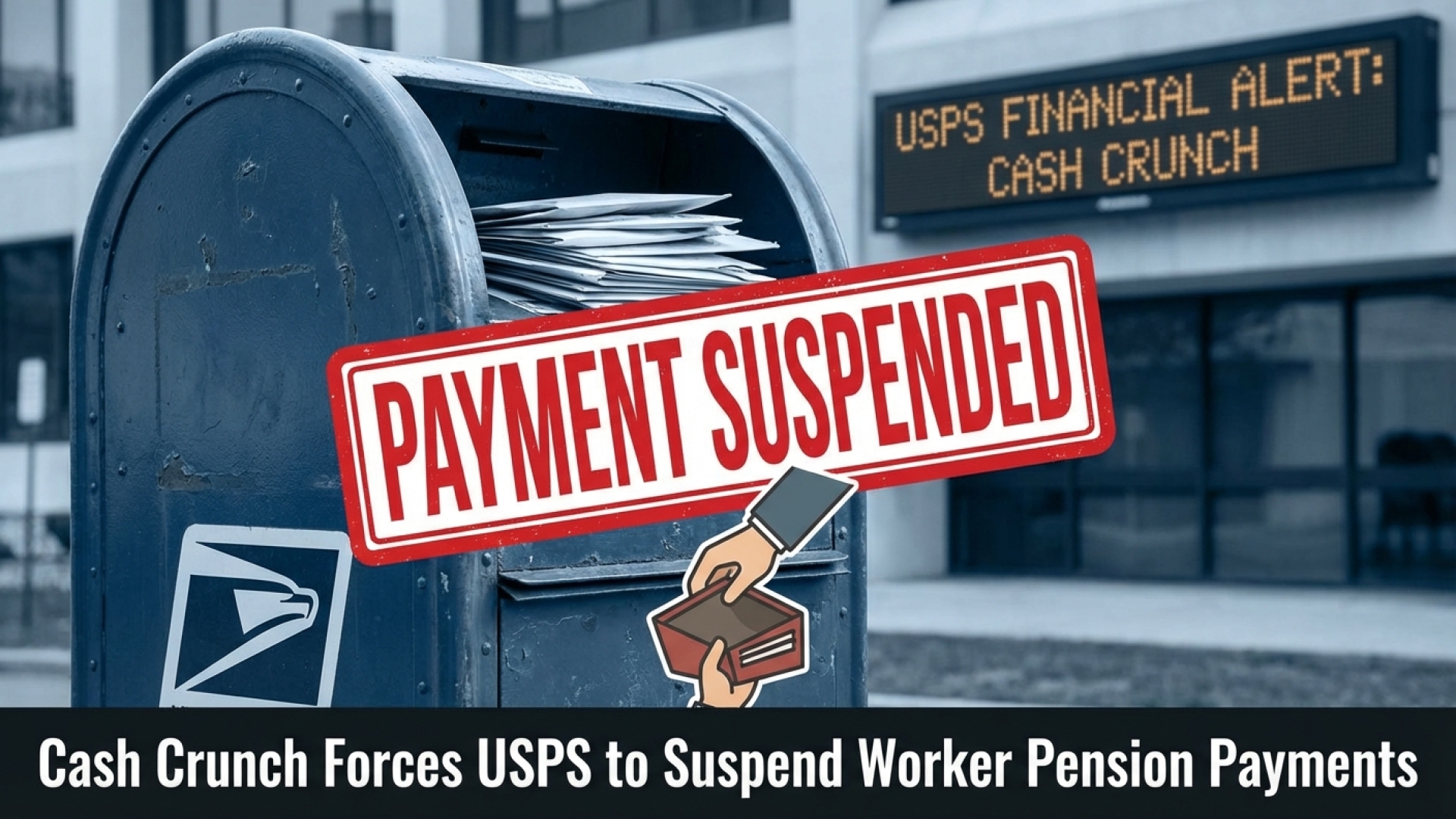
The U.S. Postal Service (USPS) has announced a temporary suspension of its employer contributions to the Federal Employees Retirement System (FERS) annuities, a decision triggered by a deepening financial crisis that threatens the agency’s long-term viability. This move is designed to preserve immediate liquidity, ensuring that payroll, supplier obligations, and essential mail delivery services remain uninterrupted across Western New York and the rest of the nation.
USPS Navigates Severe Financial Challenges
In an internal directive reviewed by the Lake Erie Times, Chief Financial Officer Luke Grossmann explained that the Postal Board of Governors authorized this step as a critical maneuver to prevent total cash depletion. Current projections suggest the agency could run out of cash by February 2027 without significant intervention. For residents in Buffalo and the surrounding suburbs who rely on daily mail for medication and bills, the suspension represents a defensive strategy to keep the trucks moving, prioritizing immediate operational needs over long-term pension funding.
Despite the halt in employer contributions, the USPS clarified that current and future retirees will not see an immediate impact on their benefits. The agency will continue to transmit employee-side retirement contributions to the Office of Personnel Management. Furthermore, matching funds for the Thrift Savings Plan and employer contributions to Social Security will remain intact. Those seeking a deeper understanding of these benefits can consult a Western New York business guide on federal workforce transitions.
Regional Impact and Stakeholder Reactions
The decision has sent ripples through the local labor community. Brian Renfroe, president of the National Association of Letter Carriers, noted that while the suspension is “not ideal,” it serves as a necessary evil to avoid more drastic measures that could impact the livelihoods of carriers on the streets of Buffalo. With approximately 99% of career postal employees covered by FERS, the stability of this system is a top priority for our local community and the thousands of postal workers residing in Erie and Niagara counties.
| Fiscal Year | Net Loss (Billions) | Primary Financial Driver |
|---|---|---|
| 2024 | $9.5 | Declining First-Class Mail Volume |
| 2025 | $9.0 | Operational Costs & Inflationary Pressure |
Seeking Long-Term Solutions for USPS Stability
Postmaster General Louis DeJoy has consistently advocated for legislative reform to address the underlying structural deficits. Key proposals include raising the agency’s borrowing cap and granting greater autonomy to adjust postage prices in alignment with rising operational costs. Investigative analysis into regional political dynamics suggests that congressional action will be required to provide the USPS with a permanent “off-ramp” from its current fiscal trajectory.
Consumer advocacy groups, such as “Keep Us Posted,” are calling for a balanced approach. They argue that while the USPS needs liquidity, frequent rate hikes could alienate the very businesses and greeting card publishers that sustain the service. They continue to lobby for the preservation of six-day-a-week delivery, a service vital to the rural and urban pockets of the Western New York region.
Analyzing the Shift in Mail Volume
The root of the crisis lies in a seismic shift in how Americans communicate. Mail volume has plummeted from a peak of 220 billion pieces in 2006 to just 110 billion today. This decline is largely fueled by the transition to digital billing and online communication platforms. While the local news often highlights the growth of e-commerce, that growth hasn’t fully offset the losses in high-margin First-Class mail.
Despite the $9 billion loss reported for the 2025 fiscal year, there are minor bright spots. Total operating revenue saw a slight uptick of $916 million, largely due to the regional success of the Ground Advantage shipping service. However, as the USPS continues to navigate these choppy financial waters, the focus remains on maintaining the “last mile” of service that connects every household in the Lake Erie region to the rest of the world.
Disclaimer: The content provided by Lake Erie Times is for informational purposes only and should not be considered as professional legal or financial advice. Some links on Lake Erie Times are affiliate links. If you make a purchase through these links, we may earn a commission at no additional cost to you.