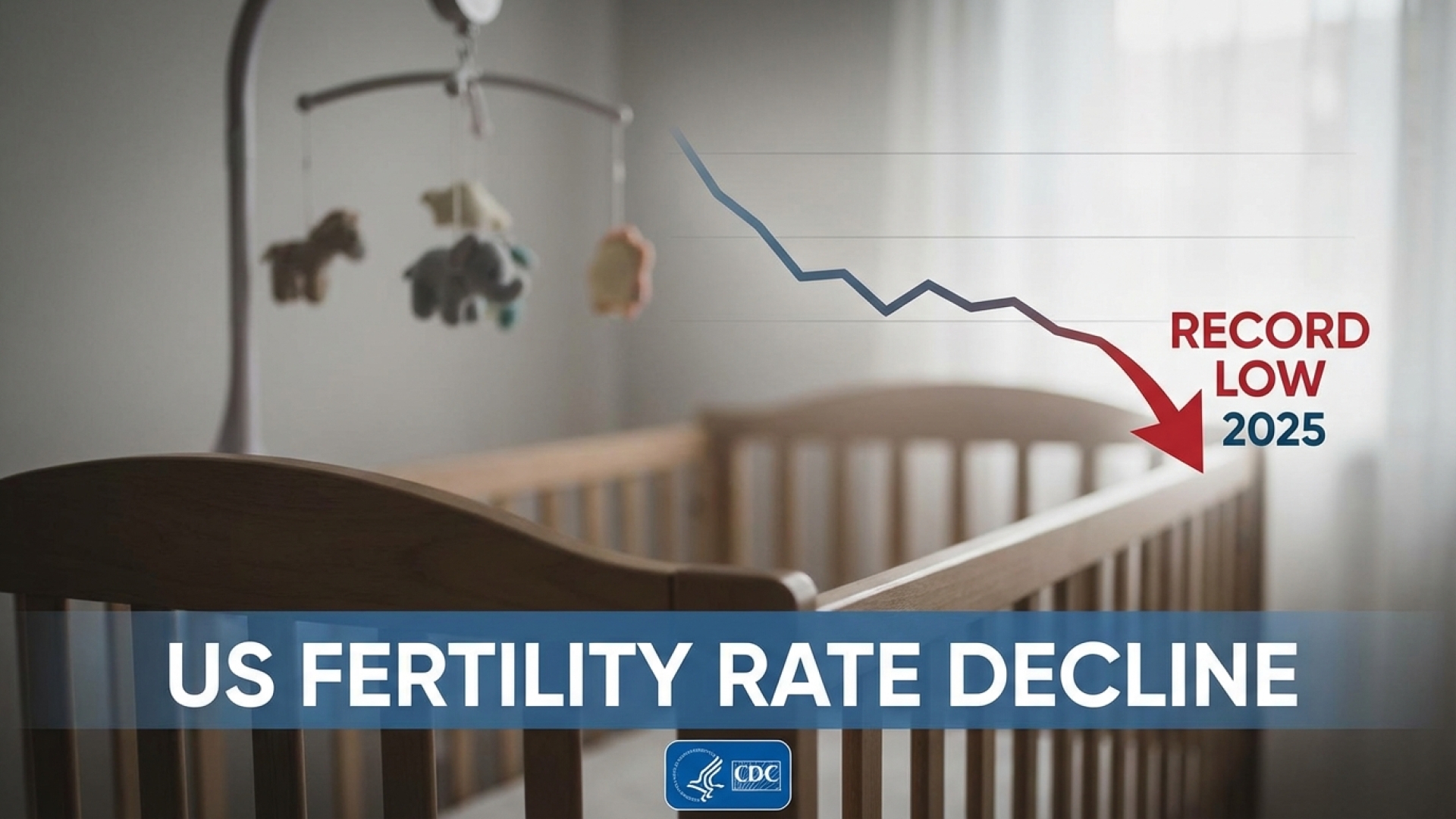
The United States reached a significant demographic turning point in 2025 as the national fertility rate continued its multi-decade descent to a new record low. Preliminary data from the U.S. Centers for Disease Control and Prevention (CDC) highlights a persistent downward trajectory, a trend that carries profound implications for the national economy and the local community here in Western New York.
Analyzing the National Fertility Decline
According to the CDC’s latest findings, the general fertility rate fell to 53.1 births per 1,000 women aged 15 to 44 in 2025—a 1% decrease from the previous year. This contraction represents more than just a statistical dip; it is the continuation of a trend observed since 2007, during which the nation’s fertility rate has plummeted by approximately 23%.
In Buffalo and the broader Lake Erie region, these national shifts mirror local concerns regarding aging populations and the future of the regional workforce. As birth rates soften, the long-term sustainability of community infrastructure and school districts becomes a focal point for regional planning.
| Metric | 2024 Data | 2025 Data | Percentage Change |
|---|---|---|---|
| General Fertility Rate (per 1,000 women) | 53.8 | 53.1 | -1.3% |
| Total Annual Births | ~3,642,800 | 3,606,400 | -1.0% |
| Teen Fertility Rate (Ages 15-19) | – | – | -7.0% |
A Generational Shift: Delayed Childbearing
The data reveals a stark contrast between age demographics. While fertility rates for teenagers and women in their early 20s have hit historic lows—with teen births dropping over 70% since 2007—older demographics are seeing a slight uptick. The rate for women aged 30 to 34 increased by approximately 3% last year, signaling a broad societal move toward delaying parenthood.
This delay is often attributed to economic factors, career prioritization, and a desire for greater stability before starting a family. For those navigating this shift, utilizing tools like advanced fertility tracking kits can provide essential insights into reproductive health during these later childbearing years.
The Replacement Level Crisis and Local Impact
For a population to remain stable without significant immigration, a replacement rate of 2.1 children per woman is required. The U.S. has now fallen below 1.6, a figure that raises red flags for economists. In Western New York, where industrial and healthcare sectors rely on a steady pipeline of new talent, a shrinking younger generation could eventually strain social support systems and stifle local innovation.
The Census Bureau reports that 63% of women aged 25 to 29 are currently childless, up from 50% just a decade ago. As more residents in the Lake Erie region choose to wait, focus has shifted toward reproductive preparation. Many prospective parents are turning to high-quality pre-conception vitamins to ensure optimal health when they do decide the time is right.
Looking Ahead: Economic and Social Resilience
While immigration continues to bolster the overall U.S. population, the internal decline in birth rates suggests a future with a much higher median age. For Buffalo families, this highlights the necessity of early preparation. Navigating the costs of modern parenting requires diligent research; resources such as effective family financial planning tools are becoming indispensable for young professionals in our region.
As we continue to monitor these demographic changes at the Lake Erie Times, it remains clear that the choices made by the current generation will reshape the economic landscape of Western New York for decades to come.
Disclaimer: The content provided by Lake Erie Times is for informational purposes only and should not be considered as professional medical, legal, or financial advice. Some links in this article are affiliate links; we may earn a commission at no additional cost to you, which supports our commitment to local journalism.