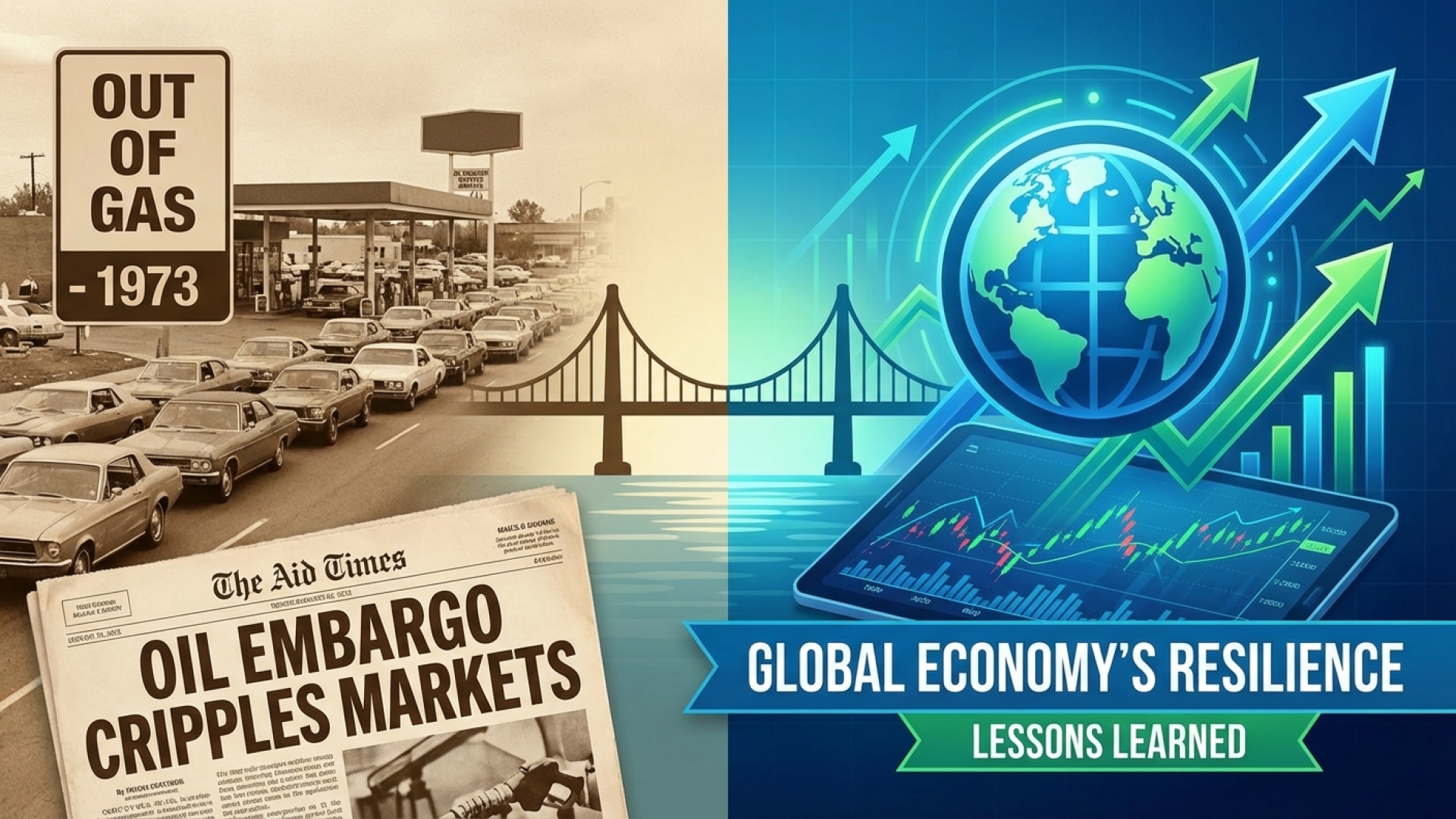
For residents across Western New York, the sight of rising digits at the gas station display feels like a disorienting flashback. As conflict in the Middle East drives a surge in global oil prices, the rising costs of gasoline, diesel, and jet fuel are reigniting fears of “stagflation”—that difficult economic cocktail of high prices and stagnant growth that defined much of the 1970s. However, an investigative look at our current economic landscape suggests that while the sting at the pump is real, the U.S. and global economies are far more resilient than they were a half-century ago.
The memory of the 1973 Yom Kippur War and the 1979 Iranian revolution remains a benchmark for energy crises. During those eras, Middle Eastern producers significantly restricted supplies, leading to mile-long lines at fuel stations and a radical shift in how nations viewed energy security. Today, experts like Amy Myers Jaffe of New York University’s Center for Global Affairs argue that decades of experience have built a necessary “scar tissue” that helps the market absorb these shocks more effectively.
Despite this historical perspective, modern challenges remain. The stability of the Strait of Hormuz—a vital artery through which 20% of the world’s daily oil production flows—continues to be a major point of sensitivity for global business and trade.
Adapting to the Pressure: A Diversified Energy Portfolio
The primary reason the current crisis hasn’t crippled the economy is a fundamental shift in our energy mix. In 1973, oil powered nearly half the world; today, that dependence has thinned considerably. By diversifying into natural gas, nuclear power, and renewables like solar and wind, the global economy has cushioned itself against the volatility of a single commodity.
| Energy Factor | 1973 Statistics | 2023/2024 Statistics |
|---|---|---|
| Global Oil Share of Energy | 46% | ~30% |
| U.S. Vehicle Fuel Efficiency | 13.1 MPG | 27.1 MPG |
| U.S. Oil Production | 9.2M Barrels/Day | 13.6M Barrels/Day |
| Net Energy Status | Heavy Importer | Net Petroleum Exporter |
The United States has undergone a particularly dramatic transformation. Following years of declining domestic production, the “fracking” revolution of the early 21st century turned the tide. By 2019, the U.S. became a net petroleum exporter. This shift, combined with a 1978 law that phased out oil-fired electricity generation, has decoupled much of our power grid from Middle Eastern oil volatility.
Lessons in Conservation: From Nixon to the Modern Era
The 1970s oil embargo forced immediate, often drastic, changes in consumer behavior. President Richard Nixon famously instituted a national 55-mph speed limit and urged gas stations to close on weekends. Internationally, the United Kingdom moved to a three-day work week to conserve electricity, and Japan introduced “sho-ene” laws to mandate efficiency across its industrial sectors. These measures weren’t just temporary fixes; they sparked a long-term commitment to lifestyle changes and engineering marvels.
By 1975, the U.S. government established the first fuel economy standards. The result has been a steady climb in vehicle efficiency, effectively doubling the miles a driver can get from a single gallon of gas over the last 50 years. Additionally, the establishment of the Strategic Petroleum Reserve (SPR) provided a critical emergency buffer, recently utilized by IEA member countries to stabilize market prices during international conflicts.
Political Shifts and the Future of Energy Independence
While the structural foundation of the economy is stronger, political decisions at the federal level continue to shape our vulnerability. Under the administration of Donald Trump, several policies aimed at curbing petroleum dependence were rolled back. These included the reduction of consumer credits for electric vehicle (EV) purchases and the easing of fuel economy mandates for automakers.
In our local politics and regional planning, these shifts matter. As Sam Ori, executive director of the University of Chicago’s Energy Policy Institute, notes, reversing efforts to adopt EVs and higher efficiency standards could leave the U.S. economy more exposed to future price spikes than it otherwise would be. For Western New Yorkers, who rely heavily on personal vehicles for commuting and commerce, the balance between traditional fossil fuels and emerging green technology remains a central economic debate.
As we navigate this period of global tension, the infrastructure of the 21st century—from fracking sites to solar arrays—provides a level of protection our parents didn’t have in 1973. However, the price at the pump remains a reminder that our local economy is inextricably linked to global events.
For more in-depth reporting on how global trends affect Buffalo and Western New York, stay connected with Lake Erie Times.