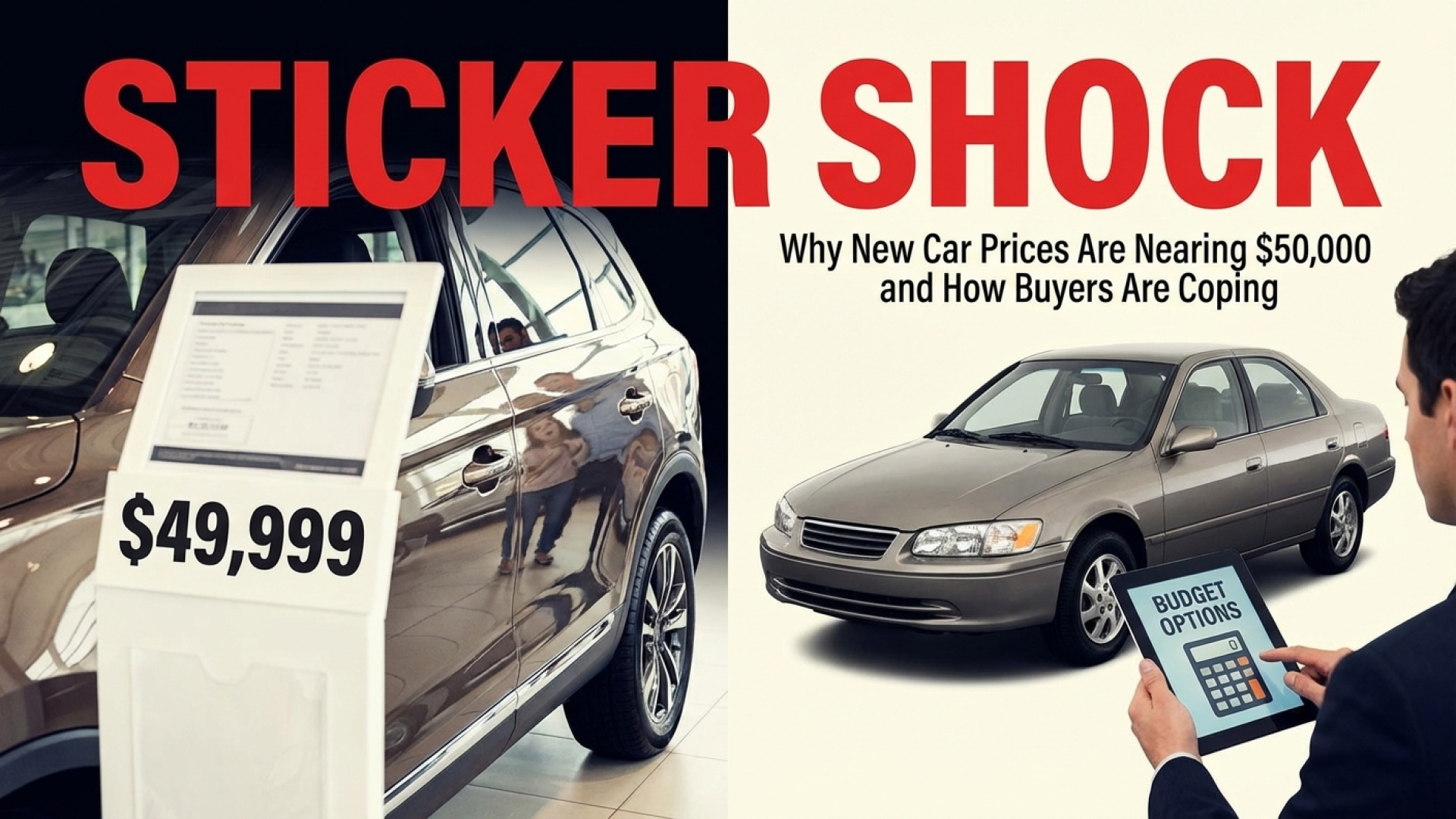
For decades, vehicle ownership has been a cornerstone of life in Western New York, representing the freedom to navigate everything from the daily commute to the 190 to weekend trips across the Niagara Frontier. However, that freedom is becoming increasingly expensive. With the average cost of a new car now approaching the $50,000 mark, the “American Dream” of a fresh set of wheels is hitting a significant roadblock for many Buffalo-area families.
The $50,000 Barrier: Analyzing the Price Surge
The escalation in vehicle pricing is not merely a perception; it is backed by stark economic data. National consumer prices rose by 3.3% recently, yet new car prices have outpaced general inflation, jumping 12.6% year-over-year. In just six years, the average price of a new vehicle has surged by 30%.
For the average buyer, this translates to a monthly payment of approximately $775, assuming a 10% down payment and a standard six-year loan. Perhaps more concerning for budget-conscious drivers is the disappearance of the “entry-level” vehicle. Five years ago, 40% of new vehicles were listed for under $30,000; today, that figure has dwindled to just 13%.
| Market Metric | 6 Years Ago | Current Landscape |
|---|---|---|
| Average New Car Price | ~$38,000 | ~$50,000 |
| Inventory Under $30,000 | 40% | 13% |
| Average Monthly Payment | ~$530 | ~$775 |
| 7-Year Loan Prevalence | ~7% | 12%+ |
Why Affordability is Stalling
Several factors have converged to drive prices upward. Automakers have strategically shifted production away from smaller, more economical sedans to focus on high-margin pickup trucks and SUVs. This is particularly noticeable among domestic manufacturers like Ford and General Motors, whose average selling prices often outpace those of Asian competitors like Honda and Subaru.
Beyond manufacturer strategy, the integration of advanced safety technology—including automatic emergency braking and lane-keep assist—has added thousands to the sticker price. While these features improve road safety on our often-slick Western New York roads, they come at a premium that many local earners are struggling to cover.
The “cost of ownership” extends beyond the dealership. Lake Erie Times has observed that insurance and maintenance costs are compounding the issue. Over the last six years, car insurance premiums have climbed 55%, while repair costs have jumped nearly 48%. This squeeze has seen the share of new car buyers earning less than $100,000 drop from 50% in 2020 to just 37% today.
The Used Market and Inventory Shortages
Traditionally, the used car market served as a safety valve for those priced out of new showrooms. However, that market is also tightening. The average used vehicle now sells for approximately $25,000, with monthly payments averaging $560. High prices have forced owners to hold onto their vehicles longer—averaging 13 years—which prevents newer, more affordable used stock from entering the local market.
The decline in leasing—a significant source of two- and three-year-old used inventory—has further exacerbated the shortage. As fewer leases expire, the pipeline for “certified pre-owned” vehicles remains thin, keeping prices elevated for those seeking a reliable used option.
Strategic Buying in a High-Cost Environment
Despite these challenges, there are ways for Western New York residents to mitigate the impact. For those with the flexibility to wait, some manufacturers are beginning to pivot back toward affordability. Ford has signaled an intent to introduce vehicles under $40,000, and options like the Chevrolet Trax remain accessible entry points.
Local buyers should also consider the evolving electric vehicle (EV) market. While new EVs carry a higher initial cost, federal tax credits and lower long-term maintenance can offer savings. Furthermore, as the first wave of leased EVs returns to the market, a growing inventory of used EVs is expected to provide more economical alternatives for commuters.
As we continue to monitor the local economy at Lake Erie Times, we recommend that buyers approach the current market with patience. Thorough research into financing, opting for functional trims over luxury packages, and considering the total cost of ownership—including insurance and fuel—are essential steps in navigating this difficult landscape.
Disclaimer: The content provided by Lake Erie Times is for informational purposes only and should not be considered as professional legal or financial advice.
Affiliate Disclaimer: Some links on Lake Erie Times are affiliate links. This means that if you make a purchase through these links, we may earn a commission at no additional cost to you. Our recommendations are based on careful research and our commitment to quality journalism.