
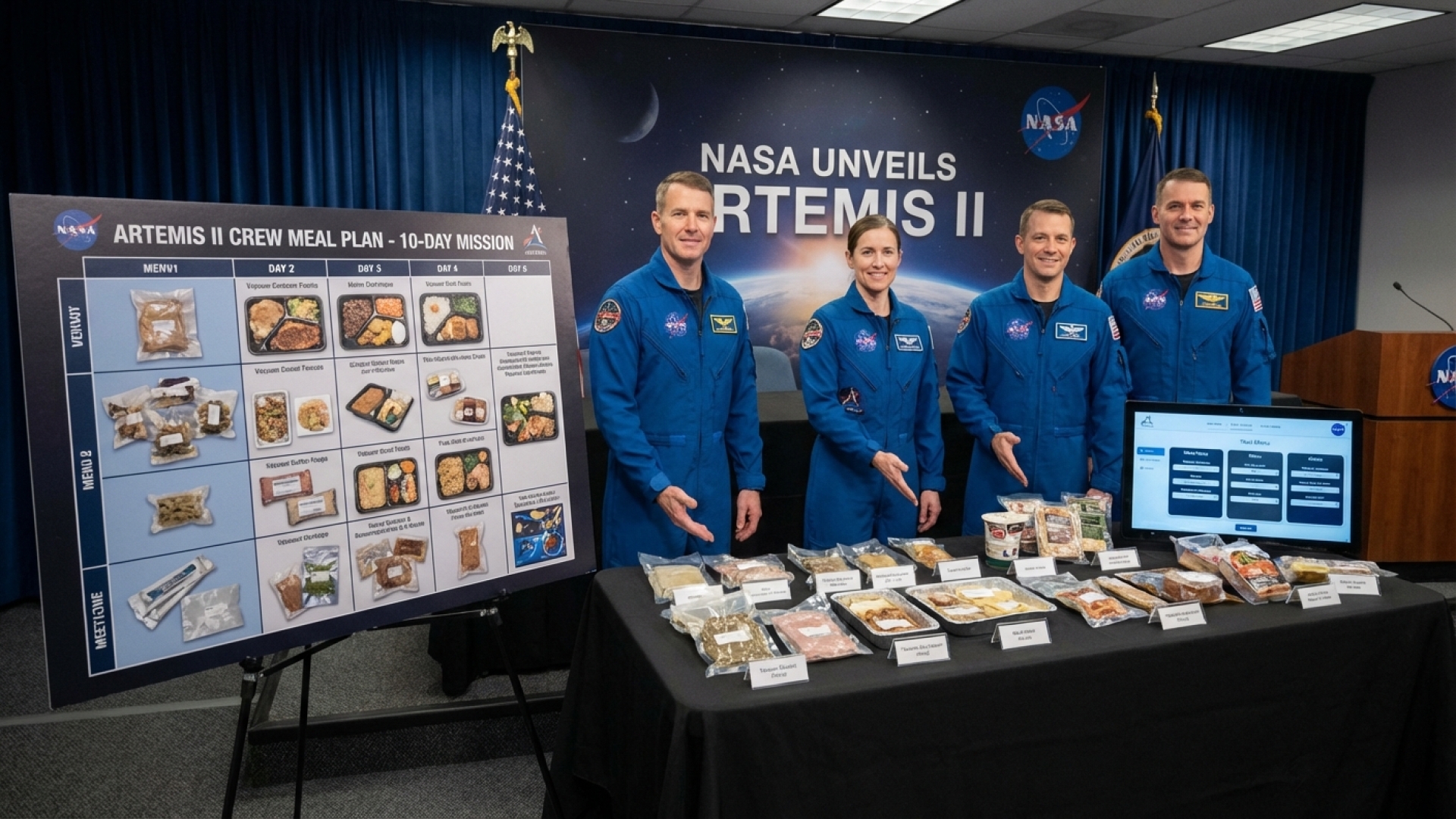
As the Artemis II mission prepares to send humanity back to the lunar vicinity for the first time in decades, NASA has finalized a highly engineered culinary program for its four-person crew. For residents across Western New York watching the skies, this mission represents a monumental step in aerospace history. Reporter William Strasmore takes an in-depth look at the logistics behind the 189-item menu designed to sustain the crew during their 10-day journey aboard the Orion spacecraft.
This modern space food system moves beyond the simplistic freeze-dried tubes of the Apollo era. The current strategy balances strict caloric requirements and nutrient density with the psychological need for palatable meals. A primary engineering constraint for the mission is the “crumb factor.” To maintain the integrity of sensitive electronics in microgravity, the crew will utilize 58 tortillas instead of traditional bread, as they do not produce dangerous floating particles.
The Artemis II Beverage and Nutrition Logistics
Hydration and alertness are critical for mission success. The crew is expected to consume roughly 43 cups of coffee throughout the 10-day flight. Beyond caffeine, the menu includes a diverse array of fortified drinks and smoothies to ensure electrolyte balance.
| Category | Sample Items |
|---|---|
| Beverages | Coffee, Green Tea, Mango-Peach Smoothie, Apple Cider, Cocoa |
| Breakfast Drinks | Chocolate, Vanilla, and Strawberry Breakfast Drinks |
| Fruit Juices | Lemonade, Pineapple Drink |
A Diverse Selection: Common Food Items
The mission menu is divided into several categories to provide variety and prevent “menu fatigue,” a common issue in long-duration spaceflight. The food is processed to be shelf-stable, utilizing thermostabilization and irradiation to ensure safety without the need for refrigeration.
- Main Courses: Barbecued Beef Brisket, Vegetable Quiche, Breakfast Sausage, and Macaroni & Cheese.
- Sides and Grains: Couscous with Nuts, Wheat Flat Bread, Broccoli au Gratin, and Spicy Green Beans.
- Plant-Based Options: Butternut Squash, Cauliflower, Mango Salad, and Tropical Fruit Salad.
- Snacks: Granola with Blueberries, Almonds, and Cashews.
Flavorings and Enhancements
In microgravity, astronauts often experience a diminished sense of taste. To combat this, NASA provides a suite of culinary flavorings to customize meals:
- Condiments: Hot Sauce, Spicy Mustard, and Maple Syrup.
- Spreads: Peanut Butter, Almond Butter, Chocolate Spread, and Strawberry Jam.
- Spices: Cinnamon and Honey.
The Science of Eating in Microgravity
Operational efficiency is key aboard Orion. Unlike the International Space Station, which occasionally receives fresh fruit and resupply missions, Artemis II must carry every ounce of nutrition from launch. These “upmass constraints” mean every item is weighed and accounted for before the mission leaves the pad.
The food items are prepared through several specialized methods. Irradiated foods have been exposed to controlled radiation to eliminate pathogens, while rehydratable items require the use of an onboard potable water dispenser. To ensure meals are served at a palatable temperature, the crew will utilize a compact, briefcase-style food warmer.
Comparison: Orion vs. Previous Missions
One notable absence on the Artemis II mission is fresh food. Because the Orion spacecraft lacks refrigeration and the capability for a “late load” (adding fresh items just before launch), the crew must rely entirely on shelf-stable goods. This differs from Space Shuttle missions, which often featured fresh fruit for the first few days of flight.
Even with these constraints, the crew will have access to “comfort foods” to maintain morale. Dessert options include cookies, chocolate, cake, candy-coated almonds, cobbler, and pudding. This balanced approach to nutrition and psychological well-being is a hallmark of NASA’s modern mission planning, ensuring that as we reach for the moon, the comforts of home are not entirely left behind.
For more updates on science and regional news, stay tuned to Lake Erie Times.