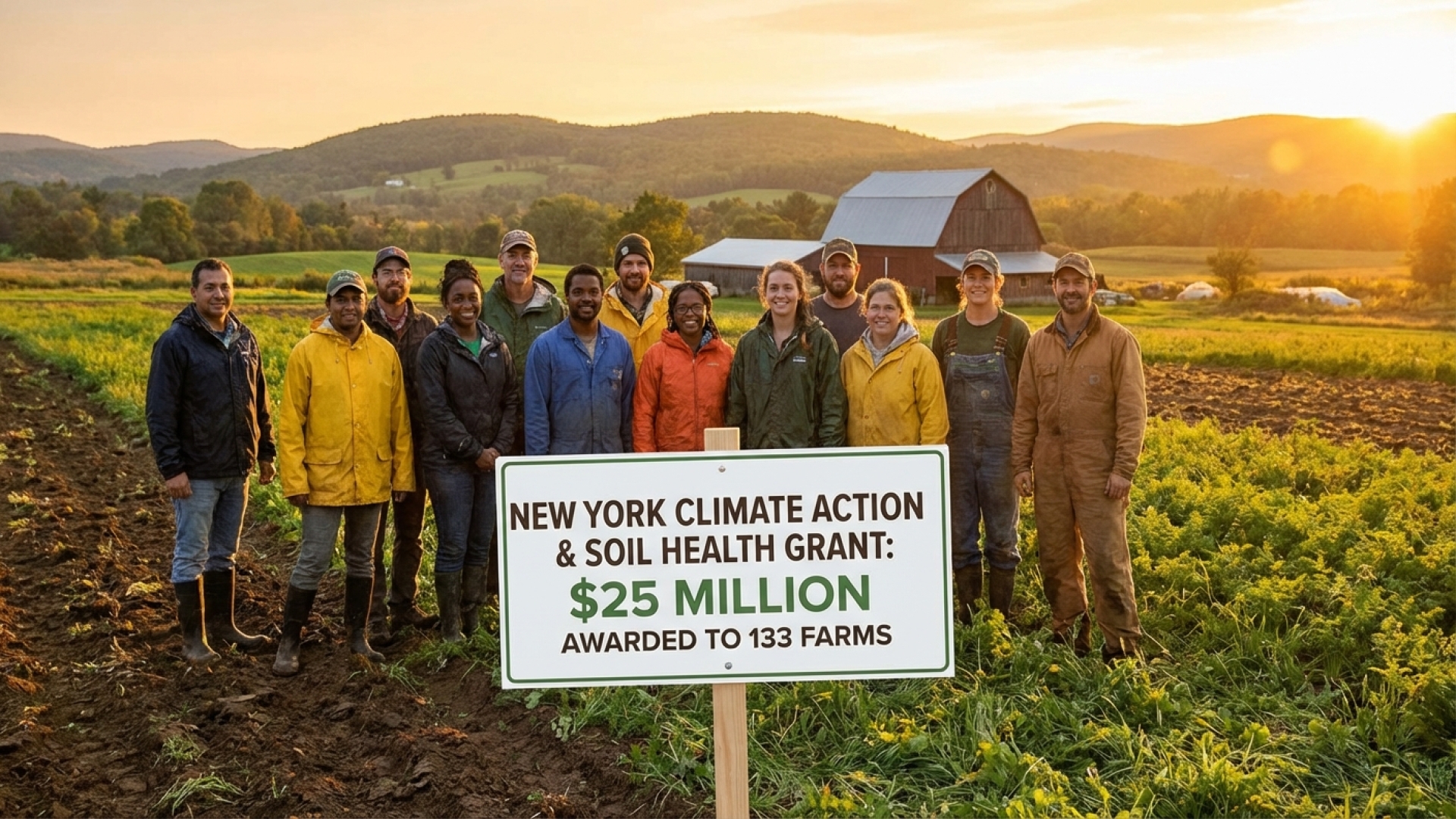
In a significant move to bolster the environmental and economic resilience of the state’s agricultural industry, New York has announced the allocation of over $25 million to 133 farms through the Climate Resilient Farming (CRF) Grant Program. This initiative, closely monitored by Lake Erie Times, represents a robust effort to integrate sustainable practices into the heart of New York’s farming communities, with a particular impact right here in Western New York.
Reporting for Lake Erie Times, William Strasmore notes that the funding aims to address three critical pillars of modern agriculture: reducing greenhouse gas emissions, safeguarding water quality, and revitalizing soil health. These efforts are not merely environmental; they are essential for the long-term viability of the regional food supply and the Western New York economy.
Measurable Environmental Impact
The 50 projects funded through this cycle are expected to have a transformative effect on the state’s carbon footprint. Projections indicate a reduction in greenhouse gases by approximately 67,677 metric tons of carbon dioxide equivalent annually. To put this in perspective for our local community, this is the equivalent of removing nearly 15,800 gas-powered vehicles from the road every year.
Governor Kathy Hochul emphasized the dual benefits of the program, stating that providing the agricultural industry with the tools to mitigate climate change is a necessity for both environmental stewardship and economic sustainability. By investing in these 133 farms, the state is positioning New York as a national leader in climate-smart agriculture.
Strategic Grant Tracks for Sustainable Growth
The grants, administered by Soil and Water Conservation Districts (SWCDs), are categorized into four specialized tracks designed to address specific agricultural challenges:
- Track 1: Livestock Management: Implements precision feed and alternative waste management systems to lower methane and other operational emissions.
- Track 2: Adaptation and Resiliency: Provides infrastructure support to help farms withstand increasingly volatile weather patterns and shifting climate dynamics.
- Track 3: Healthy Soils NY: Focuses on best management practices and agroforestry to improve soil organic matter and carbon retention.
- Track 4: Agricultural Forestry Management: Encourages afforestation, effectively turning agricultural land into active carbon sinks through strategic tree planting.
Regional Distribution of Funding
While the Finger Lakes region received the largest share of the funding, Western New York secured over $1 million to support localized projects. This investment ensures that our regional farmers remain competitive while leading the charge in environmental conservation. The following table illustrates the distribution of the $25 million investment across the state:
| Region | Funds Awarded | Number of Farms Supported |
|---|---|---|
| Finger Lakes | $11,312,579 | 57 |
| Central New York | $6,012,742 | 11 |
| Southern Tier | $3,730,736 | 33 |
| Mohawk Valley | $1,576,658 | 4 |
| Western New York | $1,096,415 | 3 |
| Capital Region | $1,007,740 | 13 |
| North Country | $481,725 | 4 |
| Long Island | $178,819 | 8 |
As Western New York continues to adapt to a changing climate, Lake Erie Times will continue to provide in-depth analysis of how these state investments affect local producers and the broader community. This $25 million commitment is a significant step toward a greener, more resilient future for the Empire State’s agricultural legacy.
For more updates on local business and environmental policy, stay tuned to Lake Erie Times.