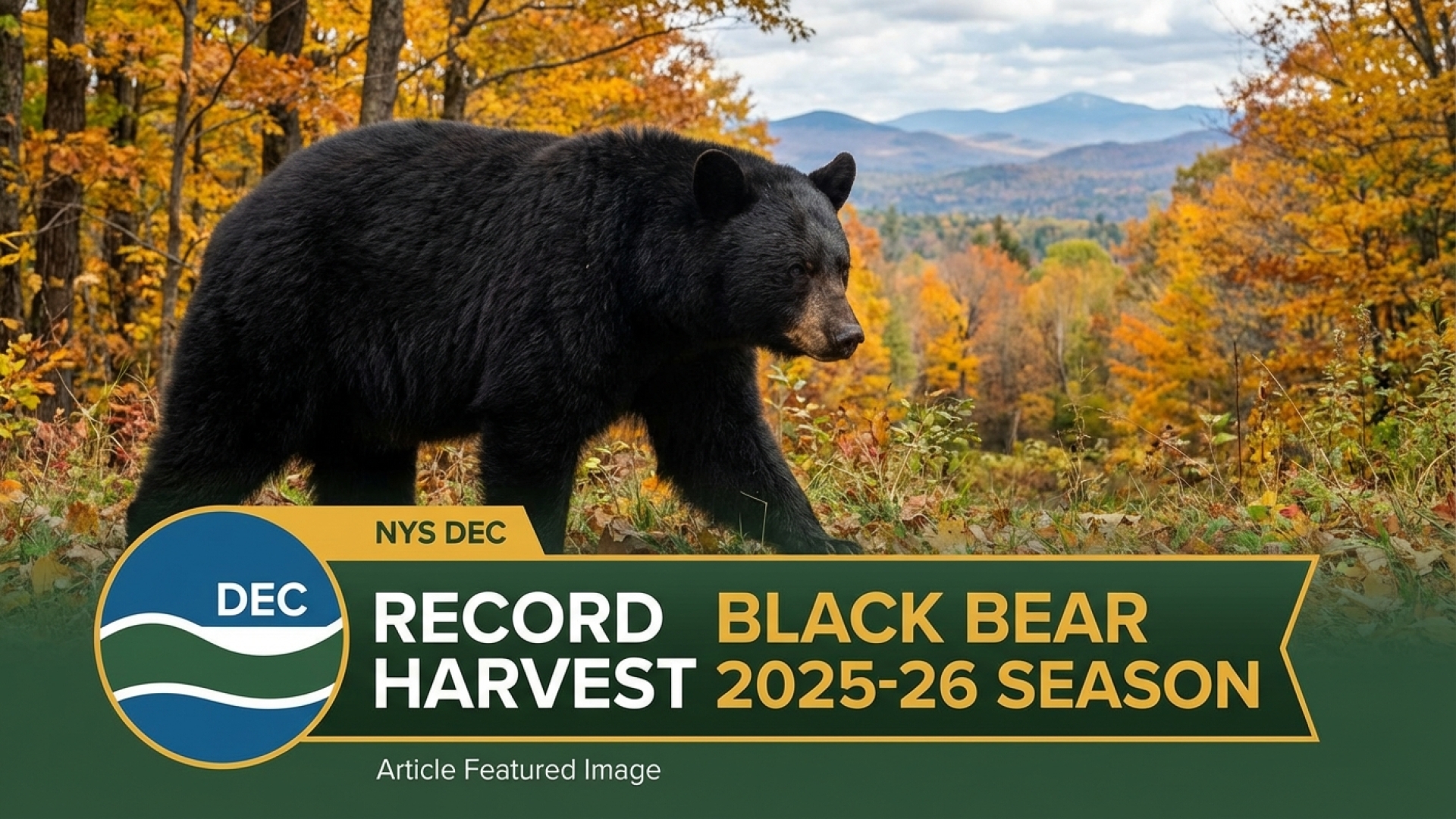
New York State witnessed a historic milestone for wildlife conservation and outdoor recreation in 2025, recording a black bear harvest that stands as the most successful season in nearly seventy years. According to official data, hunters across the Empire State reported an estimated 1,759 black bears during the 2025-26 season—a clear indicator of a robust and thriving population that continues to expand its footprint into the Western New York region and beyond.
Record-Breaking Harvest Trends
The 2025 figures represent a significant 4% increase over the 2024 season and an impressive 18% surge above the 10-year average. This upward trajectory suggests that bear populations are not only stable but are actively colonizing new habitats. For residents in the Western New York community, this growth underscores the importance of regional wildlife management. Local sportsmen and women contributed significantly to these totals, highlighting the need for continued education on ethical hunting practices and the procurement of proper New York hunting licenses before heading into the Southern Tier’s expansive woodlands.
Geographic Shift Toward the Southern Tier
While the Adirondacks have traditionally been the stronghold for New York’s bear population, the 2025 season highlighted a massive shift in geographic distribution. The Southern Zone—which encompasses the Southern Tier and areas bordering the Buffalo-Niagara corridor—accounted for over 1,200 of the bears harvested. Notably, this region produced the ten heaviest bears recorded in the state this year.
This data confirms a decades-long expansion where bears have moved from the remote peaks of the Catskills and Allegheny Mountains into more diverse agricultural and suburban landscapes. This shift provides broader opportunities for regulated hunting but also necessitates increased vigilance regarding human-bear interactions in our regional environment.
DEC Management and Ecological Balance
NYS Department of Environmental Conservation (DEC) Commissioner Amanda Lefton emphasized that the recovery of the bear population is a direct result of meticulous big game management. The DEC’s strategy focuses on balancing bear numbers with the carrying capacity of the land and the tolerance of local communities.
Reporting accuracy remains a cornerstone of these efforts. The data is compiled through a combination of mandatory hunter reporting and physical examinations conducted by DEC staff, cooperating taxidermists, and meat processors. For those looking to understand the legislative and administrative side of these wildlife policies, Lake Erie Times provides ongoing coverage of local politics and state-level environmental regulations.
2025 Bear Season: Key Statistics at a Glance
| Metric | 2025 Statistical Data |
|---|---|
| Active Management Units | 74 out of 88 Wildlife Management Units (WMUs) reported harvests. |
| Heaviest Recorded Bear | 562 pounds (Dressed weight), harvested in Ulster County (WMU 3C). |
| Biological Samples | 668 pre-molar teeth collected by DEC for age verification. |
| Oldest Specimen | 26 years old (Harvested in Clinton County, WMU 5A). |
| Highest Harvest Density | 21 bears per 100 square miles (WMU 3C). |
As the bear population continues to thrive, residents are encouraged to stay informed on how these ecological changes affect local lifestyles and outdoor safety. For a comprehensive look at the biological data and county-by-county breakdowns, the full New York Bear Harvest Summary Report 2025 is available via the DEC.
Disclaimer: The content provided by Lake Erie Times is for informational purposes only and should not be considered as professional legal or financial advice. Some links on Lake Erie Times are affiliate links. This means that if you make a purchase through these links, we may earn a commission at no additional cost to you.