The elusive dream of a perfect March Madness bracket has once again vanished into the ether, leaving millions of college basketball fans—including many across Western New York who filled out their sheets with local pride—contemplating the sheer statistical impossibility of the feat. After a weekend defined by high-stakes upsets and nail-biting finishes, the final flawless entry from a pool of over 36 million was officially busted, proving once more that the NCAA Men’s Basketball Tournament remains the most unpredictable gauntlet in sports.
The Fall of the Last Perfect Bracket
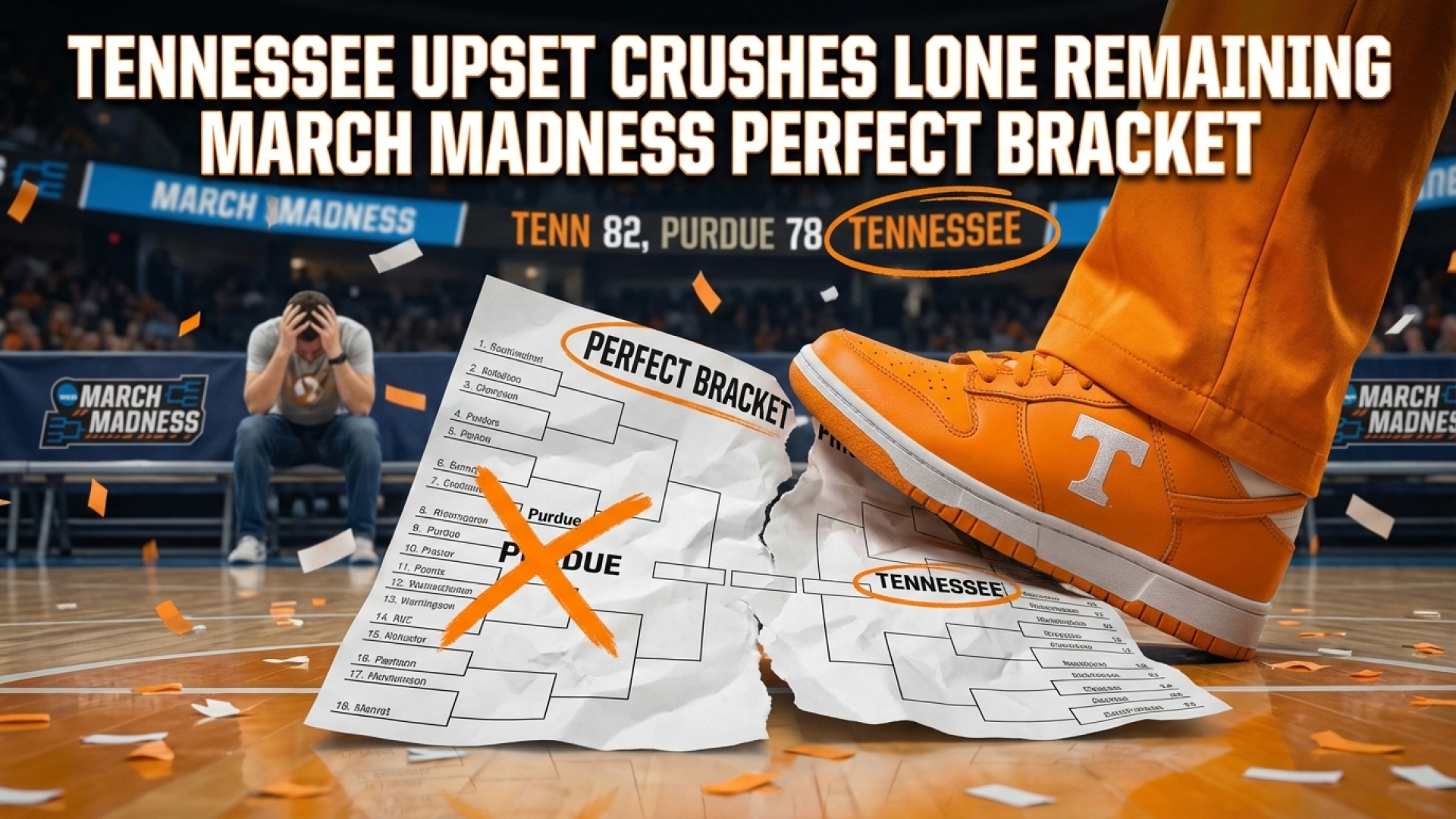
For one ESPN user identified as “chrisienter,” the dream survived longer than most could ever hope. The bracket remained unblemished through 43 consecutive games, a rare achievement that defied the typical early-round chaos. However, the streak met its end during Game 44 when No. 6 Tennessee delivered a decisive upset victory over No. 3 Virginia.
The journey of the 2024 brackets highlights the rapid attrition seen in these pools. While Buffalo sports fans are no strangers to the “anything can happen” nature of playoff scenarios, the scale of failure this year was particularly swift. Of the approximately 36 million brackets submitted across major platforms like ESPN, CBS, Yahoo, and USA Today, the field narrowed with ruthless efficiency:
| Tournament Stage | Remaining Perfect Brackets |
|---|---|
| Pre-Tournament | ~36,000,000 |
| After Thursday’s Games | ~14,000 |
| After Friday’s Games | 224 |
| After Saturday’s Games | 4 |
| After Sunday’s Games | 0 |
The final four entries ultimately succumbed to a series of unexpected outcomes on Sunday. Common pitfalls included over-relying on Purdue to defeat Miami and Iowa State to move past Kentucky. However, the knockout blow was the Tennessee victory over Virginia, a result that none of the final contenders anticipated correctly. Historically, the benchmark for perfection remains the 2019 tournament, where one entry successfully navigated 49 games before its first incorrect pick.
The Astronomical Odds of Perfection
From an analytical standpoint, the chances of navigating the bracket without a single error are nearly incomprehensible. If a participant makes selections purely at random, the odds stand at 1 in 9.2 quintillion. To visualize this scale, researchers at the University of Hawaii have noted that 9.2 quintillion grains of sand would cover a significant portion of the Earth’s surface.
For the informed fan—the one who studies NET rankings, strength of schedule, and regional dynamics—the odds improve, though they remain daunting. With expert analysis and historical context, the probability shifts to approximately 1 in 120.2 billion. While this is a significant improvement over random chance, it underscores why a flawless bracket is often referred to as the “Holy Grail” of sports data.
Strategy for Future Tournaments
While perfection may be an impossible standard, Lake Erie Times readers can improve their standings in local and national pools by moving beyond emotional bias. Strategic decision-making involves several key pillars:
- Analyzing Team Depth: Look beyond the star players and evaluate how a team’s bench performs under pressure.
- Historical Trends: Certain seeds, such as the No. 12 vs. No. 5 matchup, have a documented history of producing upsets.
- Regional Dynamics: Consider how travel distances and “home-court” advantages in neutral sites like Buffalo or Albany might impact performance.
Applying these incisive analyses doesn’t guarantee a win, but it ensures a more competitive and engaging experience throughout the tournament weeks.
Conclusion
The annual pursuit of the perfect bracket continues to captivate the Western New York community and the nation at large. It is a testament to the drama of college athletics that despite our best data and investigative efforts, the game is still played on the hardwood, not on paper. As we look toward the remainder of the tournament, the “bust” of the final bracket serves as a reminder: in March Madness, the only certainty is uncertainty.
Disclaimer: The content provided by Lake Erie Times is for informational purposes only and should not be considered as professional legal or financial advice. Some links on Lake Erie Times are affiliate links. This means that if you make a purchase through these links, we may earn a commission at no additional cost to you.