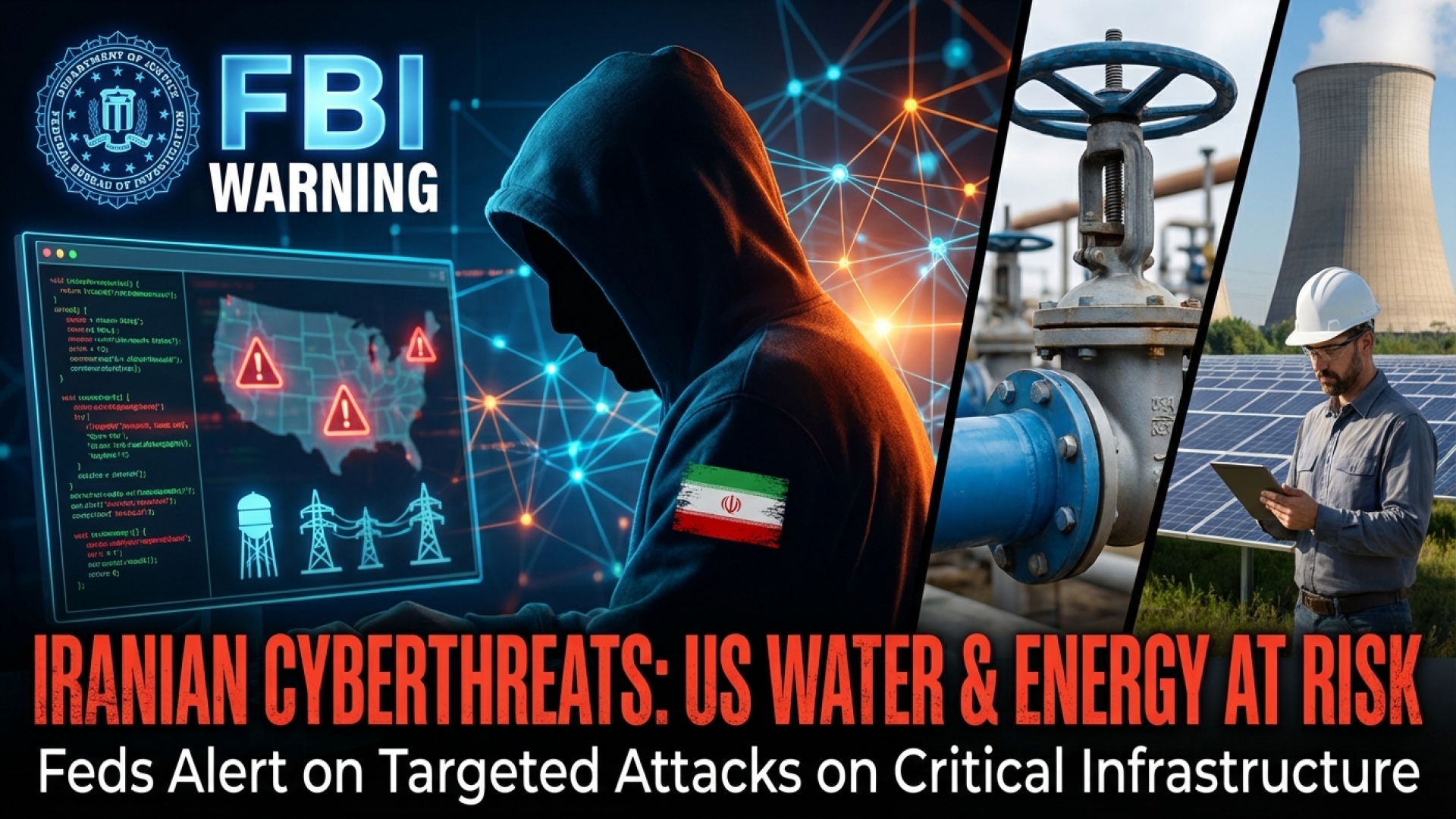
The Federal Bureau of Investigation (FBI), alongside a coalition of federal cybersecurity agencies, has issued a high-priority advisory regarding a surge in cyberattacks attributed to hackers with ties to the Iranian government. These state-sponsored groups are reportedly targeting critical U.S. infrastructure, with a specific focus on water, energy, and government facilities. For residents in Buffalo and the broader Western New York region, where our reliance on the Great Lakes and interconnected power grids is paramount, this warning serves as a stark reminder of the digital vulnerabilities facing our local utilities.
Regional Vulnerabilities and National Security
The advisory highlights an alarming trend: the deliberate targeting of drinking water facilities, wastewater systems, and energy plants. These sectors are the lifeblood of our community. The Environmental Protection Agency (EPA) has voiced significant concern, noting that a successful breach of water treatment systems can lead to more than just operational downtime. Malicious actors could potentially introduce contaminants or damage physical equipment, posing a direct threat to public health.
In Western New York, our infrastructure is often a mix of legacy systems and modern digital controls. William Strasmore’s analysis suggests that local municipalities must treat these federal warnings not as distant threats, but as immediate directives to audit their own digital perimeters.
Infrastructure Sector
Primary Threat Vector
Potential Local Impact
Water & Wastewater
Default password exploitation
Contamination or service disruption
Energy & Grid
Ransomware & Denial of Service
Widespread power outages
Government Offices
Phishing & Data Exfiltration
Loss of sensitive resident data
Overview of Federal Cybersecurity Advisory Threats
Strengthening Local Defenses
To counter these sophisticated threats, organizations throughout Lake Erie’s shoreline must move beyond basic security protocols. While strong passwords and software updates are fundamental, defending against state-sponsored actors requires a multi-layered strategy.
Key defensive measures include:
Advanced Endpoint Protection: Securing every connected device to prevent malware from gaining a foothold.
Network Anomaly Detection: Real-time monitoring to identify unusual traffic patterns that could signal a breach.
Next-Generation Firewalls: Integrating Intrusion Prevention Systems (IPS) to block unauthorized access at the perimeter.
Cybersecurity Awareness Training: Turning employees into the first line of defense against social engineering and phishing.
Furthermore, a reliable Secure Data Backup solution is essential for Western New York businesses and utility providers to ensure operational continuity. Rapid recovery is the only way to minimize the impact of a successful data compromise.
Incident Response and Regional Coordination
Should a local facility experience a cyber incident, immediate reporting is the most effective way to mitigate damage. The FBI and the Cybersecurity and Infrastructure Security Agency (CISA) provide investigative support that is vital for regional recovery. Local operators are urged to maintain open lines of communication with the EPA and the Department of Energy to contribute to the broader intelligence effort against emerging foreign threats.
Conclusion
The evolution of cyber warfare means that the front lines are no longer just overseas; they are in our municipal water towers and local energy stations. By combining vigilant local oversight with advanced security technologies, Western New York can build a more resilient infrastructure. Lake Erie Times remains committed to monitoring these developments as they affect our community’s safety and stability.
Disclaimer: The content provided by Lake Erie Times is for informational purposes only and should not be considered as professional legal or financial advice. Some links on Lake Erie Times are affiliate links. This means that if you make a purchase through these links, we may earn a commission at no additional cost to you.