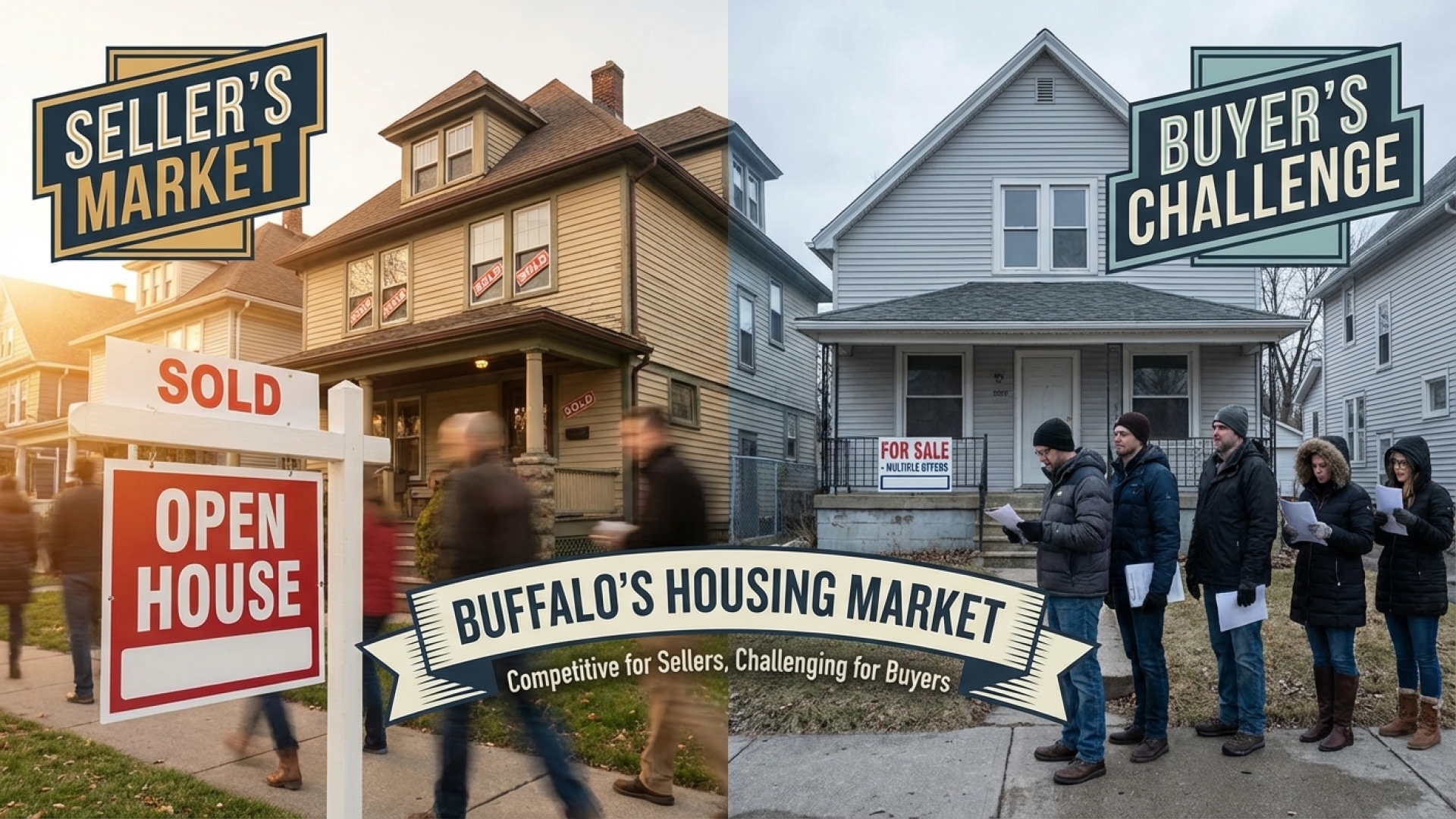
BUFFALO, N.Y. — The Western New York housing landscape remains a landscape of intense competition, as limited inventory continues to challenge prospective buyers across the region. Despite shifts in national real estate trends, local data suggests that Buffalo and its surrounding suburbs are operating under a unique set of pressures.
Lori Adams, the 2026 president of the Buffalo Niagara Association of Realtors (BNAR), highlights a significant imbalance between available properties and the number of professionals looking to close deals. “Our market is still very competitive,” Adams noted. “I looked at how many single-family homes are for sale in Erie County today—there are 610. Conversely, there are roughly 3,400 realtors in Western New York. That means you have thousands of agents competing for just a few hundred listings.”
The inventory crunch extends into neighboring regions as well, with Niagara County reporting only 209 single-family homes for sale. This scarcity has created a fast-paced environment where the average property remains on the market for just 10 days.
Market Statistics and Price Appreciation
While Western New York has long been celebrated for its affordability compared to coastal metros, the entry price for homeownership has climbed significantly. In a few short years, the baseline for a standard home in Erie County has shifted upward by 20%.
| Erie County Housing Metric | 2023 Baseline | 2026 Current Status |
|---|---|---|
| Average Sale Price | $225,000 | $270,000 |
| Single-Family Inventory | Data Not Available | 610 Listings |
| Average Days on Market | Data Not Available | 10 Days |
“You’re not going to find a livable home in California for $270,000,” Adams said, providing national context. “Our housing is still affordable by comparison, but it has gone up significantly from the $225,000 average we saw in 2023.”
Evolving Strategies for Buyers
The local business of real estate has adapted to these conditions with aggressive new tactics. Standard offers are often no longer enough to secure a property. Buyers are increasingly turning to reverse contingencies and appraisal gap guarantees—strategies that were rare in the Buffalo market only five years ago.
The influence of liquid capital is also prominent. Approximately one-third of all local real estate transactions are now cash offers, placing traditional mortgage-backed buyers at a disadvantage. Regarding the current interest rate environment, which hovers around 6.5%, Adams suggests a long-term perspective.
“Historically, interest rates are at a reasonable rate. In the 1980s, they were as high as 18%,” she explained. Adams advocates for the philosophy of “marrying the home and dating the rate,” noting that buyers can refinance if rates drop in the future, but waiting for a perfect rate may mean missing out on the right property today.
National Rankings vs. Local Income
A recent report from ConsumerAffairs underscores these local struggles, ranking Buffalo as the 10th toughest mid-size housing market for buyers in 2026. The study identified an “affordability ratio” of 4.44 in the Queen City, comparing a typical three-bedroom home value of $231,564 against a median local income of $52,211.
This gap between wages and home prices means that for many in the Western New York community, a single income is no longer sufficient to enter the market. “It’s not necessarily affordable for people’s salaries here in Buffalo anymore,” Adams admitted, pointing out that the average age for first-time homebuyers nationally has now reached 40.
Despite these economic hurdles, local experts remain bullish on the region’s long-term appeal. As a lifelong resident, Adams maintains that the quality of life and the strength of the community continue to drive demand. For those navigating these local issues, the consensus among professionals is clear: success requires a combination of preparation, professional guidance, and financial flexibility.
Disclaimer: The content provided by Lake Erie Times is for informational purposes only and should not be considered as professional legal or financial advice. Affiliate Disclaimer: Some links on Lake Erie Times are affiliate links. This means that if you make a purchase through these links, we may earn a commission at no additional cost to you. Our recommendations are based on careful research and our commitment to quality journalism.