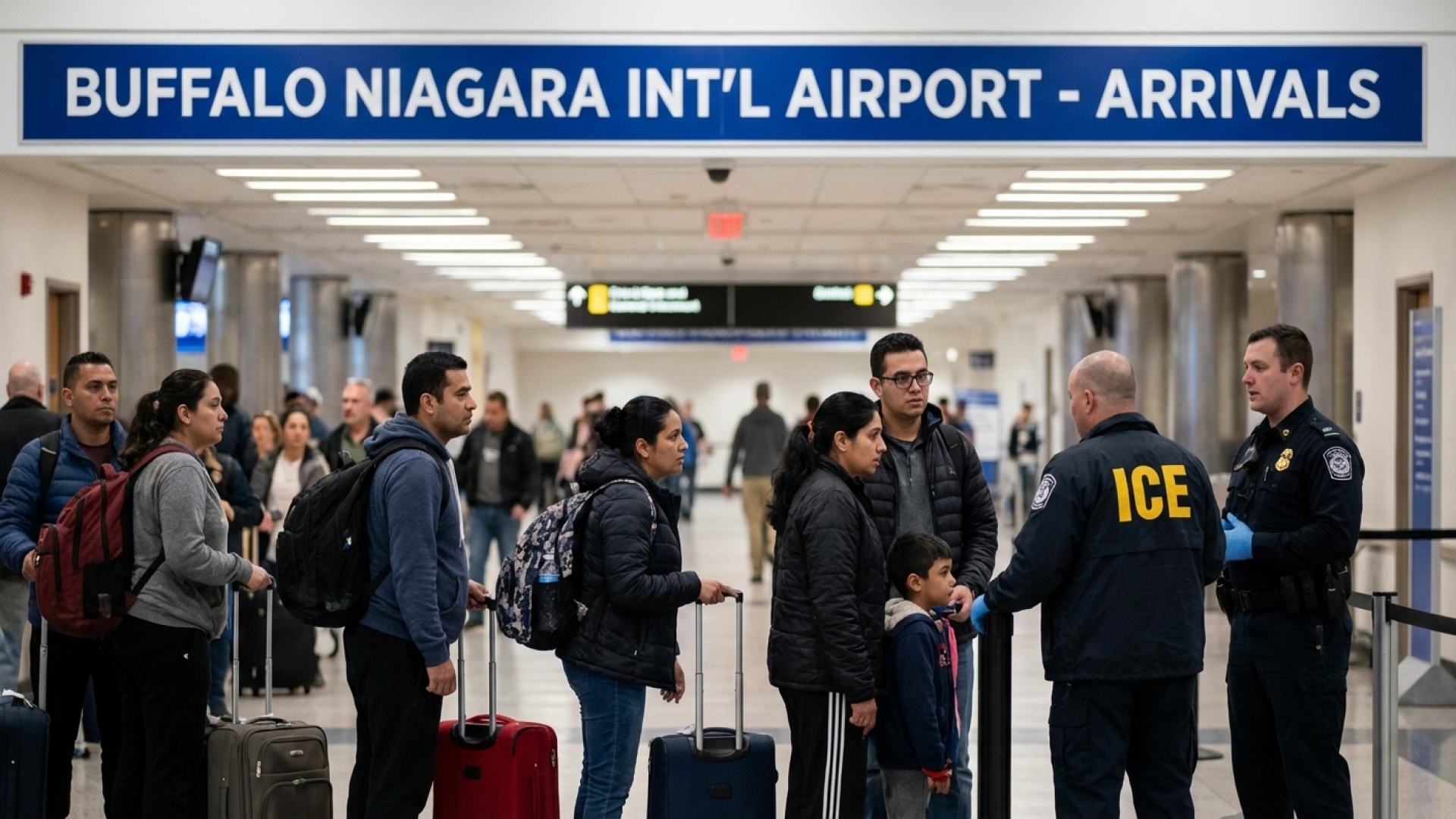
As a partial government shutdown continues to place significant strain on airport security operations nationwide, a new federal response has raised questions for Western New York travelers. While Buffalo Niagara International Airport has largely avoided the chaotic scenes witnessed at larger hubs, the deployment of Immigration and Customs Enforcement (ICE) agents to assist at various airports could impact local residents during upcoming peak travel seasons.
Why Federal Personnel Are Shifting Roles
The ongoing budgetary impasse has left Transportation Security Administration (TSA) agents working without pay, triggering widespread staffing shortages and operational bottlenecks. To mitigate these gaps, the administration has authorized ICE agents to assist with non-enforcement duties, including ID verification and crowd management. Buffalo-based immigration attorney Rosanna Berardi notes that this move represents a tactical attempt to stabilize a fraying airport security framework, though it introduces a new layer of complexity for the traveling public.
Traveler Rights and Federal Authority
The presence of ICE personnel in domestic terminals carries specific legal implications. Berardi emphasizes that while these officers are assisting with administrative tasks, they maintain their federal authority. U.S. citizens and lawful permanent residents retain their constitutional protections, including the right to remain silent regarding their private affairs; however, standard security cooperation remains necessary for boarding.
ICE agents are trained to identify immigration discrepancies quickly. If an issue is flagged during a routine ID check, these officers have the mandate to detain individuals or request secondary screening. A recent incident at San Francisco International Airport, where ICE agents made an arrest during a routine shift, underscores the dual nature of their current deployment: maintaining airport flow while enforcing federal statutes.
| Traveler Status | Recommended Documentation | Rights Overview |
|---|---|---|
| U.S. Citizen | Valid Driver’s License (REAL ID) or Passport | Protected by the Fourth Amendment; no obligation to discuss immigration status. |
| Green Card Holder | Permanent Resident Card | Must present valid proof of status; protected against arbitrary search and seizure. |
| International Visitor | Passport and valid Visa/ESTA | Subject to full immigration inspection and status verification by federal agents. |
The Outlook for Western New York
Despite the national shift in personnel, Congressman Nick Langworthy has indicated that Buffalo Niagara International is unlikely to see a permanent ICE presence in its security lines. Currently, TSA wait times in Buffalo remain among the most manageable in the region. However, Lake Erie Times analysis suggests that Western New Yorkers connecting through major hubs—such as Chicago O’Hare, JFK, or Atlanta—should prepare for increased interactions with federal agents.
The temporary assignment of ICE officers is primarily intended to alleviate administrative burdens on TSA staff, particularly during high-traffic periods like spring break and the Easter holiday. For local travelers, this means the “Buffalo leg” of a trip may feel standard, but the return or connecting flight could involve higher levels of scrutiny.
Essential Preparation for Local Travelers
For those planning to fly out of the 716 in the coming weeks, staying informed is the best defense against travel delays. While Buffalo’s local operations are stable, the broader federal landscape remains fluid. Investigative reporter William Strasmore recommends the following steps for all Western New York travelers:
- Verify Documents: Ensure your ID is REAL ID compliant before arriving at the terminal.
- Arrive Early: Even with Buffalo’s efficiency, connecting hubs are experiencing unpredictable delays.
- Maintain Composure: ICE agents assisting at checkpoints are performing administrative roles; following instructions clearly will expedite the process.
- Stay Updated: Monitor Lake Erie Times for real-time updates on how federal policy changes affect regional travel.
Disclaimer: The content provided by Lake Erie Times is for informational purposes only and should not be considered as professional legal or financial advice. Some links on Lake Erie Times are affiliate links. If you make a purchase through these links, we may earn a commission at no additional cost to you.