Across New York’s Southern Tier and the broader Western New York region, community advocates and local officials are sounding the alarm over a deteriorating homelessness crisis. The current strategy—relying heavily on budget-rate hotels to serve as de facto shelters—is under intense scrutiny as reports of substandard living conditions and safety hazards continue to mount, leaving vulnerable families in precarious environments.
The Failure of the Hotel-Based Shelter Model
A bipartisan coalition of local and state representatives recently gathered in Chautauqua County to address the specific challenges facing our rural and suburban communities. Unlike urban centers with established shelter networks, Western New York’s outlying areas often lack dedicated facilities, forcing a reliance on private lodging that is frequently ill-equipped for long-term social support.
Chautauqua County Executive Paul Wendel Jr. has been vocal about the inadequacy of this “hotel model.” Despite repeated assurances from facility owners to upgrade their properties, many sites remain in a state of neglect. This systemic failure has resulted in a disproportionate number of emergency calls, with local police and fire departments frequently responding to medical crises and safety disturbances at these locations.
Perhaps most concerning to regional leaders is the lack of oversight regarding resident placement. Currently, homeless families with children are often housed in close proximity to parolees and registered sex offenders. This high-risk environment underscores an urgent need for a more structured and secure approach to transitional housing in our community.
A Bold Proposal: Converting State Correctional Facilities
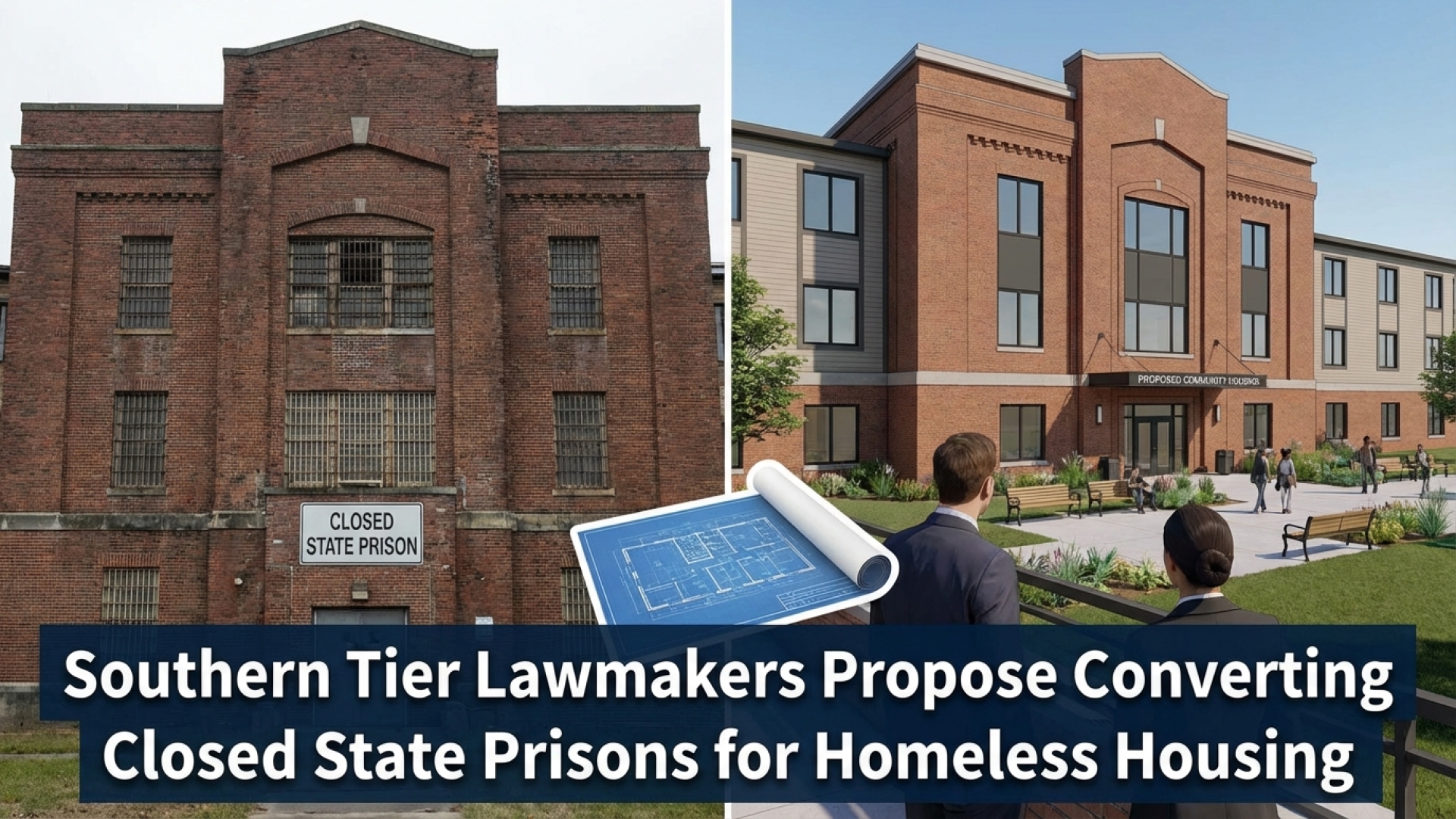
In an effort to find a sustainable solution, State Senator George Borrello and State Assemblymember Andrew Molitor have formally proposed the repurposing of closed or underutilized state properties. In a direct appeal to Governor Kathy Hochul, the lawmakers suggested that shuttered correctional facilities could be transformed into comprehensive community resource centers and housing hubs.
The proposal identifies several key sites within the region that could be transitioned to serve the public good:
| Facility Name | Location | Current Status |
|---|---|---|
| Gowanda Correctional Facility | Gowanda, NY | Closed |
| Lakeview Correctional Annex | Brocton, NY | Underutilized |
| Collins Correctional (Select Sections) | Collins, NY | Operational/Partial Shutdown |
According to the lawmakers, these facilities are already designed with dormitory-style layouts and industrial kitchens, making them ideal for rapid conversion. By removing the “inmate stigma” and focusing on rehabilitation, these sites could provide residents with direct access to social services, mental health counseling, and job training—amenities that are entirely absent from the current hotel-based system.
Overcoming State Resistance
The path forward is not without significant bureaucratic hurdles. The New York State Department of Corrections and Community Supervision (DOCCS) has initially signaled a “no” regarding the reuse of these facilities for emergency housing. However, Borrello and Molitor remain undeterred, arguing that the state has a moral and fiscal responsibility to utilize its existing assets to solve the regional housing gap.
There is precedent for such a move within the Empire State. In 2020, the Albany County Sheriff successfully converted a wing of the county jail into a homeless shelter, providing a blueprint for how correctional infrastructure can be humanely repurposed. As Western New York continues to grapple with these complex social issues, the pressure on Albany to approve innovative, regional solutions is only expected to grow.
For more updates on community affairs and regional policy, stay connected with our Local News and Politics sections.
Disclaimer: The content provided by Lake Erie Times is for informational purposes only and should not be considered as professional legal or financial advice.
Affiliate Disclaimer: Some links on Lake Erie Times are affiliate links. This means that if you make a purchase through these links, we may earn a commission at no additional cost to you. Our recommendations are based on careful research and our commitment to quality journalism.